


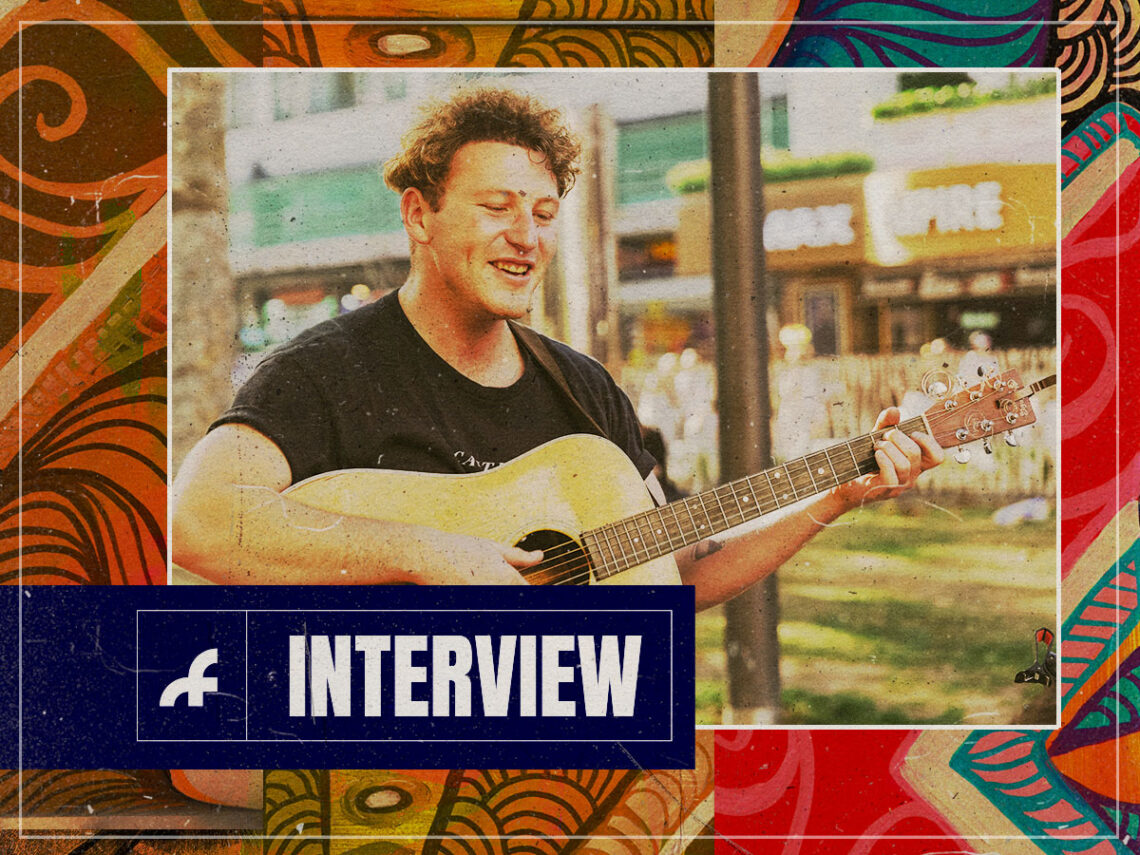
Putting in the hours: Harry Marshall on aspiring artists, the modern music industry, and the crucial importance of busking

Busking has birthed some of the greats, including the likes of Tracy Chapman, Pink Floyd’s David Gilmour, Janis Joplin, Beck, Billy Bragg and countless others performing on the street. They all started in public, honing their craft and earning some cash. London, meanwhile, is arguably the world’s epicentre of busking, with Rod Stewart getting his start by performing in London’s underground and the city continuing to have a well-oiled organised system in order to keep its vibrant street performances alive and running smoothly.
At its core, you could see busking as a daily practice or rehearsal, all to hook an audience in and keep them engaged. There couldn’t be a better microcosm in which to learn to be a great live performer as each set on a street corner becomes a trial run for a successful gig.
“You’ve got to figure out how to make them go, ‘Oh, this guy’s alright’. That’s always been the hardest part, that’s the mission,” Harry Marshall says. As one of London’s most infamous buskers, found almost daily around the city’s central points of Piccadilly Circus and Chinatown, Marshall is a full-time musician on the streets during the day and selling out venues like OMEARA and Bush Hall at night. Gaining an ever-growing fanbase thanks to his slick live performance, Marshall puts it all down to busking, thanking the London streets for teaching him “how to craft a show. How to start strong, how to draw them in then pull them down and make them feel something and then get the mood back up again”.
Watching Harry Marshall play his third 45-minute set of the day on an early Thursday afternoon in Piccadilly Circus, within three songs, he’s surrounded by a crowd of at least 50 people. Despite the repetition, his energy never falters. It’s tireless, with Marshall regularly clocking in “16 45-minute shows in one week. That’s like a whole tour in one week”.
But with every set, the passion stays high. Around him, couples are dancing together while a young boy plays air guitar, watching Marshall with the kind of awe that comes when a core memory is being made. Routinely, people step forward, dropping coins into his guitar case or scanning the QR code, leading them to Marshall’s Spotify page, where he’s racked up millions of streams for his indie-pop original music. His latest releases, ‘Bones’ and ‘Las Vegas’, are soaring alt-pop numbers, mixing ’80s synth licks with storytelling lyricism that sits somewhere between Matty Healy and Bruce Springsteen. It’s great stuff, but Marshall’s measure of success lies outside of numbers on the screen.

“Even if my solo career doesn’t break any more than this, I know I’ll still have satisfaction because of the interactions I have every day when people hear me play,” he says, “It’s all rewarding at the end of every gig whether you’re doing your own stuff or not.”
For Marshall, it’s all for the love of a live show. Building a band of other buskers who all prioritise their live sound, their focus is evident even when it comes to writing: “We’re live musicians; that’s always been what we’re here for.” Originating on the live scene, playing gigs from his teenage years and now funding his career through daily live sets, it makes sense that his biggest goal is arguably the ultimate live show; “I want to play Glastonbury. That’s always been my biggest dream. I used to pull a sickie from school and watch the live streams.”
With any skill, confidence and competency always comes from practice. And as Marshall hits the streets day after day, he’s become an incredibly seasoned musician by 25. Dedicated to the same work ethic as artists like Patti Smith, who calls all of her gigs ‘jobs’ to pay homage to the labour and work that goes into artistry, Marshall believes in the traditional system that good music, good gigs and good work ethic will get you places. “Look at the best bands in the world; that’s how they came up. They play club after club after club, and they built the following by just gigging and gigging, so when they got to the big time, they already had 1000s of hours under their belts and the stage presence to match,” he says, adding: “I think that’s more important than doing well on Spotify. I still have faith in that old system.”
Not too dissimilar to the way yoga teachers have to clock 2000 hours of practice before qualifying, this idea of putting the hours in is one that seems lost in the modern music industry. In an era of quick-blowup viral artists booming from TikTok screens instantly up to primetime festival slots and major record deals, hardworking slow-builders have tragically fallen out of fashion. Stories like Marshall’s, of his beginnings with his parents “signing waivers to let [him] play pub gigs when [he] wasn’t old enough to even get in the door” or his hectic routine of playing gigs every Friday, Saturday and Sunday around his local town, are rarely heard of anymore.

“The whole industry looks down on busking and pub gigs,” Marshall says, “I don’t know why, but they just want artists to come out of nowhere.” Since the 1970s, the percentage of working-class musicians coming from working-class backgrounds has halved, according to the Office for National Statistics, falling to only 7.9%. With the recent news of Spotify essentially eliminating royalties of low-streaming tracks, independent and working-class artists will find it even harder to fund their projects or keep working in music. These moves, paired with the rise in cultural conversation around industry plants and nepo babies, all point towards a music industry that is becoming increasingly impossible for working-class musicians to navigate at the best of times, let alone when they’re hit with class snobbery from industry professionals for trying to make ends meet. Marshall has witnessed this first hand: “I’ve had so many people turn their nose up when I say I’m a busker, but this is a day job. Every musician needs money to survive, let alone money to make their art, and there shouldn’t be any snobbery around that.”
Busking allows Marshall to keep climbing the ladder, getting himself the opportunities some of TikTok’s biggest stars still couldn’t achieve, like flying their band out to LA to record or deciding to book London’s beautiful Bush Hall for a show. But still, Marshall feels the cold shoulder from a lot of industry professionals: “I work really hard, I’m really proud of the fact, but still major labels would want to wipe all evidence of me busking to be able to craft and control their own image of me.”
Not content to leave it up to industry A&R people or the chance of the TikTok algorithm to break him, Harry Marshall’s story is one of endurance and unshakable drive. To you, a busker might be background noise to a drink out in a beer garden or an inconvenience when you’re trying to get through a city centre. But to Marshall, having experienced assaults while performing and still going out there in the minus-figures of deep winter, busking allows him to both become a better musician and financially survive in order to become that fully realised, formidable artist he knows he can be.
