


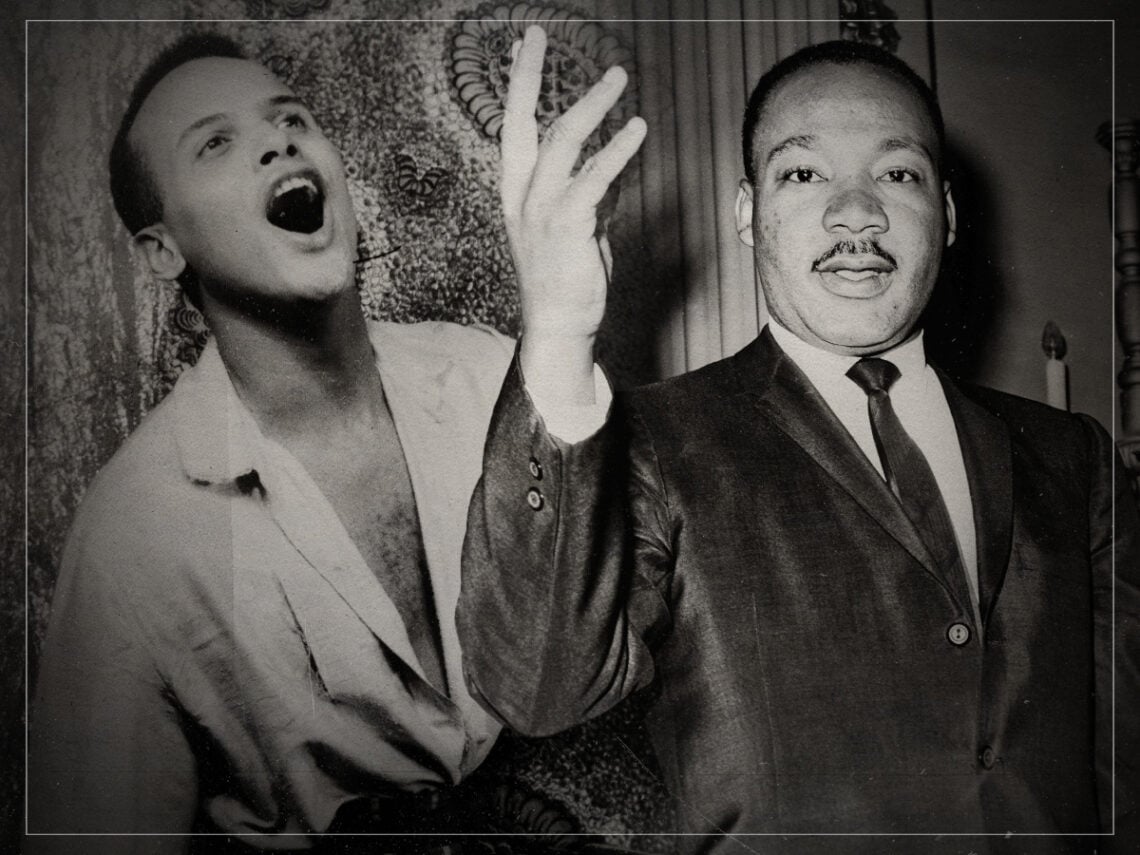
“Nourished my soul”: when Harry Belafonte got a call from Martin Luther King Jr

The year 1956 was a revolutionary one for Harry Belafonte, the multihyphenate artist known for his merging of popular culture and political activism.
Belafonte grew from a career start as a club singer in New York – a gig he took in order to pay for his acting classes – to a folk artist, performing at The Village Vanguard jazz club. That May, he released his breakthrough album Calypso, soon to become the first LP worldwide to sell more than a million copies in a year. In his renditions, calypso music, a Caribbean style that originated in Trinidad and Tobago in the early to mid-19th century, was brought to American audiences.
Calypso featured Belafonte’s signature, ‘Day-O (Banana Boat Song)’ as its opener, a sensation that contributed to the album’s success. Soon, Belafonte was named the ‘King of Calypso’ in popular music.
In tandem, Belafonte was expanding his acting and film career. His first film, 1953’s Bright Road, saw him co-star as the principal of a rural Black elementary school in Alabama. He would receive a Tony Award the following year for John Murray Anderson’s Almanac, which earned him his second film role, in 1954’s Carmen Jones, where he starred as Corporal Joe, a soldier who is selected for flight school. With a second Broadway stint in 1955’s 3 for Tonight, Belafonte was an undeniable talent, and there was seemingly nothing that he could not accomplish.
In March of 1956, Belafonte would meet the second of two pivotal figures that would change the course of his life. The first had been Paul Robeson, a fellow multihyphenate in his singing, acting and civil rights activism, whom Belafonte, in his 2011 memoir My Song, called “my first great formative influence; you might say he gave me my backbone”. The second was Martin Luther King Jr, beginning with a fateful phone call.
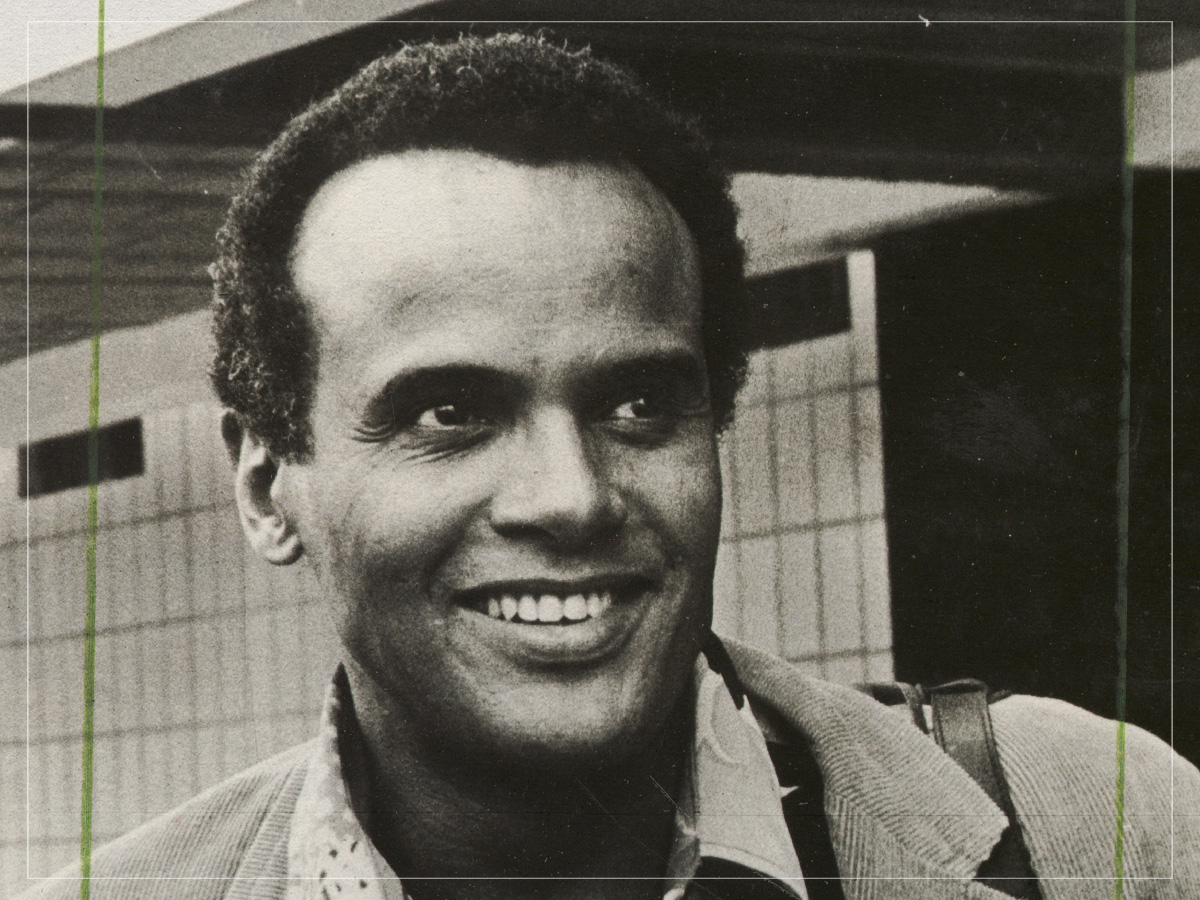
“He called me and introduced himself over the phone,” Belafonte recalled to Mojo in 2010. “He said, ‘You don’t know me, we’ve never met, but my name is Martin Luther King, Jr’… I was waiting for the joke, because everybody knew who he was. But it wasn’t a joke. He said, ‘I am calling you because I think you might be of service to something I very much believe in.’”
King had been arrested for his involvement in the Montgomery bus boycott the year prior, in 1955, and he subsequently began travelling to northern cities, increasing awareness of social segregation and oppression in the south, and acquiring donations for those impacted. Making his way to New York, he would meet Belafonte for the first time.
The two met in the basement of Adam Clayton Powell’s Abyssinian Baptist Church in Harlem, where Belafonte went to see King speak. “Afterwards, we adjourned to the basement and sat at a little card table where the ladies used to play bingo, and he told me his mission,” Belafonte recalled. “We talked for… well, it was supposed to be 30 minutes, but it turned into nearly five hours. He would not release me and… I would not be released.”
This meeting began years of friendship between the two men, and shared efforts of political activism. He joined King and his wife, Coretta Scott King, at the 1958 Youth March for Integrated Schools in Washington, DC, and in 1963, when King was arrested during the Birmingham campaign, Belafonte bailed him out of jail and raised $50,000 to release other protesters.
That same year, Belafonte helped organise the March on Washington, supporting King in conversations with Robert F Kennedy.
Forging his working and personal relationship with King up until his death in 1968, Belafonte would continue to champion King’s activism and adopt his teachings into the work of his own, and of his great influences, Belafonte wrote in his memoir, “Martin King was the second; he nourished my soul.”
