


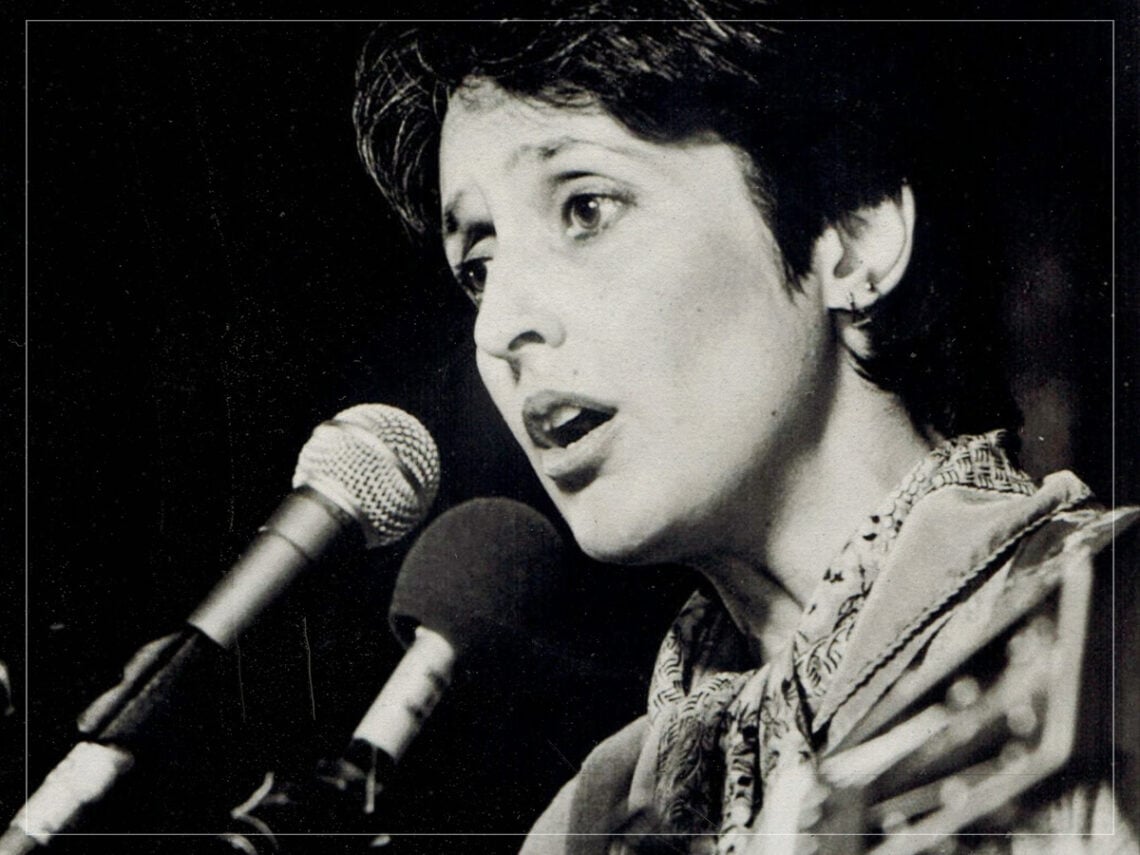
The artist who inspired Joan Baez to become a folk musician: “He was off limits”

Greenwich Village in the early 1960s, a time when seemingly everyone was on the brink of an album, anthology or the Great American Novel, when you wonder who was left to do the plumbing. It was a bohemian melee, but if anyone can be said to have been the driving force, then it may well have been Joan Baez.
The times were a-changing in more ways than one, and as Bob Dylan proclaims, Joan Baez (or Joaney as he calls her) was at the cutting edge of the movement: “Joaney was at the forefront of a new dynamic in American music. She had a record out that was circulating in the folk circles, I think it was just called Joan Baez and everybody was listening to it, me included, I listened to it a lot,” he declares in the 2009 documentary Joan Baez: How Sweet the Sound.
However, no matter how revolutionary and magnificent the scene may have been, pretty much everyone within it, in retrospect, looks back and identifies one key early facet that hamstrung its initial development. Joni Mitchell, for one, fiercely bemoaned the fact that authenticity was held as the most paramount tenet of the movement, and it meant that everyone was covering the same old dusty songs.
For her, it was Dylan’s classic ‘Positively Fourth Street’ that made her realise, “Oh my God, you can write about anything in songs.” But for Baez, that lightbulb had pinged a good few years earlier thanks to another folk radical who wasn’t prepared to be tethered to the dreary notion of authenticity uber alles.
She admits that she came to folk rather later, but then rapidly swooned for Harry Belafonte. She even met the star in “his mid-90s” with her family, and the late star still had an angelic appeal. “My son burst into tears,” she recalled of the meeting when speaking to Chicago Humanities. “He said, ‘I feel like I’ve been in the presence of a fucking prophet.’ And I said, ‘Well that’s because you have been’.”
She’d been raised on rhythm and blues, but when Belafonte came into her life, it felt as though she had encountered a ‘complete’ artist for the first time. “My mom brought home this album, Harry Belafonte, and we just stared at it. Nobody should look like that. He was so handsome. I don’t know if we played it for the first two [times] – we just stared at it,” she recalled.
She would later dedicate a plethora of covers to Belafonte, but for a while, he was more a secret pleasure amid the strict Greenwich Village scene. “In the early snooty folk days he was off limits because he was, you know, banging on drums and having a good time,” she recalled. In this guise, he was to some extent, a pioneer of folk blending with more rhythmic styles, the infamous Newport electrical moment to come. But initially, he simply encouraged Baez to follow a path into music and be uncompromising along the way.
He remained a hero for Baez throughout her life, the pair often meeting owing to their support of Martin Luther King Jr. She would conclude, “All the good ones are self-deprecating, you know? Really, really, really gifted. What can I say?”
Clearly, still modestly drawing the wrath of the White House in her 80s, she retains that spirit.
