


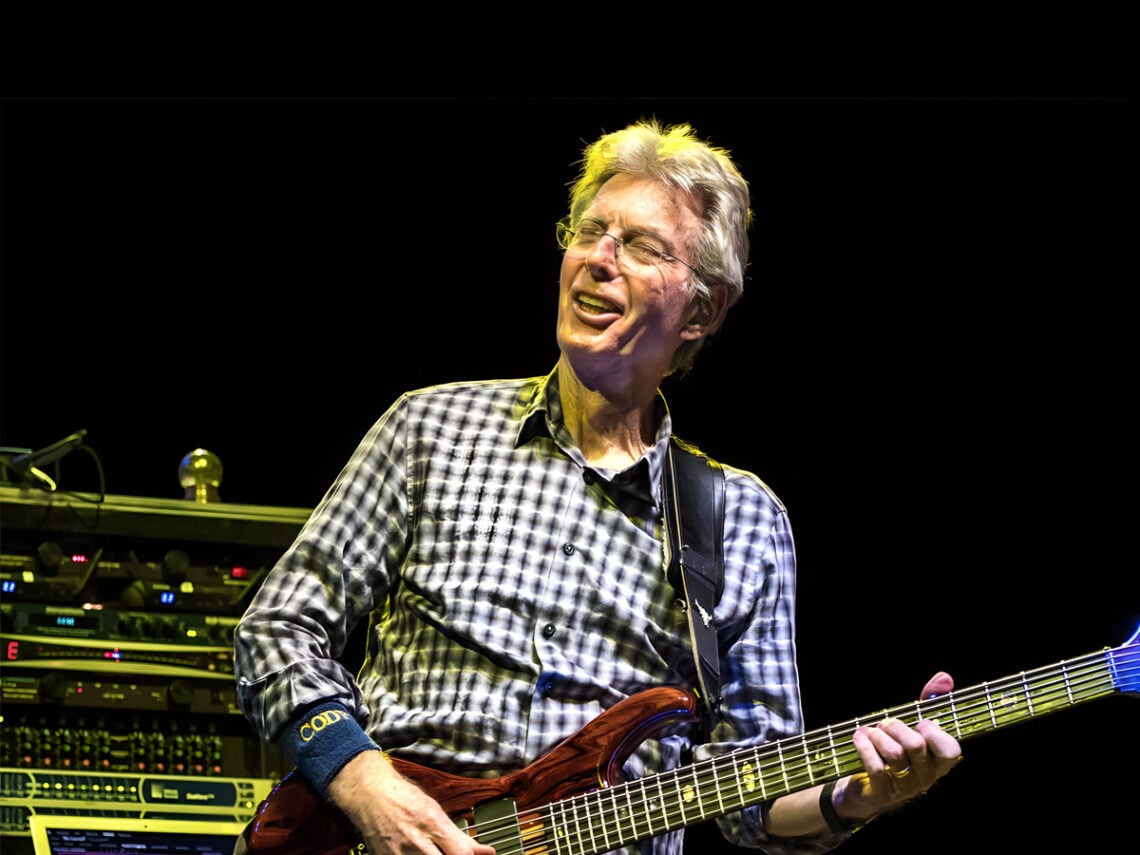
Grateful Grooves: Three isolated bass tracks that prove Phil Lesh was a genius

There has never been an easier time to find praise for the Grateful Dead bassist Phil Lesh. He passed away recently, and as people mourned the instrumentalist responsible for some of the funkiest and most exciting music ever written, they began sharing the reasons why they enjoy his artistry so much.
Providing the rhythm section for a band like the Grateful Dead is much more difficult than playing bass for any other musical outfit. What made the Grateful Dead so popular was their willingness to improvise when playing live on stage. The atmosphere in the room, the band, and the world influenced their performances to the point that nobody knew what a set was going to look like.
Lenny Kaye once praised the band for their album Live / Dead and their ability to use only written songs as a backbone for something much more meaningful and in the moment. “A list of song titles would mean very little in terms of what actually goes on inside the album,” he said, “Like the early Cream, the Dead in concert tends to use their regular material as a jumping-off point, as little frameworks that exist only for what can be built on top of them.”
Lesh had to be able to write compelling and fun basslines and adapt them in real time to provide a solid rhythm section for what was often an unknowable force. His talent exceeded so many others, not only in how he could perform in a studio but also on stage, and the loss of him is music’s loss.
Below are three songs that show Lesh’s isolated bass-playing ability, perfectly reflecting him as an instrumentalist. His bass playing, along with the guitars of Jerry Garcia and Bob Weir, often didn’t sound like individual instruments. They bubbled alongside one another, interweaving perfectly and providing the communitive nature of the Grateful Dead’s music, which already appealed to so many.
Phil Lesh’s three best basslines:
‘Bertha’
Because the Grateful Dead was such a unit, it can often be difficult to properly appreciate how talented each member was as an individual. This is why it’s worth listening to these isolated bass tracks: You get to truly understand Lesh’s ability as a musician and how much he could adapt his playing style depending on the environment in which he played.
On this version of ‘Bertha’, Lesh gives it a moment before he comes in with his bass guitar. When he does, the track is no doubt elevated, as he plays with such vigour and funk on the edge of his fingertips. Even on its own, it’s a track on which you could imagine people dancing. Then, when the track slows down, he can continue playing with that added element of funk but in a way that is in keeping with the shifting tone of the song.
‘China Cat Sunflower’
The same can be said for his performance on ‘China Cat Sunflower’. After a brief introduction, the power of Lesh’s bass comes through clearer than ever. He drives the song but doesn’t stray far from it, either. It’s a fine balance to strike, as his bass playing doesn’t just fade boringly into the background; it’s its own beast that is able to complement the track.
The band owes a lot to his ability, and it’s a beautiful thing to behold. When you watch videos of The Grateful Dead playing live, there is a unifying sway in the crowd, and the rhythm section was a crucial conductor for this. You hear it in every single second, even with just the bass playing; it’s an easy song to sway and be moved to.
‘I Know You Rider’
The understatement of the bassist in rock music is something that has to be addressed. The only way that bands could let loose and be as experimental as they were was because of bass players holding everything together. At the same time, though, when they held everything together, they had to do so in a way that remained engaging and didn’t ruin a song.
Lesh was perfect for this, and it can be heard in ‘I Know You Rider’. His ability is on display, and the entire band is glued together by such an enticing rhythm. If there had been any other bassist at the helm, the exciting facets of the whole of Grateful Dead wouldn’t have been given room to manoeuvre.
