


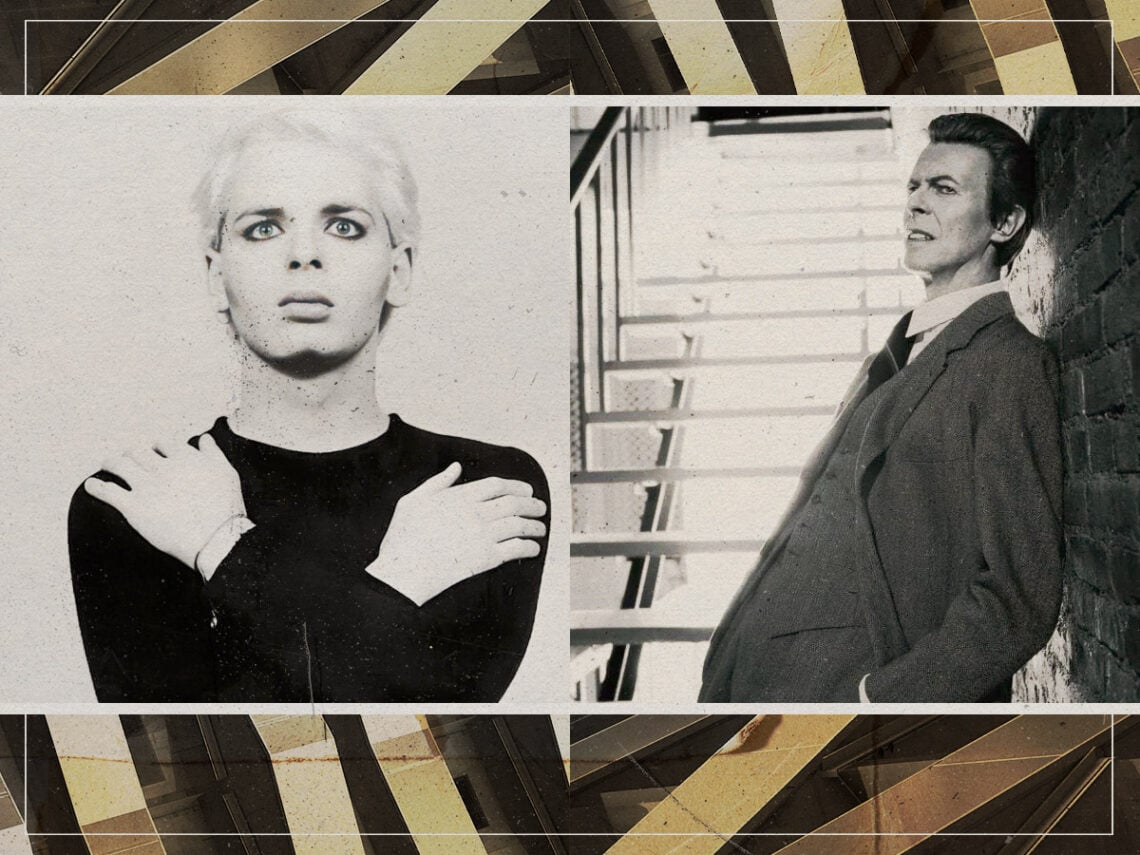
The Gary Numan classic that rubbed David Bowie up the wrong way: “Very disappointing”

Every decade between the end of World War II and the millennium bore a dramatic leap in pop cultural development. From the genesis of rock and roll in the gyrating knees of Elvis Presley to the pioneering electro-musings of Aphex Twin, in just four decades, we had covered acres of sonic ground.
Snug at the centre of this spectrum sits Gary Numan, an innovative artist who drew from various contemporary influences, including punk and krautrock, to yield a nuanced yet eminently saleable product.
Before breaking out as a solo artist with The Pleasure Principle in 1979, Numan fronted Tubeway Army, one of the earliest bands in what would become the crest of the synth-pop wave. The extent to which he and his collaborators elicited this dramatic shift in popular music has been debated over the years, with some deeming them true originators, while others minimise their contributions as mere popularisers.
Surprisingly, among Numan’s early detractors was David Bowie. Though the latter emerged from his glam-era triumph into similar territory as the former, he was cautious to place praise. In fact, his reticence to praise manifested in unremitting bitterness one evening during the former’s heyday, when he was due to rub shoulders with his teenage idol for the first time.
Just one look at Numan in the late 1970s was enough to divine his allegiance to the likes of Bowie and the besuited droids in Kraftwerk. Naturally, a shot at friendship with the Starman would have been a dream come true. However, the pair’s first interaction would become the stuff of nightmares for the young singer. “In the ’80s, I did the Kenny Everett Show, and Bowie was on, too,” Numan told Uncut in 2019, “I was a massive fan, I had seen him countless times; I had an embarrassing array of bootlegs. The chance to even be remotely near him was an honour.”

Continuing, Numan recalled a rarely-publicised side of Bowie. “He asked for me to be thrown out of the studio and then taken off the programme, which was very disappointing,” he said. At the time, Numan was very upset, but over the years, he came to understand that one moment cannot define someone and that it was less of a rejection of his art than a rejection of his artistic generation. “He was still a young man, with ups and downs in his own career, and I think he saw people like me as little upstarts,” he mused, before adding, “But later, he said some nice things about me, so that made the whole thing better!”
The ‘Cars’ singer returned to the subject in more detail in a 2021 conversation with the NME. “It bothered me at the time because I was a massive fan, and he’d been such a big part of my life for so many years, so I was pretty disappointed, and the fact I got taken off the show afterwards. But I later came to realise we all go through periods when we’re more fragile or paranoid and not sure how we fit into all of this.”
Asked whether he felt it could have been jealousy that led to Bowie’s actions, Numan added: “I think there was an element of that. I never got to meet him afterwards and ask, but my feeling was at that moment, I was the current big thing in weird make-up, and I don’t think that period was the best for him. I know many people that met him, and he was lovely, and I wish I’d met that version.”
Indeed, while Numan enjoyed stardom through the 1980s, Bowie’s career entered a slump following the success of 1983’s Let’s Dance, with the low watermark arriving in the form of Never Let Me Down in 1987, which was a bit of a letdown by all accounts. At this stage in his career, he must have found it difficult to come to terms with the feeling that his zenith had passed and a new generation had grasped the helm. Jealousy is one of the most unwelcome and unbecoming emotions, and while it may well have seasoned the cauldron that night on the Kenny Everett Video Show, the bulk of the broth was, in my opinion, composed of wrath.
Was Bob Dylan jealous when he heard The Beatles’ ‘Norwegian Wood (This Bird Has Flown)’? Of course not. He was mad. “What is this? It’s me, Bob. [John Lennon is] doing me! Even Sonny & Cher are doing me, but, fucking hell, I invented it,” he once vented in response to the Rubber Soul classic, feeling that The Beatles had ripped off his style.
Similarly, Bowie was somewhat peeved that Numan had taken his idea of merging catchy modern pop tones with the crashing sounds of German industry. ‘Are ‘Friends’ Electric?’ by Tubeway Army remains one of the finest songs of the early synth-pop era. It reached number one on the UK Singles Chart, buoyed by the sterling, if less commercially profitable, work by Bowie and Brian Eno on the critically acclaimed Berlin Trilogy.
While the public tapped their toes to ‘Are ‘Friends’ Electric?’, Bowie’s remained tight to the floor. After hearing the sonic similarities between this new number one and his work on the Berlin-era albums, especially Low and “Heroes”, he may also have noticed how Numan added quotation marks to ‘Friends’ to signify irony (can robots really be friends?), just as he had with the “Heroes” album title. However, given that “Heroes” was a nod to the Neu! song ‘Hero’, very few complaints could be lodged in this particular file.
Whatever the weather, Bowie wasn’t best pleased with this new hitmaker’s take on his style and responded in sonic form. In 1966, Bob Dylan released ‘4th Time Around’, complete with the line, “I never asked for your crutch / Now don’t ask for mine”, as a swipe at the eldest Beatle. In 1980, Bowie followed suit, targeting his song ‘Teenage Wildlife’ at Numan. The line, “A broken-nosed mogul are you /One of the new wave boys / Same old thing in brand new drag”, holds him in the crosshairs as a young copyist profiting from the legwork of his elders.
Over time, the Starman’s fury abated, supposedly when he saw the bigger picture of intergenerational admiration, flowing beautifully from the Dada movement through the Beat generation, Bob Dylan’s lyrics and the compositional prowess of Brian Wilson and George Martin, to Kraftwerk, Neu!, Brian Eno, David Bowie, Gary Numan and beyond. An artist should never fear feet on their back. There is no shame in being a bridge, only in spite and jealousy.
