


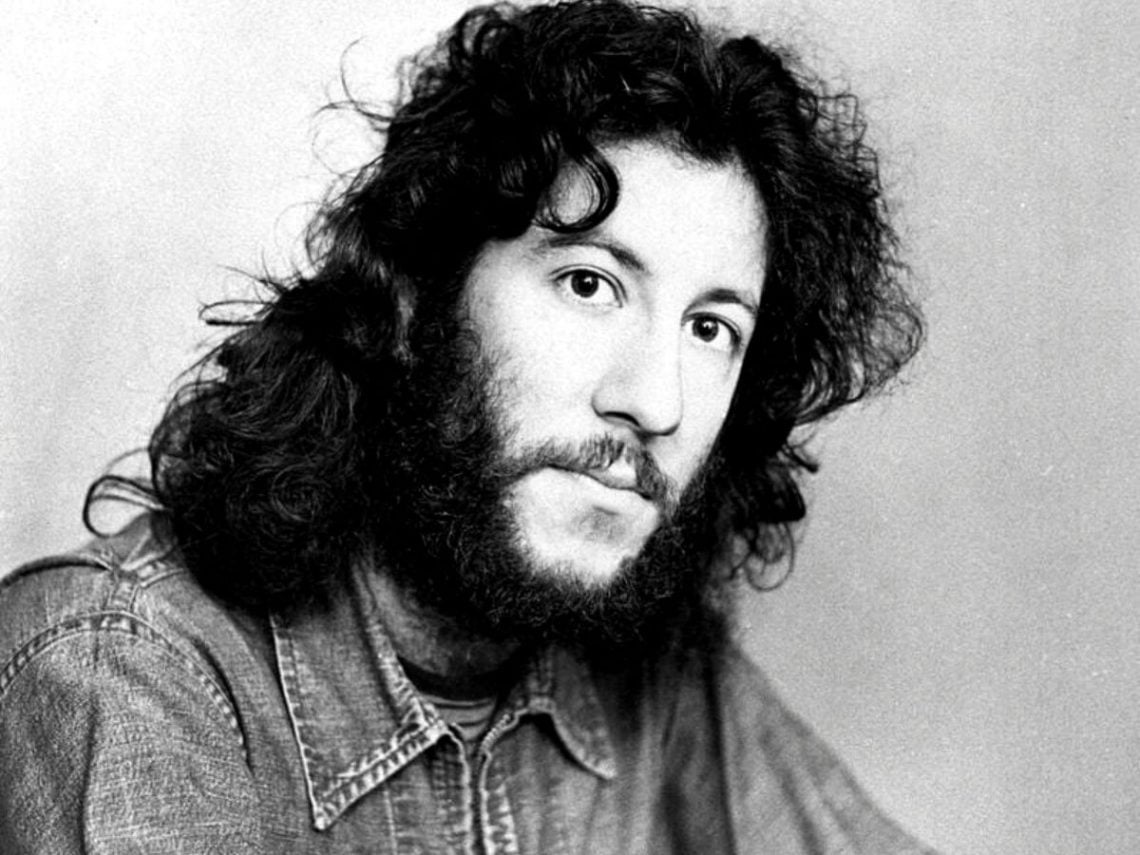
Fleetwood Mac – ‘Peter Green’s Fleetwood Mac’

The first time I listened to the debut album from legendary blues rock pioneers Fleetwood Mac, I absolutely hated it. The sound was muddy, the instruments were terribly balanced, and the vocals were nearly inaudible. This was the album that made Peter Green a certified guitar legend? This was the album that launched one of the greatest and most successful bands of all time? Surely something had to be wrong.
And something was wrong: the headphones I was listening through were broken. So I put aside the slanderous review that I had typed up, cleared my head, and put on Peter Green’s Fleetwood Mac a second time. What I heard was nothing short of a marvel. I would like to publically thank the GOGroove company for making my favourite pair of janky headphones, because without that bit of technical difficulty, I would have been terribly unfair to Peter Green’s Fleetwood Mac.
Filled to the brim with classic blues tracks and new original standards written by Green and fellow Fleetwood Mac guitarist/singer Jeremy Spencer, Peter Green’s Fleetwood Mac may very well be the finest package of British blues ever released. The bitter truth was that none of the British blues bands, whether it was The Yardbirds, The Animals, John Mayall and the Blues Breakers, or more lauded acts like The Rolling Stones or Cream, could hold a candle to the original American blues. If you’re a blues purist, British blues is a nice diversion for when you don’t want to listen to Howlin’ Wolf or Muddy Waters.
But Peter Green’s Fleetwood Mac is something else: it’s the missing link between Britain’s embrace of old-school blues and the evolution that it would make into hard rock. Fleetwood Mac had completely avoided the psychedelic diversions their peers had, opting to record their debut as a stripped down nearly-live document of pure musical chemistry. The DNA of Led Zeppelin and Ten Years After is all over Peter Green’s Fleetwood Mac, so much so that hard rock probably would have sounded very different had Fleetwood Mac never made it to the recording studio in the last months of 1967.
It’s easy to forget that swinging London was at its height when the Mac recorded their debut. Pop art, psychedelic drugs, and new advances in studio technology were all available to those who wanted them. Fleetwood Mac completely turned their back on the bright and colourful day-glo hippie attitude that was dominating the English music scene. For the Mac that appears on Peter Green’s Fleetwood Mac, Sgt. Pepper’s Lonely Hearts Club Band never happened. That would soon become ironic, considering Green’s acid-assisted mental breakdown and Spencer’s mescaline-fueled trip that eventually led him to the religious cult now known as The Family International. But none of that is anywhere to be found on Peter Green’s Fleetwood Mac.
Instead, there are 12 blues classics that show off Green’s inimitable voice (on both the guitar and the microphone), Spencer’s killer slide chops (and piano prowess), and the rock-solid thump of band namesakes John McVie and Mick Fleetwood. Kicking off with a rumbling version of Spencer’s ‘My Heart Beat Like a Hammer’, Peter Green’s Fleetwood Mac rolls along with 30 minutes of the best British blues that you’re sure to hear.
Subverting the usual “woman done me wrong” themes, Spencer and Green each put their most heartfelt foot forward on their first songs. ‘My Heart Beat Like a Hammer’ finds Spencer in apology mode, acknowledging his own hang-ups that have led his baby away. Green then steps in with ‘Merry Go Round’, a charming ode to fidelity and true love – although he does get in a kick against “evil women”. Green’s voice is so smooth and enthralling on ‘Merry Go Round’ that it’s possible to hear legions of young fans falling for him right there in the grooves of the vinyl.
Backing up their singer-songwriter skills, Green and Spencer also have an unmatched guitar interplay. Green’s playing is smooth and fluid, never over-complicating his solos or pushing beyond what each song needs. Spencer is more thorny and spikey, with his slide runs stabbing his arrangements with an extra sense of anger and discord.

Almost as a way of signaling their next move, Fleetwood Mac also lay down some killer rock and roll on Peter Green’s Fleetwood Mac. ‘Long Grey Mare’ features a boogie rhythm that could have come straight from Chuck Berry, while ‘Shake Your Moneymaker’ is more souped up than Elmore James ever could have imagined for his original. Sandwiched in between those tracks is Spencer’s haunted take on Robert Johnson’s ‘Hellhound on My Trail’, which he helms from the piano. It’s strange to hear someone other than Christine McVie play keyboards on a Fleetwood Mac song, but had Spencer stuck around, he would have made an excellent bluesy piano player for the band. They would have never reached the heights that they did with McVie, but that’s beside the point.
Each song gets its own unique sonic setting, despite most of the material being simple twelve-bar blues. ‘Looking For Somebody’ features Fleetwood discovering his love of tom-tom drums in real-time, while ‘No Place to Go’ lets Green reinterpret the iconic growl of Howlin’ Wolf. ‘My Baby’s Good to Me’ passes the spotlight over to Spencer and his angular slide runs, while ‘Cold Black Night’ features all four players staying firmly in the pocket, never rushing to the slow-burning conclusion.
‘I Loved Another Woman’ is a minor key samba that acts as a direct forerunner to Green’s legendary ‘Black Magic Woman’, released as a single just a month after Peter Green’s Fleetwood Mac. It might be easy to confuse ‘The World Keep on Turning’ with the similarly-titled ‘World Turning’ from the Lindsay Buckingham/Stevie Nicks era of the Mac, but once you hear Green’s unvarnished acoustic blues, you’ll never get the two confused again.
The album closes out with another James classic, ‘Got to Move’, with the looseness in the studio coming through loud and clear as Spencer goes full gonzo on the vocal while the rest of the band chug along with goofy delight. The version of Peter Green’s Fleetwood Mac currently available on streaming services includes quite a bit of studio chatter and banter, but instead of feeling like rough cuts, these elements add a ragged charm to the band’s material. You can truly hear the looseness and the fun that filtered into the early Fleetwood Mac experience.
It’s remarkable how quickly things went sideways for the original band. Guitarist Danny Kirwan was brought in shortly after the band recorded their sophomore effort, Mr. Wonderful. Kirwan helped add a dimension to the Mac beyond the blues, with he and Green composing the atmospheric duet ‘Albatross’ that gave the band a number one single in the UK. But by 1970, increasingly eratic behaviour led Green to quit Fleetwood Mac. Kirwan and Spencer attempted to salvage the band as new co-frontmen, but Spencer left in 1971. McVie’s wife, Christine Perfect, had contributed to all of the band’s previous albums besides Peter Green’s Fleetwood Mac. She was soon brought in as a keyboardist, singer, and songwriter, but a rotating cast of singer/guitarists made the early 1970s a confusing time for Fleetwood Mac.
It would all sort itself out in the end, and the commercial juggernaut that was the Buckingham/Nicks era of Fleetwood Mac even brought Peter Green out of semi-retirement to play guitar on the Tusk album cut ‘Brown Eyes’. But as it stands, Peter Green’s Fleetwood Mac remains the only studio album to capture the original lineup of Fleetwood Mac in all their bluesy glory. The album remains a high water mark for all of blues rock, acting as a testament to why Green is still considered one of the original British guitar gods. If you could only listen ot one album in order to understand why the blues was so intoxicating to young British men in the 1960s, Peter Green’s Fleetwood Mac is the best possible translation of that phenomenon.
