


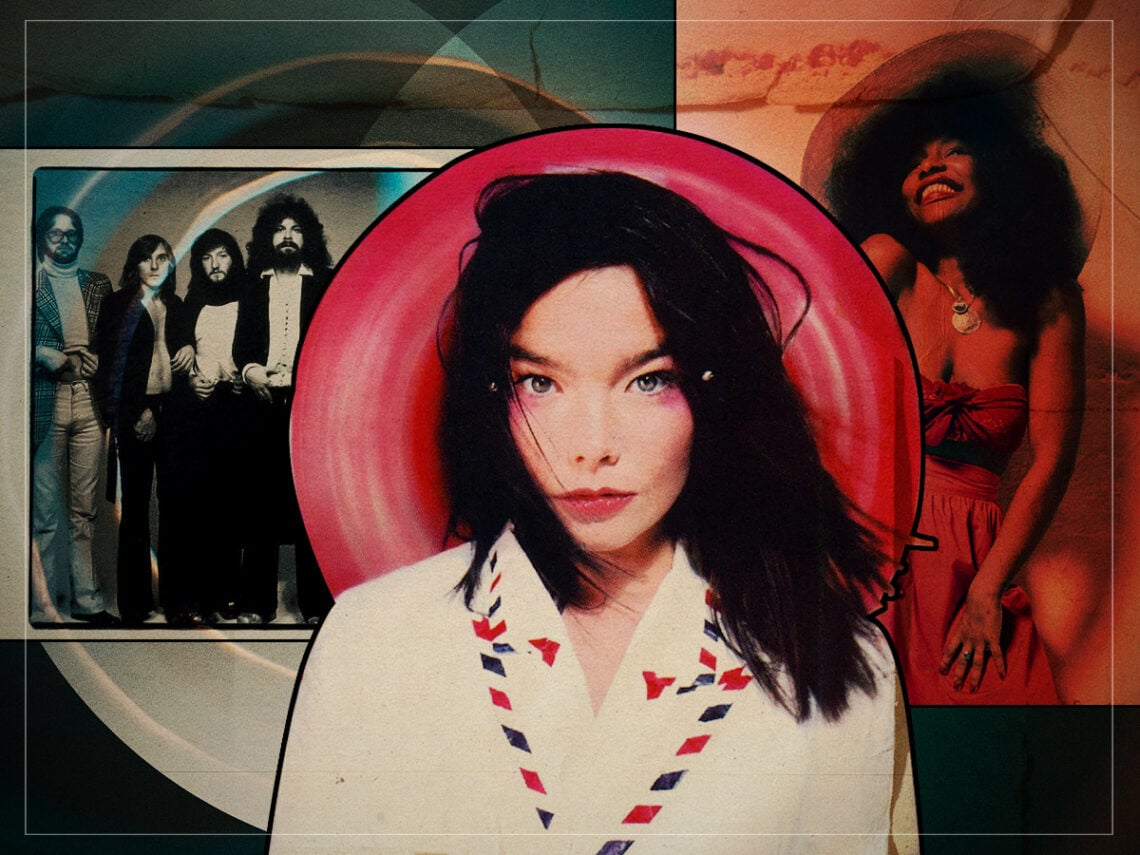
Five times artists sampled their own songs

When we think about sampling in music, our first thoughts often gravitate towards hip-hop and electronic music, but it’s far from just these two genres that utilise samples in their work. While some of the greatest sample-flippers of all time certainly fit under these genre umbrellas, it’s not just the DJ Shadows, Madlibs and J Dillas of the world who are finding innovative ways of repurposing pre-existing songs and turning them into exquisite works of their own.
While many might argue that the Avalanches’ plunderphonics high-point Since I Left You, is an electronic album due to its use of turntables and samplers, it’s just as much a psychedelic album as it is applicable to any other genre tag, and throughout the record, there are multiple callbacks to previously heard samples that cause the ears of the listener to prick up.
This is a large part of what sampling is all about: the opportunity to be referential to another older idea and to jog the memory of the listener. You want to make them ask, “Where have I heard that before?” and therefore dig to discover what it was that they thought they’d heard. Sampling is a great source of intrigue, and if you can push the audience to discover something new through the use of a sample, then you’ve ultimately used it effectively.
This makes you question why so few artists choose to sample their own material, and if the point of sampling is to get the listener intrigued by the origin of a small sound bite, then why not direct them towards your own older material? Below are five incredible examples of where an artist has sampled their own music and the inventive ways in which they’ve done it.
Five times artists sampled their own songs:
Chaka Khan – ‘La Flamme’

Disco and R&B icon Chaka Khan had a number of hits throughout her career, both as a solo artist and member of Rufus. Perhaps best known for ‘Ain’t Nobody’, there were also some tracks that were less prominent in the public eye that are well worth commending, such as ‘What Cha’ Gonna Do For Me’. However, what’s the best way of reminding audiences of the variety of standout tracks within your repertoire?
Khan took the bold idea of sampling both of the above tracks in her 1984 track ‘La Flamme’, and while it’s got that signature maximalist synth-funk sound that she was known for, it manages to sound distinct from the two sample sources by including short blasts of chopped-up vocals from them to add to the futuristic and freaky sound of the track. Sampling yourself once is a brave move, but sampling yourself twice is perhaps even more brazen.
10cc – ‘I’m Mandy Fly Me’

Manchester art-pop outfit 10cc are perhaps one of the most overlooked groups of their ilk to have emerged from the 1970s, and virtually every song from their first four studio albums is a miniature masterpiece in its own right. The band arguably perfected their craft on 1976’s How Dare You!, and lying among the tracklist of their fourth record was the Eric Stewart-penned multi-part epic ‘I’m Mandy Fly Me’.
In the song’s introduction, we hear what sounds like a gradually fading-in radio transmission of an older 10cc song; the track ‘Clockwork Creep’ from their second album, Sheet Music. While this isn’t the most inventive use of a sample ever employed by an artist, it is a symbol of the band’s playfulness and adds another memorable section to a song that rivals ‘Bohemian Rhapsody’ in terms of its ingenious way of fusing together multiple disparate sections to a song.
Electric Light Orchestra – ‘Evil Woman’

We all know that Jeff Lynne loved using the studio as a playground to test out his wild ideas. From the use of backmasking to hide secret messages in Electric Light Orchestra’s songs, to making rhythmic patterns out of morse code to further disguise easter eggs for fans to pick up on, Lynne was a mad genius when it came to studio experimentation.
On the band’s 1975 hit, ‘Evil Woman’, there’s a reversed sample of a string orchestra that plays towards the end of the instrumental bridge before the chorus returns, and you better believe it’s another case of Lynne disguising something else in one of his songs with the use of some studio trickery. If you’re listening to the track within the context of the album it features on, Face The Music, you’ll be able to hear the orchestral line played forwards on the following track, ‘Nightrider’. Presumably, ‘Nightrider’ was written first, and Lynne thought it might be a fun idea to tie the two tracks together by repurposing the string sample playing in opposite directions on the two songs.
Björk – ‘Desired Constellation’

Icelandic pop pioneer Björk has never suffered from a shortage of novel ideas in her career, and on her fifth studio album Medúlla, she restricted herself by making an album entirely out of the human voice. While a cappella music is nothing new, some of the techniques she employed to distort vocals and morph them into their own crystalline-sounding instruments were nothing short of mind-bending.
Because of this, you might be forgiven for not instantly recognising that what appears to be a synth playing throughout the song ‘Desired Constellation’ is actually a time-stretched and manipulated sample of Björk singing the opening line “I’m not sure what to do with it” from ‘Hidden Place’, the opening track from her previous album, Vespertine. It’s hard to pick out but believe me, it’s a sample, and the lengths she went to hide this in the song are frankly staggering.
Dirty Projectors – ‘Keep Your Name’

From 2006 to 2013, the ever-revolving cast of musicians in Dave Longstreth’s Dirty Projectors project included Amber Coffman, the sometimes vocalist and guitarist who also happened to be Longstreth’s romantic partner during this period. The two were very much in love, and the song ‘Impregnable Question’ from their 2012 album Swing Lo Magellan was a joyous folk tune that celebrated their mutual passion for one another.
Somewhere between the release of that song and the band’s self-titled 2017 album, things clearly went south in the relationship, and the lead single from this release was ‘Keep Your Name’; a bitter lamentation of Longstreth and Coffman’s relationship coming to an end. While Longstreth sings all parts of the song, he assumed both the identity of Coffman and sings from his own perspectives as they bicker about their clashing ideals and move in separate directions, but the sample of the line “we don’t see eye to eye” from what was a tender love song about their shared affection suddenly gets twisted into something heart-wrenching. It’s a marvellous distortion of the original context of the song, and perhaps the best use of a sample from a band’s own previous work.
