


‘Frontier Psychiatrist’: How the Avalanches perfected and ended the music video era

It took the Avalanches about 16 months to cobble together the “thousands of samples” put to use on their 2000 debut album Since I Left You, and another 16 years to finally bring their fans a follow-up (2016’s Wildflower). Needless to say, the world changed an awful lot in the interim; so much so, in fact, that the Avalanches’ first record—and one specific song and music video that came with it—now feels like the demarcation line between the old, tangible delivery systems of pop music and the new ephemeral ones.
‘Frontier Psychiatrist’ was the second single off Since I Left You, and was kinda sorta an actual hit; topping out at No. 18 on the UK singles chart in the late summer of 2000. The song, constructed almost entirely from a truckload of amazing shortcut samples culled from those months of vinyl crate-digging, was categorised loosely as “electronic dance music” or occasionally under the much tinier descriptor of “plunderphonics”—musical collages that incorporate identifiable sampled elements.
DJ Shadow (aka Joshua Davis) was the clear comparison point at the time, but he was a California kid brought up on hip-hop. The Avalanches—originally led by sound-sourcers Robbie Chater and Darren Seltmann—hailed from Melbourne, Australia, and had different vibes in mind.
“We were very conscious of the overall atmosphere we wanted to create,” Seltmann told Billboard magazine in 2001. “Our goal was to make an album that felt like it had come from another time and place. Light and airy productions from the ‘60s were the blueprint for us, with strings and percussion leading the way.”
Listening to ‘Frontier Psychiatrist’ for the first time, either on the Since I Left You CD or more likely a slow 128kbps download from Limewire, it was the comedic timing that grabbed you. The plucking and pasting of wildly random source material is masterfully reconstituted into a sort of manic but cohesive new whole. There’s a horn section from an Enoch Light Singers album; a drum beat from Harvey Mandel; a gunshot sound effect from The Good, the Bad, and the Ugly; a handful of bits from Sesame Street and other kids records; and quite a few lines lifted from the comedy albums of the a mid-century Canadian duo called Wayne and Schuster (including the ‘Frontier Psychiatrist!’ dialogue itself).
A few of these samples were credited at the time, and a few more were recognized as the song gained some wider attention, but the main reason we know almost all of them today is because of new technology that makes it far easier to unearth the source of just about any sample, even ones pulled from the dustiest of obscure vinyls purchased at the dustiest of Australian record shops. That’s one of the ways ‘Frontier Psychiatrist’ hovers on the border of the old world and new. It was created from the literal, physical stuff of the past; reconfigured using what tech the early 2000s had to offer; and can now be cracked open and “deconstructed” piece by piece with relative ease, as one Youtuber did in 2023, eliminating any last ounce of mystery from the composition.
The biggest reason why ‘Frontier Psychiatrist’ feels like a legitimate cultural touchstone, though, is the music video that was made for it in 2001. If you’ve seen it, you know. If you haven’t, I am envious of the experience that awaits you.
It’s very much worth noting that the ‘Frontier Psychiatrist’ video was directed by two guys—Tom Kuntz and Mike Maguire—who’d come from the world of advertising, and had spent the late ‘90s putting together cool promos for MTV. These were the fleeting days of the original music video era, pre-streaming, when a song and its video still shared an almost inseparable space in the Gen X and millennial mind. Videos nominated for awards at the 2001 MTV VMAs were ones many of us can still easily picture now: Missy Elliott’s ‘Get Ur Freak On’, Eminem’s ‘Stan’, Coldplay’s ‘Yellow’, Fatboy Slim’s ‘Weapon of Choice.’ There was a nomination for ‘Frontier Psychiatrist’, too, in the obscure category of ‘International Viewers Choice: MTV Australia.’ It didn’t win, even though it is arguably the greatest video ever made and the one that ended any further relevance of the form.
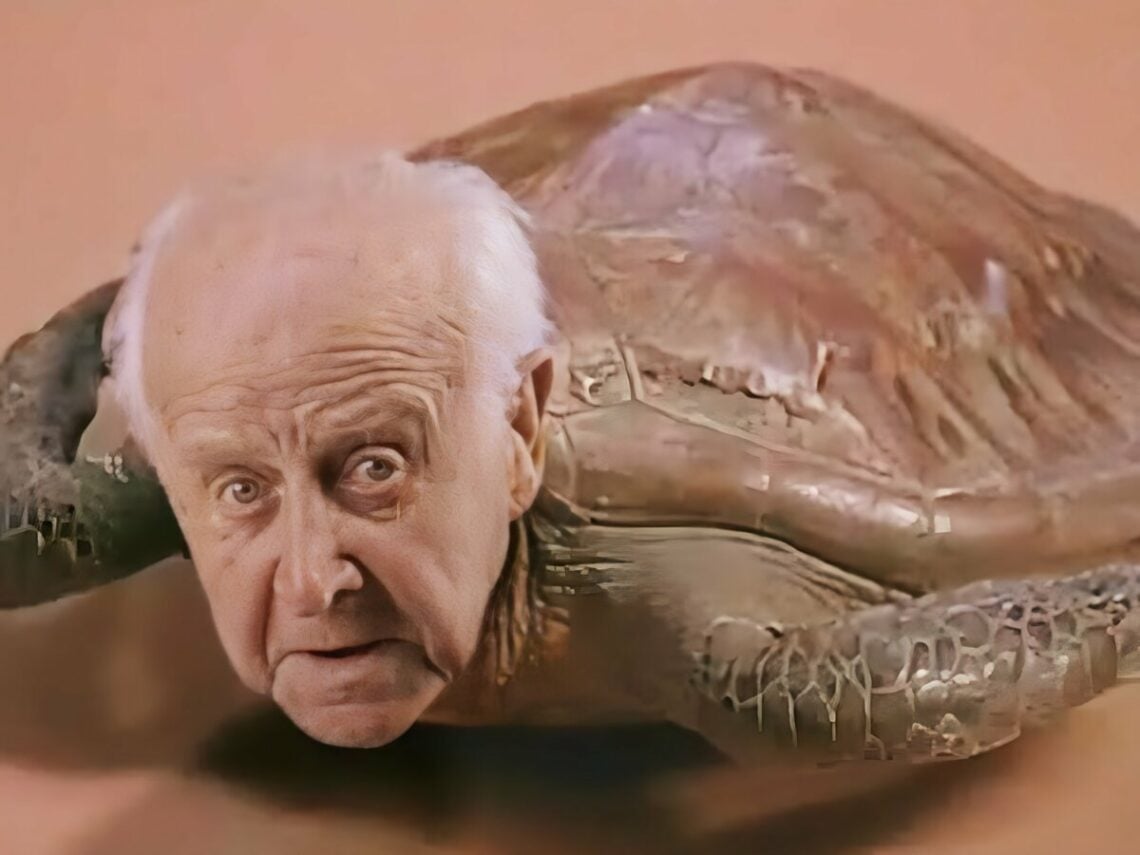
Long before any Youtubers or AI robots would have the means to deconstruct their work, the Avalanches and their video team made the prescient decision to deconstruct ‘Frontier Psychiatrist’ themselves, honing in on every single sample and representing it visually on screen—not in its original vinyl or cinematic form, but by using live, costumed performers to create re-interpretations of each captured sound. Cowboys fire the guns; German oompah men in lederhosen play the horns; a chorus of “ooooohs” is sung by ghosts in sheets.
The line “he’s crazy as a coconut” is lip-synced by a coconut. All dialogue is acted out, word for word, by a cast of about 50 people, all committed to the insane task at hand. And together, they turn a song that was born as a Frankenstein’s monster into a serious work of silly genius: “like John Waters directing an episode of Sesame Street,’ as Billboard described it. To put it another way, ‘Frontier Psychiatrist’ is simultaneously the hyper-visual MTV dream at its height, and also its last shout into the ether before the internet fully consumed it. “The video pretty much captures the essence of us,” a chuckling Darren Seltmann said at the time.
Sadly, when the Avalanches finally made a new record, nearly two decades later, Seltmann wasn’t involved. He’d left the project somewhere around 2006 to focus on making music with his wife, Australian singer/songwriter Sally Seltmann (sometimes known as New Buffalo), and to raise their child. The post-Seltmann Avalanches records have been enjoyable but certainly a product of the new world, lacking some of the atmosphere and dust of their debut. Fortunately, though, the invention of Youtube has allowed a new generation to see the glory of ‘Frontier Psychiatrist’—even if all its deeper turn-of-the-century meta implications are lost on them.
