


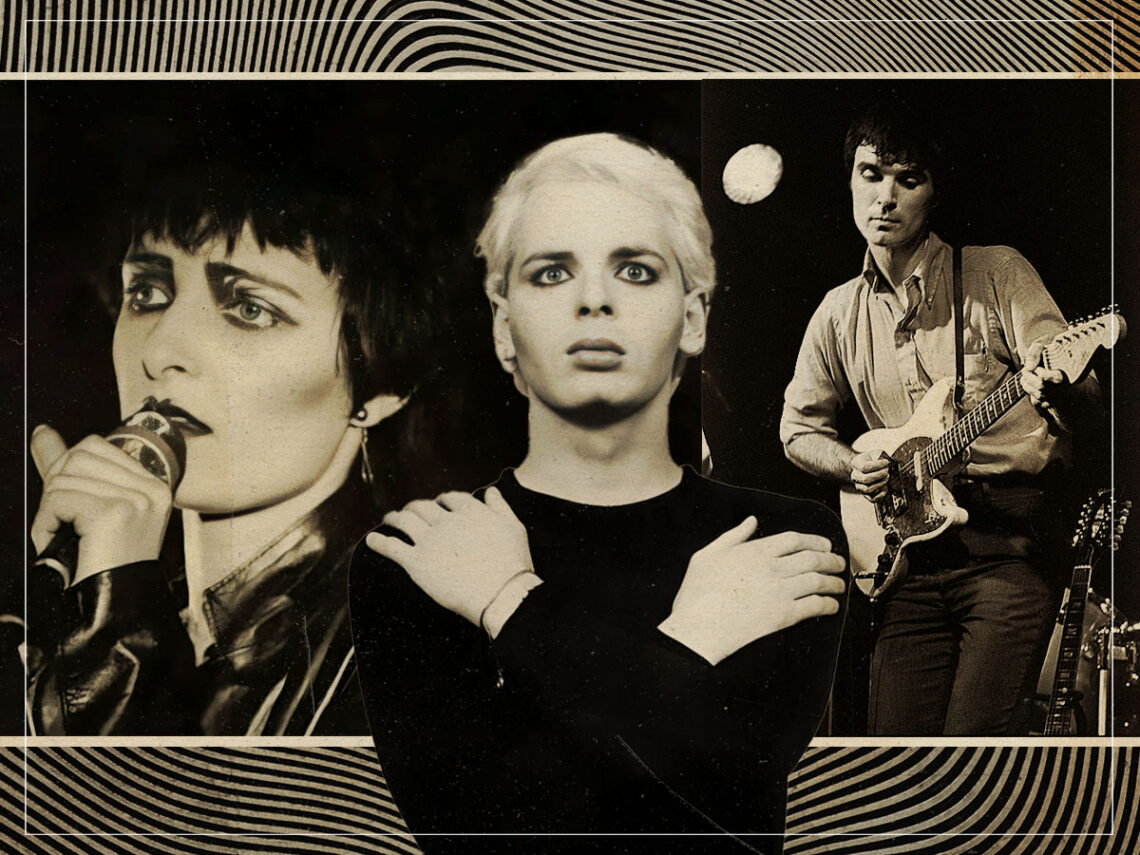
Five songs that heralded the end of the punk era

Punk is dead. Punk is alive. Punk is undead. Punk is… confusing is what it is. As a music genre that, by its very essence, kicks against the established order, defining what punk is at its eternal core is as much a losing battle as defining what it is today. One thing can be said for sure, though: there will never be a moment when punk is a more fierce cultural force than the summer of 1977.
That was the year of Never Mind The Bollocks and ‘White Riot’. Of ‘Sheena Is A Punk Rocker’ and ‘In the City’. Of Vivienne Westwood looks going mainstream. It was also, in the grand scheme of things, fairly brief. Sure, punk permeated modern culture so thoroughly that it’ll never truly go away, but the ‘punk era’ as it first rose to prominence wasn’t built to last.
Much like many of the people who embodied it, the era was built to shine bright and burn out quickly. However, if you looked closely, even at the time, you could see a number of songs that, in a certain light, were the death knell for punk as a music genre. Looked at in another, more interesting way, though, they were the sign that punk was evolving into something more.
So, let’s look at the five songs that signified the end of the ‘punk era’ and the dawn of a new wave of popular music. These tracks were either the last roar of a raging explosion, a beginning to a self-parodying paradigm, or a musical evolution, depending on who you ask.
Five songs that heralded the end of the punk era:
‘Frankie Teardrop’ – Suicide

We’ll begin with a song that actually predates the punk movement going mainstream from a band that predates the vast majority of punk bands. Suicide, Alan Vega and Martin Rev’s noise duo were always more of a performance art project than a band in the traditional sense. Nowhere is this more apparent than in ‘Frankie Teardrop’, the penultimate track of their debut album.
The story of a depressed 20-year-old factory worker driven to suicide that follows him into hell itself, the fact that this 10-minute, ambient nightmare of an art piece was released in 1976 is mind-boggling. That it was beloved by the likes of Elvis Costello and The Clash is something different. It’s a sign of the boundaries that punk music could push when driven beyond three-chord rock ‘n’ roll. It was born from the same spirit of punk, but it was decidedly post-punk before the Sex Pistols had even popularised the phrase.
‘Psycho Killer’ – Talking Heads

While the United Kingdom was embroiled in punk fever in 1977, our friends across the pond weren’t so up in arms about the whole thing. Mainly because the country is just too damn big for one style of music to reign over it the way it did in green and pleasant Blighty. This means that American punk has never had as defined a sound as British punk, as shown by the fact that this Talking Heads classic is as much a defining moment of American punk as ‘Blitzkrieg Bop’ and ‘Holiday in Cambodia’, yet the trio are decidedly different.
Coming out of the same CBGBs scene that gave the world The Ramones and Blondie, the Talking Heads were deconstructing punk music at the very same time it was being popularised. The music itself was made with the exact same focus on enthusiasm and drive over skill. However, rather than stomping through overdriven glam riffs, they were taking cues from funk, disco and soul music to make something as danceable as it was unique.
‘Hong Kong Garden’ – Siouxsie Sioux and The Banshees

Siouxsie Sioux was famous before she even thought about forming a band. Or perhaps that should be infamous. Perhaps staring down the barrel of forever being that underage girl that Bill Grundy was leering at during that TV interview in December 1976, Sioux put together The Banshees, and they started gigging together in 1977.
‘Hong Kong Garden’ is an incredible example of what you can learn by growing up with The Pistols. After all, if you really understand them, you understand that the absolute worst way you can live up to them is by studying exactly where on your lips you should thread that safety pin. Instead, you take their attitude towards self-presentation and music, and you make it your own. Siouxsie did that so effectively, even from her band’s debut single, that very few people can claim to have ever sounded quite like her. This was punk, realising it was punk, not to be punk.
‘Train in Vain’ – The Clash

Thus, we get to 1980. A moment where The Clash, one of the true icons of the summer of ’77, a band who were on the Anarchy in the UK tour with The Pistols and The Damned, came to a crossroads. Punk as a mainstream concern was three years old. Put simply, the band were running out of things to say over the same old three-chord ramalama. It was time to either get used to churning out the same old shit or push it forward. Three guesses what they did.
London Calling completely blew open what a punk band was capable of, even one as entrenched in the scene as The Clash. The biggest sign of their changing ways was ‘Train in Vain’, the third single from that astonishing record and the first public sign that this was a band committed to changing with the times. Its snappy, disco-inflected pop is more radical than a hundred ‘Complete Control’ rewrites. And it’s a dreaded display of technical proficiency to boot.
‘Cars’ – Gary Numan

We end with the point that the punk era died, and the era of post-punk truly began. The moment that everything influenced by punk began to dominate not just the tastemakers, not even just the charts at home, but become a worldwide sensation. Gary Numan was such a punk fanboy that he actually auditioned to play guitar in The Jam. However, after coming to prominence in Tubeway Army, it soon became clear that whatever he was born to do, he was born to do it alone.
‘Cars’, his debut solo single, is the synthesis of everything that came before. It has the simplicity and self-expression of punk and literally nothing else. Because for your music to be punk, that’s basically all it needs. No screaming, no power chords, definitely no gobbing (gross), just a powerful, creative voice and the will to stand by it. By doing just that, Numan had the first post-punk hit to reach the Billboard Hot 100 and arguably defined the sound of the oncoming decade. All thanks to punk dying. Not bad.

Never Miss A Beat
The Far Out Punk Newsletter
All the latest Punk content from the independent voice of culture.
Straight to your inbox.