


The five movies Stanley Kubrick would take to a desert island: “What would they be?”

Stanley Kubrick lived and breathed cinema such that he died in the middle of finishing up what would become his final film, Eyes Wide Shut.
He might not have been as prolific as someone like Steven Spielberg, but he knew that good art took time, and he let his work consume him, spending years planning out his movies, with his dedication to his unrealised Napoleon film the ultimate proof.
He studied the historical figure extensively, wanting to make the kind of epic film that would go down in history as the definitive encapsulation of man’s involvement in war, but when that fell through, he pummeled all of that energy into the beautiful Barry Lyndon, crafting a world so opulent and magnificent to look at, with the rise and fall of the titular character unfolding over three carefully composed hours.
Whether he was espousing anti-war sentiments or examining the inner workings of the human mind and its propensity for violence and betrayal, Kubrick never faltered in his vision, which unsurprisingly allowed him to go down as one of the all-time greats, which makes it fascinating to imagine what movies someone as talented as him liked to watch in their down-time and which directors he found to be overrated or underrated. Kubrick expressed so many opinions on cinema over the years that it’s hard to identify which movies he considered the most important, but following his passing, close friends and business associates had opinions about the titles that meant the most to him.
In one interview with Sight and Sound, Anthony Frewin, who worked closely as an assistant to the director for many years, selected several movies which he was convinced the filmmaker would take to a desert island if given the chance. So, while Kubrick didn’t technically pick these movies, there’s enough evidence to suggest that he would want to have easy access to these select films if he were stranded on an island.
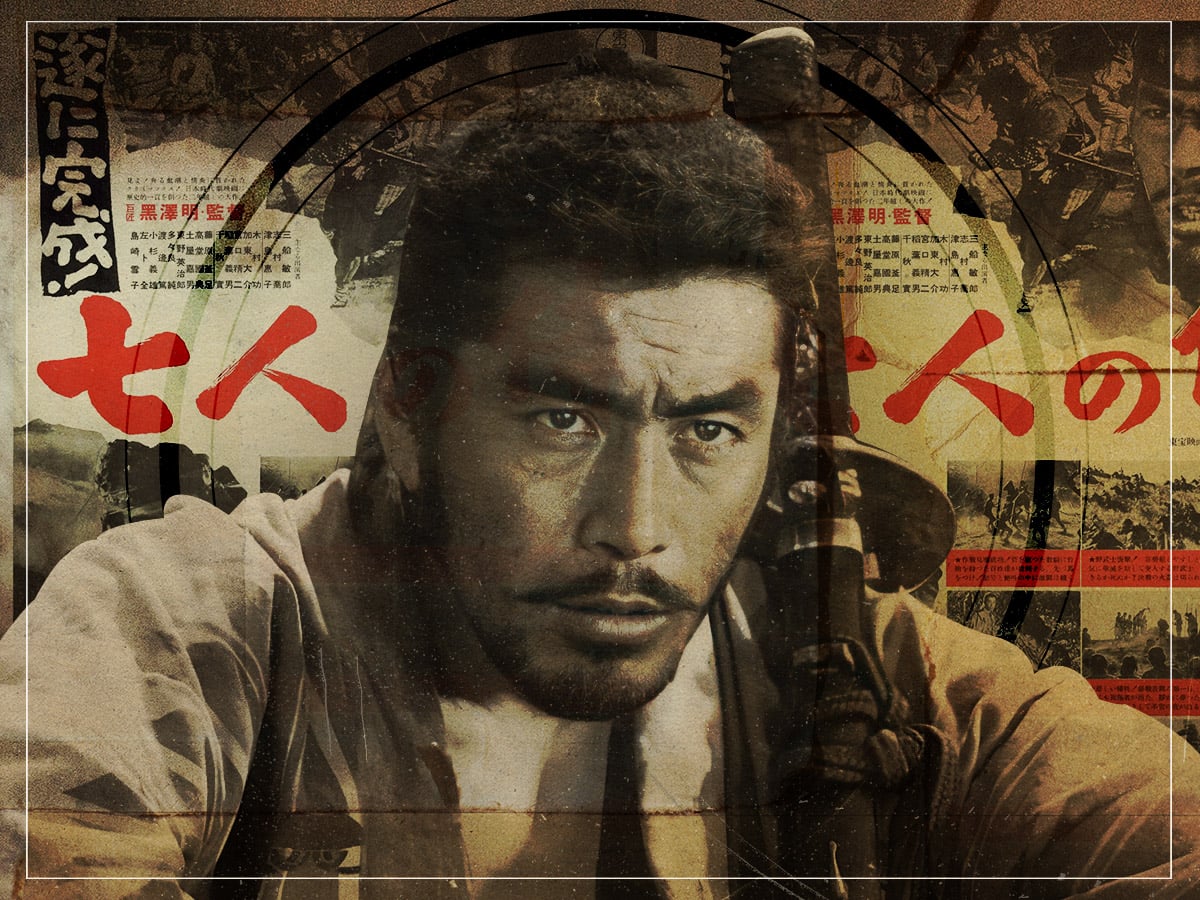
Frewin is certain that Kubrick wouldn’t be interested in taking any old Hollywood fodder with him, claiming, “Stanley was generally very disappointed with commercial cinema”, so instead, he looked towards foreign masters, citing Akira Kurosawa as one of his favourites.
“Stanley thought Kurosawa was one of the great film directors and followed him closely. In fact, I cannot think of any other director he spoke so consistently and admiringly about,” he explained. In particular, he loved 1954’s Seven Samurai, easily the Japanese director’s most well-known, a three-and-a-half-hour film that is widely hailed as a masterpiece, and it significantly inspired Kubrick’s own approach to making long movies unfaltering in their pacing, as well as Rashomon and Throne of Blood, the latter inspired by William Shakespeare’s Macbeth.
Kurosawa knew how to tell a profound story with depth, while also maintaining an epic and deeply cinematic backdrop, and also admired Kubrick, but tragically died before the latter had a chance to reply to his fan letter, which had apparently “meant more to him than any Oscar would”. He was devastated that he hadn’t thought of the perfect reply in time.
Besides his beloved Kurosawa movies, Frewin thinks that Kubrick would have also picked The Battle of Algiers, directed by Gillo Pontecorvo, a film with a bold anti-war narrative explored with a realistic style of shooting, often incorporating newsreels which give the effect of watching a documentary, and it’s the power that this achieves that makes it such a profound cinematic experience.
Frewin’s other pick was Danton, the 1983 biopic which saw Gérard Depardieu play one of the leaders of the French Revolution, Georges Danton; clearly, Kubrick was obsessed with movies about war and the people who come to have a prominent role within them.
“Stanley raved (or what passed as raving with him!) about The Battle of Algiers, and [Andrzej] Wajda’s Danton, over a lengthy period of time,” Frewin claimed. According to him, the director “told me that I couldn’t really understand what cinema was capable of without seeing The Battle of Algiers” and that “he was still enthusing about it prior to his death”, while on the other hand, he thought Danton was “very nearly beyond criticism”.
That’s high praise from a cinematic master, who certainly wouldn’t have complained if these epic historical films were all he had for company on an abandoned island.
