


Five movies hailed as masterpieces that are actually terrible

There’s nothing more awkward than someone who sings the praises of a movie that you absolutely despise, whether it be a five-star rating on Letterboxd from one of your friends or another man who proudly declares that Pulp Fiction is the best film of all time, despite having never seen anything else.
Everyone is entitled to their taste, of course, but some films have fan bases so deep that you feel afraid to question their worth. Is The Wolf of Wall Street really that good? Or is it just an indulgent fantasy about excessive wealth and power? I digress.
Some films are so hugely popular that if you dare utter a word against them, the ghost of Hollywood will appear before you and burn you and your DVD collection. But, dare I say it, maybe these movies are actually massively overrated? And actually, disliked by more people than we’d imagine?
So, before I confront these mysterious powers myself, here are five movies hailed as masterpieces that I think are actually quite terrible.
Five hugely overrated classic movies:
Blow Up (Michelangelo Antonioni, 1966)
To set the record straight, I am a huge fan of Michelangelo Antonioni; The Passenger and La Notte are both singular pieces of work that I think about often, capturing the loneliness of faded love and the emptiness of not opening yourself up to it. However, his 1966 film Blow Up is not one that I’d like to think of, unless I’m rewriting my memories of first watching it. That night, it had been a toss-up between watching this or Pitch Perfect 2, and I honestly think that would’ve been more intellectually stimulating.
Blow Up follows a photographer in ‘60s London who accidentally captures a death in one of his photographs, finding his life a little shaken by the discovery. While there is no one more enamoured with slow cinema than I am, the slowness of this film offered nothing beneath the surface to pick apart, with more superficial fluff than substance.
While it explores the implications of voyeurism and the relationships between the artist and their work, I found it to be a hollow and convoluted exploration of these themes, feeling more like a photograph than it did a film. Perhaps I would find more meaning within it after a rewatch, but my memories of this film are as meaningless as the lifeless photographs taken in the film, and nothing more than that.
Inception (Christopher Nolan, 2010)
Before I get bullied off the internet for expressing an impure about Christopher Nolan, I would like to preface this controversial statement by saying that I am not the target audience for his work, even though I’m sure there are enjoyable factors to be found in his films from boys who like cool gadgets and cars that go boom etc. The hype around Inception was so spectacularly huge that I expected something truly earth-shattering and came away from it going… oh? That was it?
Many critics have discussed the lack of emotional depth in Nolan’s characters, and ultimately, this is where his work always falls short for me (especially his writing about women in general, who are always wives or sex objects). Inception follows a thief who specialises in infiltrating people’s dreams, stealing and selling information about their personal lives to their enemies.
While the concept is certainly interesting and daring, the stakes felt so low because I simply didn’t know enough about any of the characters to care about the mission’s consequences. If Cobb had been trapped in this dream world forever, I wouldn’t have felt a thing because he was a hollow person with no real personality. Nolan attempted to add depth to his career through the whole ‘dead wife’ narrative, which again felt empty and vapid given that we know nothing about this woman and have very limited appearances in the film.
Nolan was perhaps going for a haunted quality to the character and an unspoken emotional trauma to make us realise that this mission is actually quite personal, choosing to dwell in the logistics and action of the world. But the focus on these elements only began to feel repetitive and boring to me as the same challenge was repeated over and over again, with a tedious score being drip-fed into us in an attempt to emotionally manipulate us into thinking that something is happening. Sorry, Nolan, but I’ve played Animal Crossing games that felt more stressful than this.
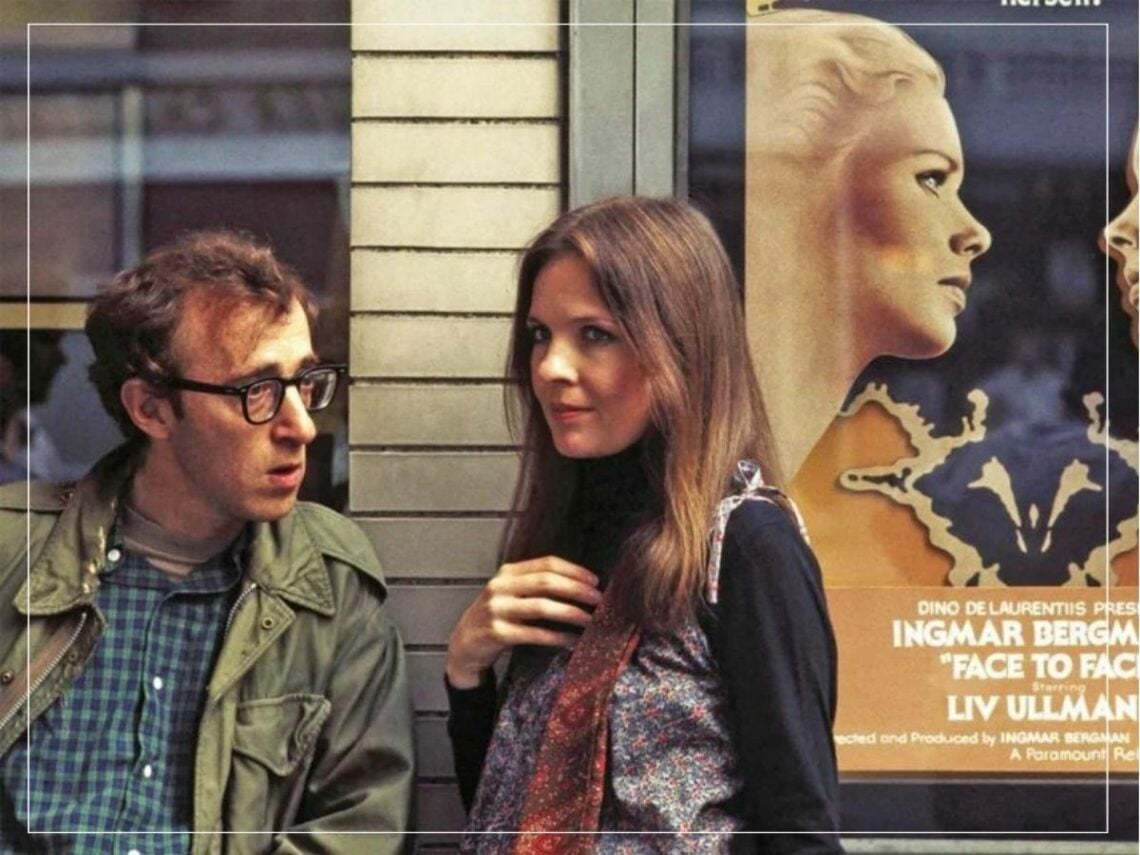
Annie Hall (Woody Allen, 1977)
Annie Hall is one of Woody Allen’s most well-known films, and for what? It’s a baffling piece of trash that makes me want to recoil into my skin, which is probably the director’s effect on most people after his recent exploits.
The film is allegedly a comedy about a comedian who falls in love with Annie Hall, described as ‘ditsy’. We all know that when a man writes a woman as being ‘ditsy’, it really means easy to control, in similar territory to the ‘manic pixie dream girl’. Annie Hall is maybe one of the earliest manic pixie dream girls, a woman who was written as being quirky and vivacious to help inspire cynical men and find joy in their lives.
Woody Allen has impressively managed to write himself into every film he’s ever made, and here he takes on the role of the insufferable, egotistical, moody lover boy. Annie Hall spends its entire runtime indulging Allen’s every creative whim—and none of them work. It’s narratively confused and convoluted, and the fact that it’s hailed as a masterpiece genuinely baffles me. There’s one mildly entertaining moment where subtitles reveal the hidden meanings behind a conversation and a brief appearance by Jeff Goldblum, but beyond that, I couldn’t stand it. Allen’s sense of entitlement and superiority is unsettling, as he seemingly equates self-deprecating humour and reading one book by Albert Camus with being more clever than everyone else. Newsflash: you’re just a creep!
2046 (Wong Kar-wai, 2004)
I don’t think this film is terrible, but I certainly don’t understand why it’s held in such high regard and reverence. While I think Wong Kar-wai’s work is tonally interesting, its poetic quality doesn’t resonate with me.
2046 serves as a loose follow-up to In The Mood for Love, Wong Kar-wai’s most renowned film. I was curious to see how he expanded on its themes within a futuristic narrative, but I left the cinema feeling underwhelmed and unfulfilled. The story centres on a writer mourning a lost love, weaving between two narratives as he yearns for someone who remains out of reach. The film feels more like a meditative collection of images than a cohesive narrative—a quality that can be hit or miss depending on the viewer. Personally, as someone who thrives on dialogue and lengthy conversations, 2046 didn’t connect with me. It’s sparse on words, with silence often taking precedence over the storytelling I usually enjoy.
However, I can completely understand why some people would love this film, as it uses the visual language of film in a new way to convey emotion without speaking it out loud, creaying a cunulative effect through the layering of images and music. But sadly, this style of filmmaking doesn’t click with me and it instead comes across as a very beautiful montage that doesn’t help me feel the weight of the characters unspoken pining.
Mishima: A Life in Four Chapters (Paul Schrader, 1985)
Oh boy, do I have beef with Paul Schrader. One night earlier this year, I dragged myself to the BFI despite having a monstrous cold because sometimes, there is nothing more healing than a good film. But in this particular case, I couldn’t have been more wrong, and I’m convinced that the experience of watching Mishima: A Life in Four Chapters only worsened my sickness.
The film is a fictional retelling of Yukio MIshima’s life (a famous Japanese author) as told through the dramatisation of four of his novels. Unsurprisingly, there are four parts to the story, which are distinguished through the use of different colours, with one section being entirely washed in pink, orange, green and black and white.
However, it felt like the kind of film the worst person you’ve ever met at film school would make—then proceed to lecture everyone about how profound the colour palette is, shoving gels in front of lights in a forced attempt to create depth and meaning. The narrative came across as confused, disjointed, and obnoxious. While Schrader attempts to tie together four unrelated stories, each one is so fleeting and surrealistic that there’s no time to feel anything before being abruptly pushed into the next. There’s nothing to latch onto, no sense of connection to the characters or even to the man the biopic is supposedly about. By the end, I’d learned more about Schrader’s DOP than anything else—and that when you’re already feeling unwell, a Schrader film will only make you feel worse.
