


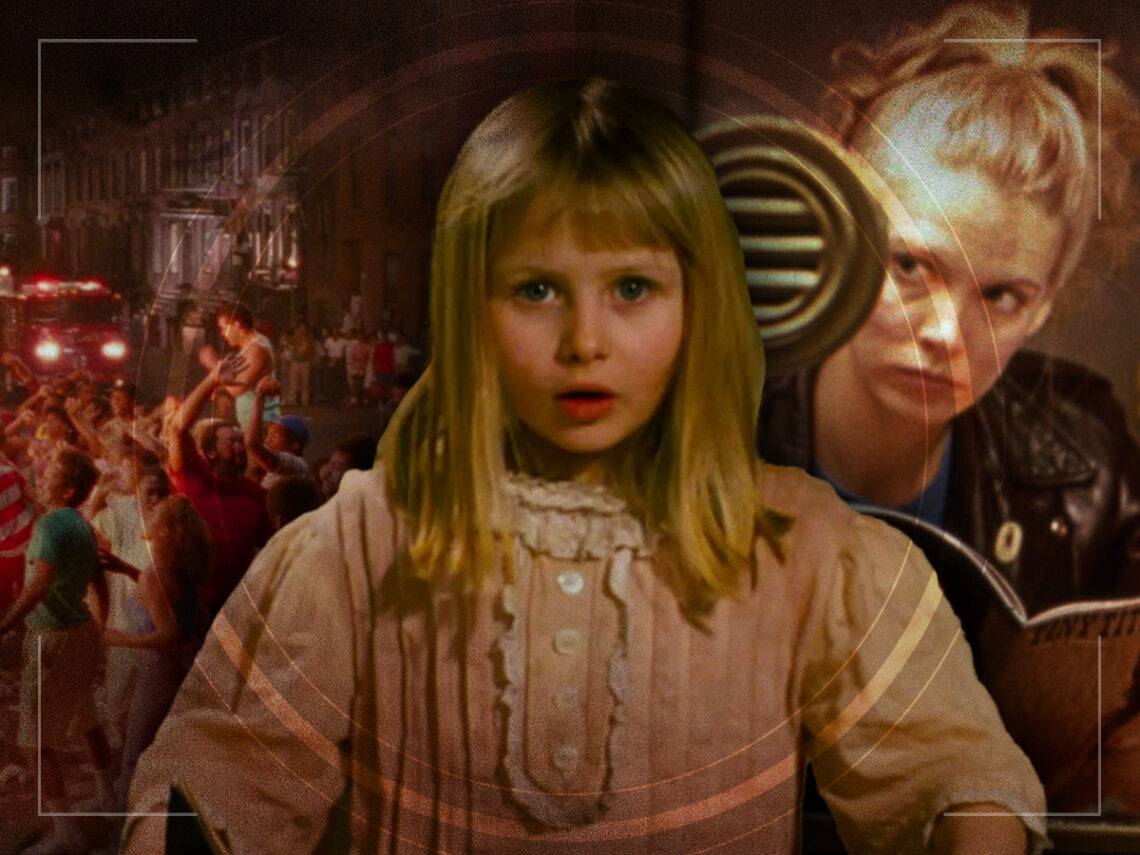
Five movies from the 1980s that were way ahead of their time

The phrase ‘ahead of its time’ is often thrown around like confetti in the world of cinema, with some applying this label to commercial directors or people who frankly, don’t deserve the title. It seems as though every good idea stemmed from another, with many filmmakers taking inspiration from those who came before them and then being lauded as revolutionaries, all while the ones who did it first are forgotten in the ensuing barrage of accolades for the former.
During the 1980s, in particular, directors like Ridley Scott and Steven Spielberg were praised for being ‘ahead of their time’, with the effects in Alien and timelessness of ET the Extra-Terrestrial being highlighted as works that would stick out in cinematic history for doing something that had never been done before.
While this might be true in some ways, you can also find traces of these stories in other films, where some directors were carving out an entirely new path and making leaps that others could barely dream of doing.
And so, without further ado, here are five movies from the ’80s that were completely and actually ahead of their time.
Five 1980s movies that were ahead of their time:
‘Possession’ – Andrzej Żuławski (1981)

The subway tunnel scene from Possession might go down in history as one of the most disturbing and disgusting performances of all time, toe-to-toe with Gaspar Noé’s Irreversible, with Isabelle Adjani’s Anna flinging a bag of groceries against the wall and screaming while the eggs smash and pool together with her own blood and vomit. Every fibre in your body will be urging you to look away, but for some reason, it is nearly impossible to tear your eyes from the monstrous manifestations of her failing marriage.
There has never been a horror movie quite like Possession, with Żuławski creating a nightmarish world in which the disintegration of love is portrayed in the most visceral and horrific way possible. Adjani and Sam Neill are reduced to their most animalistic impulses as they attack your senses through their exhausting arguments and screaming matches. The former becomes completely feral as she is torn between the lure of a nuclear family and the pull of something more enticing, which manifests in the form of a tentacled creature. It remains as one of the more creative retellings of a director’s divorce on screen, and definitely as one of the most unsettling horrors of all time. Watch it if your stomach can handle it.
‘Dirty Dancing’ – Emile Ardolino (1987)

It is still absolutely criminal to me that most rom-coms are viewed as holding no substance, despite the fact that Dirty Dancing is one of the most progressive films of the decade through its excellent exploration of sexuality, gender norms, the limitations of class and reproductive rights. The film follows a young woman, Baby (later known as Frances), who visits a summer resort with her parents, only to be swept off her feet after being paired with a dancer named Johnny after his partner has to undergo an illegal abortion.
It is wise, nuanced and deeply thoughtful, with Ardolino turning our pre-conceived ideas about the chick-flick on its head by using the central romance as a way to explore weighty ideas that relate to much wider social issues. As well as this, there were almost no films from this decade that featured a woman having an abortion as part of the central plot, something that the producers were heavily discouraged from endorsing and lost out on sponsors for doing so. It is not only one of the greatest summer romances, but one of the greatest stories about a woman who finds herself while confronting the harsh realities of an unfair world.
‘Variety'<em> </em>- Bette Gordon (1983)

Female desire has always been a taboo subject onscreen, but especially during the ‘80s in which it was barely ever glimpsed through a woman’s perspective and instead painted through the perverse eyes of male directors who didn’t consider women people at all. However, there were a few films from this decade that started to shift this narrative, with Variety being one of the more complex ones to tackle it.
The plot follows a woman called Christine who finds a job at a porn theatre in New York and slowly becomes obsessed with pornography, starting to abandon the relationships that have limited her true sexual impulses and embracing her sexuality. It is a deeply inquisitive and refreshing film that looks at what happens when women free themselves from the male gaze and unsettle the status quo to challenge traditional ideas about desire. Christine slowly frees herself from the patriarchal chains that have limited her freedom of expression and is almost unbothered by those who are uncomfortable with this. The idea of the voyeur is subverted as she flips the script and starts to watch them with newfound curiosity.
‘Alice’ – Jan Švankmajer (1988)

Despite the many adaptations of Alice and Wonderland, Alice is by far my favourite. Directed by the surrealist Czech director and animator Jan Švankmajer, the story loosely follows the familiar story of a young girl who falls down something that vaguely resembles a rabbit hole (a wooden desk) and descends into an upside-down world plagued by talking rabbits, sadistic queens and biscuits with transformative powers. While it is similar to the classic tale by Lewis Carroll, Švankmajer executes a new take that raises it to new extremes of madness and unpredictability, which have always been a part of the subtext.
The director combines both live-action and stop-motion to heighten the feelings of surrealism and a dream gone wrong, with inanimate objects coming to life in an exaggerated version of reality in which dissonance is created through real-world objects used in fantastical ways. Mundane details in everyday life are transformed through the eyes of a child, forcing us to confront the binaries of the adult world and the endless possibilities of a lost perspective.
‘Do The Right Thing’ – Spike Lee (1989)

It would be hard to talk about groundbreaking films from the ‘80s without mentioning Do The Right Thing. Spike Lee’s formative masterpiece cracked open the film industry and forever changed the language of cinema. Set on the hottest day of the summer in Brooklyn, the film charts the racial tensions in one neighbourhood as tempers and temperatures rise following the owner of a popular pizzeria refusing to add Black people to his wall of fame.
The film then evolves into a boiling pot that exposes all the biases and injustices in the neighbourhood, with Lee commenting on the normalised racism that is rife in the United States and the weight of the country’s violent history. Nothing has quite come close to it, with Lee looking at what it takes to do the right thing, those who are unwilling to change, and those who struggle to survive the heat.
