


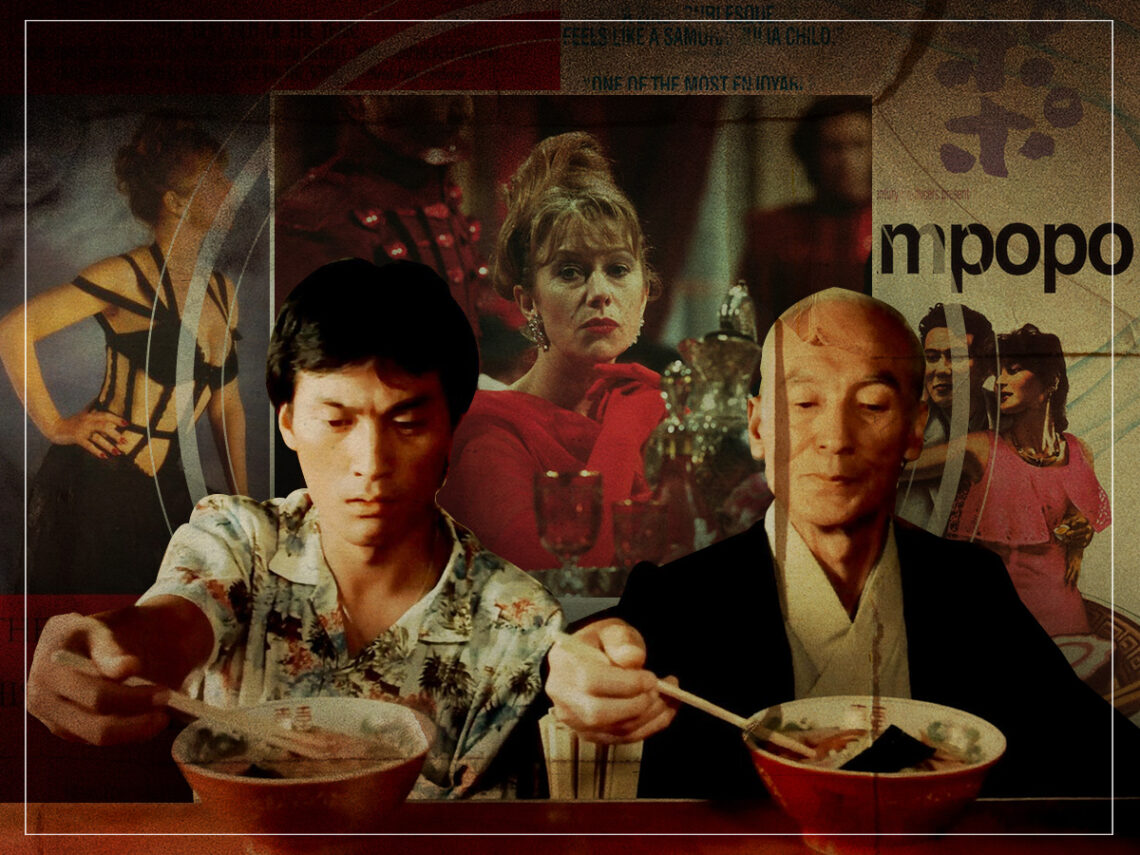
A sizzling exploration of sexual agency and female desire through food

“If music be the food of love, play on; Give me excess of it, that, surfeiting, The appetite may sicken, and so die.”
For those that haven’t watched The Bear or The Taste of Things, you might be unaware of the sexual revolution that is happening within the culinary world, with audiences that are mesmerised by the surprising sensuality of a home-cooked meal. You feel almost spellbound by the simple cracking of an egg or that thing chefs do when they use the back of a spoon to spread sauce across a plate… it truly is its own form of sorcery.
And when I reach for the same tired meals every day, I wonder whether I am doing life wrong; haven’t the poets said something about beans on toast killing the soul? Or how a hyper-fixation on quiche will ruin your sex life? It rings a faint bell in my head, yet I continue my love affair with conveniently beige meals. But amidst the mediocrity of my current cooking habits, I am reminded of the revolutionary films that sparked this very genre and their sizzling exploration of sexual agency.
You’ve heard of the spaghetti western, but have you ever heard of the ramen western? Well, hold onto your hats, folks, because Tampopo, directed by Jūzō Itami in 1985, is exactly that. The film follows a woman called Tampopo, who is the struggling owner of a ramen restaurant. But this all changes when a mysterious cowboy visits, agreeing to help her become the best ramen chef in town by taking her on a series of challenges to improve her cooking skills.
Released only four years later and directed by Peter Greenaway was The Cook, The Thief, His Wife and Her Lover, which follows a woman who is trapped in an abusive relationship with a restaurant owner. However, her life changes after falling in love with one of the customers at her husband’s restaurant, sparking a long and dangerous flirtation that threatens her life.
Interestingly enough, both films share many common threads in their examination of desire and sexual agency. The female characters discover their own voice and power through these new relationships, both of which centre around cooking and food.
In Tampopo, the main character is a widow, and after her husband’s death, it seems as though she has been living on auto-pilot; she cooks and just manages to sustain her business, but her heart isn’t in it. The food is fine, but it’s lacking in an explosive flavour and personality that would make her one of the greats. She is middling and completely disconnected from one of life’s true pleasures. However, the arrival of a mysterious and machismo cowboy prompts her wake-up call, encouraging her to become the best chef she can and revitalise her business. Their relationship isn’t sexual, but there is a definite tension between the two of them, and the idea of sensuality in relation to food is explored through the other characters, which only heightens the sexual atmosphere of the film.

The interactions between Tampopo and Goro are intercut with vignettes of the importance of food in everyday life, with one of them being a sex scene between two lovers who use food as part of their foreplay. We watch them delicately pass an egg yolk between their lips and use seafood as a tickling device. It’s slightly grotesque but, ultimately, completely enthralling. It merges together food, love and creation, creating a delectable feast for the senses as it shows the importance of savouring the simple pleasures and how much joy can be gleaned from them.
Similarly to Tampopo, the main character of Georgina in The Cook, The Thief, His Wife and Her Lover is empty and expressionless, numbed by the torment of being married to a violent man and unable to find any sense of joy in everyday life. However, she begins an affair with a regular customer in the restaurant, and their secret liaisons always take place within the confines of the restaurant, making love in dirty kitchens, on tables surrounded by vegetables and refrigerators full of dead pigs.
The director makes a point of linking their sexual chemistry with the food around them, with encounters that can only take place within these spaces, adding a rawness to their relationship that is enhanced by incorporating food into each rendezvous. It should be disgusting, but we are instead moved by their passion and willingness to have sex in these dirty spaces, surrounded by raw meat and ingredients that only heighten the sensuality of each encounter.
In both films, the presence of food encourages the women to become sexually liberated and free, acting on their most primal instincts as they merge the language of love, becoming emboldened and more awake to the joys of life by mixing them together. The sexual appetite becomes linked to our literal appetite, with the women experiencing an awakening of the senses as they open themselves to the possibility of desire, romance and new beginnings.
Georgina becomes filled with new hope and lust for life as a result of the relationship that entirely takes place in a restaurant, with the food around them resembling how pure and natural this union is and also how powerful their lust is that they can not only overlook the grossness of their surroundings during these sexual encounters but that it can heighten the sensuality of it. They are so enwrapped in each other that they barely blink an eye at the rotting meat and wilted leaves around them, only adding an erotic quality.
While Tampopo does not form a romantic relationship with Goro, he is painted in a sensual light that reinvigorates Tampopo’s lust for life. By merging her desire for Goro with her love for food, she is able to realise her potential and rediscover her spark. The fact that she is a widow is a pointed detail in the film, linking her lack of purpose in her career and bland food to the lack of love in her life. But in the company of a sexy cowboy, it is perhaps drawing on the idea that her unspoken desire and sexual appetite are reawakened, which is infused in her cooking.
So, the next time you decide to make beans on toast for dinner, think about the knock-on effect this could have on the rest of your life and how fusing all the simplest pleasures in life can give us a new kind of joy that makes life worth savouring.
