


Five Martin Dupont songs to listen to before you die

When considering new wave’s original post-punk-inspired synthesists, the UK’s proud heritage is often the first that comes to mind, and for good reason. Once giant, cumbersome pieces of hardware costing tens of thousands and only used by public-schooled prog-wizards with a spare hundred grand, the increasing portability and financial accessibility of synthesizers by the end of the 1970s meant a new generation of kids inspired by Doctor Who, Cold War anxiety, and Brian Eno‘s VCS 3 noodling with Roxy Music were all able to at least choose between a car or the latest Korg MS-20, ushering the likes of early Human League, Cabaret Voltaire, and Tubeway Army.
Not that all in the synthpop revolution were hooked on chilly sci-fi. Indebted to Motown and soul over Kraftwerk, Soft Cell released a string of passionate dance records exploring the humdrum of everyday life (there’s a Ken Loach soundtrack in another universe) that eventually touched on a little Lou Reed for The Last Night in Sodom, and Basildon’s Vince Clarke had jumped ship from Depeche Mode to join forces with powerhouse contralto singer Alison Moyet for Yazoo’s brief but hugely successful existence.
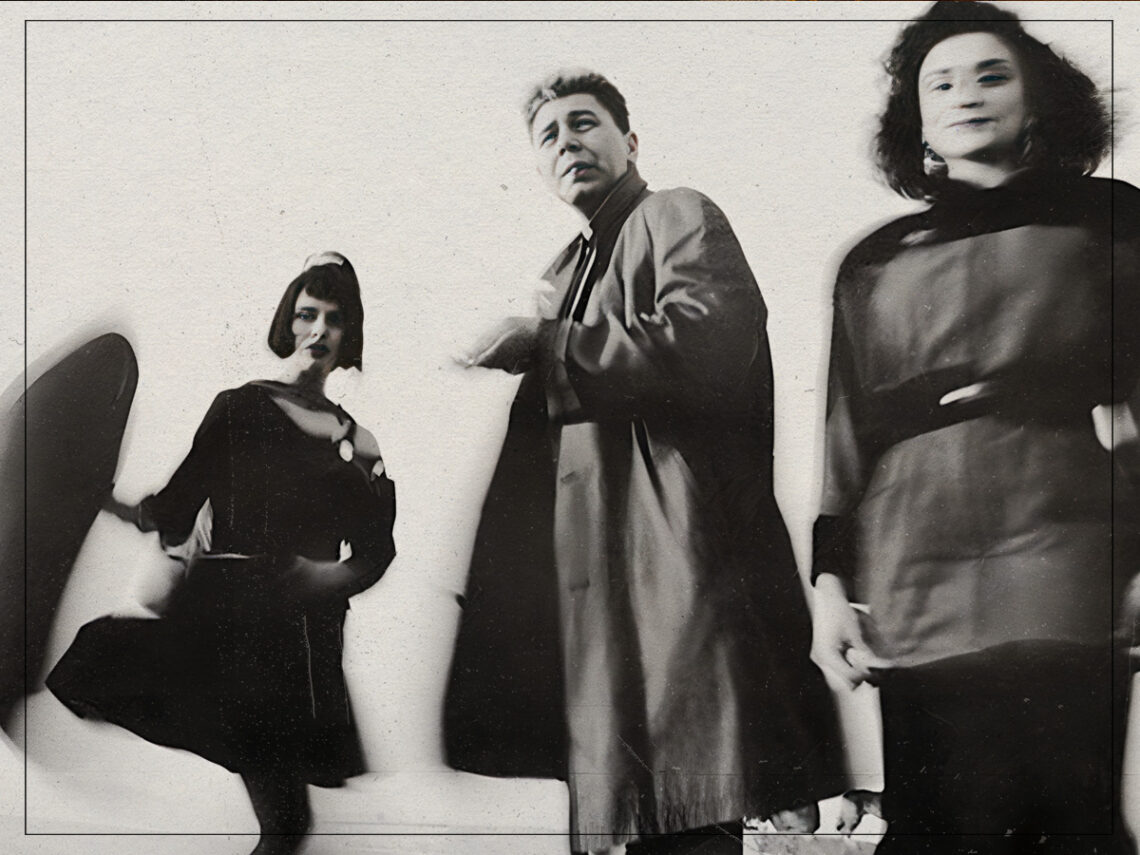
Another group imbuing their electronic music with an eclectic palette of styles was Marseille’s Martin Dupont. Formed by Alain Séghir in 1980 and initially recruiting Catherine Loy before settling on the staple trio along with Beverley Jane Crew and Brigitte Balian, the group released a string of vibrant, colourful, and highly idiosyncratic synthpop that bursts like a Fauvist explosion on each of their three albums and EP. Despite supporting The Cure and Siouxsie and the Banshees, Martin Dupont never quite reached the commercial heights of their peers, remaining a low-key cult favourite. Crew later pursued a career in the arts, and Séghir realised his original ambition as an ENT surgeon.
Just as minimal synth was making a comeback with Xeno & Oaklander and the Wierd Records scene, DJ Veronica Vasicka founded the Minimal Wave project, a label dedicated to excavating the lost gems of the coldwave punk period that bypassed recognition in their heyday. With Martin Dupont’s body of work remastered and now heard by a new generation, coupled with last year’s album of reworked material and now touring as a revitalised live act, let’s delve into their astonishing work and pick the five songs you must hear.
Five essential Martin Dupont songs:
5. ‘Bent at the Window’
A stunningly dreamy piece from their ’84 debut Just Because…, ‘Bent at the Window’ ends the album like a hazy mirage of warm, swaddled synth washes that envelop in an impressionistic embrace. Balian takes lead vocals for the most part, her echoing vocals abstractly detailing the observation of the human form like an artist fascinated with their model muse.
Aided with Séghir’s percolating guitar, it’s a powerfully evocative and sensual cut which shows Martin Dupont’s knack for plumbing emotional depths while maintaining their ramshackle DIY approach and playful irreverence.
4. ‘I Met the Beast’
Shaking off the minimal synth frost that coloured their debut, 1985 EP Sleep is a Luxury leapt forward in their growing production, welcoming rich, immersive atmospheres and vivid arrangements, scoring Séghir’s surrealist cinematic lyrics.
With Balian again behind the mic, ‘I Met the Beast’ is the EP’s absolute gem. Inspired by his love for Wall of Voodoo, Séghir smatters the track with a spaghetti western guitar amid hypnotic keys, perfectly illustrating the song’s occultist lyrical vignettes of “Barbie dolls whispering in the lagoon, physically sick every time they kiss” with their own unique twist of immersive drama.
3. ‘It’s No Use’
Featured on the cassette tape Inédits 1981-1983, which was issued free with Sleep is a Luxury, the compilation of sketches and demos contained some of their most belligerent and odd releases yet. This intriguing collation of recordings shows the band’s creativity wholly unreined and loose on their most ‘bedroom’ assembly of cuts.
‘It’s No Use’ shines among the tape’s sessions. Muffled bass grooves, a hooky drum machine, and twinkling synths swirl around Séghir’s and Balian’s back-and-forth vocals. It’s a wistful, catchy piece that exemplifies Martin Dupont’s capture of easy brilliance even when loose in the studio.
2. ‘He Saw the Light’
Reaching an apex of enthusiastic sonic bombast on their last album before the decades-long hiatus, ’87’s Hot Paradox displays confidently that the trio were still full of ideas by their demise. An exuberant rush of arresting pop coated in romance and gripping tension, it’s an album vibrating with electric urgency.
Arguably, their signature song, which was possibly influenced by Séghir’s memory of singing for the Pope as a Catholic choirboy, ‘He Saw the Light’ encapsulates everything oddly brilliant about Martin Dupont. A thundering, high-energy stomper spiked with warped vocal pads and aggressive slap-bass, the track’s ecclesiastical energy is about as thrilling as pop gets, masterfully marrying grandiosity and sprightly cool with ease.
1. ‘Love on My Side’
After their minimal wave resurrection and acclaimed live sets, Martin Dupont set about revisiting some of their earlier tracks, breathing new life with the latest studio innovations to better realise their original visions. Named after the Japanese method of repairing broken pottery with dusted gold, Kintsugi offered a fascinating glimpse of a director presenting their ‘final cut’ to some of their best-known songs.
Recorded during the Sleep is a Luxury era and long languishing as a studio outtake, ‘Love on My Side’ was afforded its definitive incarnation, injecting richer arrangements and new vocals that serve as a gripping intersection between their classic sound and their renewed live act.
