


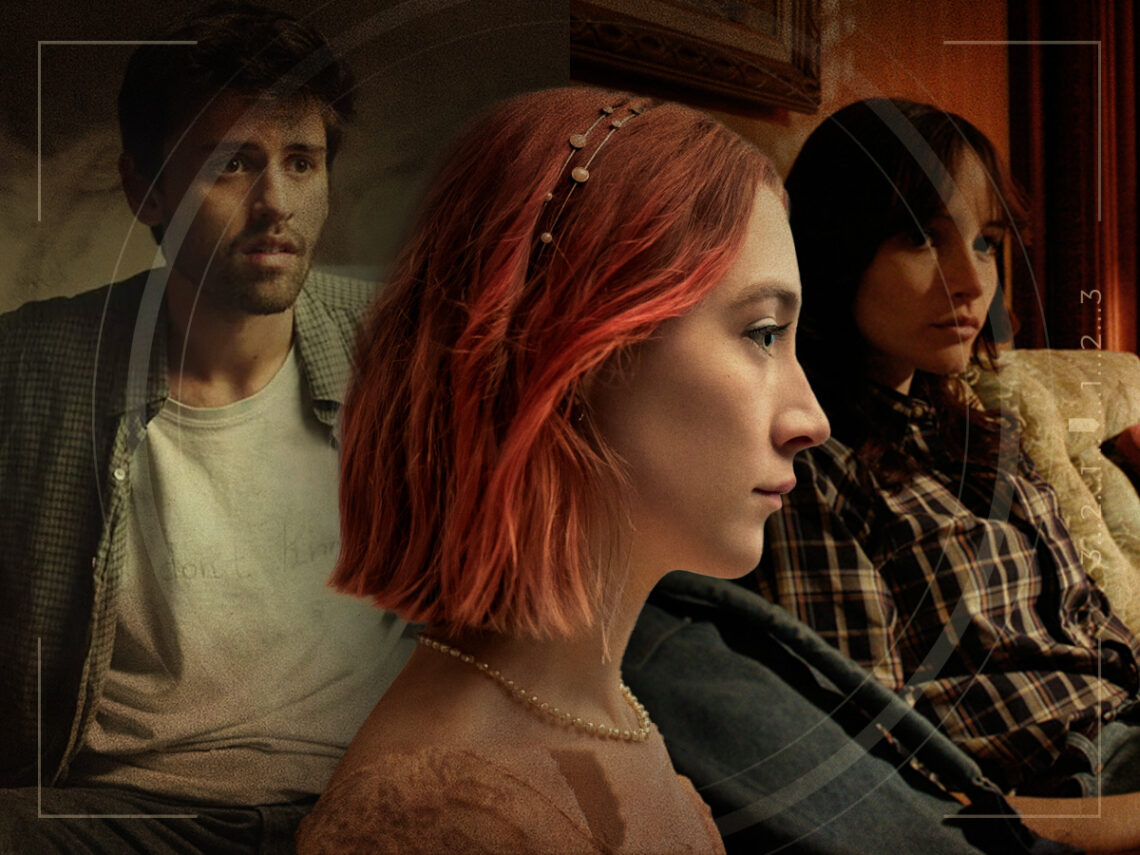
Five filmmakers heavily influenced by mumblecore

Before mumble rap was taking over SoundCloud and confusing parents the world over, there was mumblecore. Beginning in the early 2000s with films like Andrew Bujalski’s Funny Ha Ha, the movement spawned a raft of incredibly low-budget, often improvised movies designed to showcase real people having real conversations.
With an emphasis on dialogue and character over elements like plot and visual storytelling, these films often centred around young people with no clear direction in life. Sex and relationships played a big part, and they were usually set in the United States, although non-American examples do exist.
In aesthetics, execution, and philosophy, mumblecore is a painfully noughties genre. But that doesn’t mean that it doesn’t still exist today, in one form or another, and its early stars have gone on to influence mainstream filmmaking in big ways.
These five movies aren’t technically mumblecore, but the subgenre’s quiet, messy fingerprints can be found all over them.
Five films influenced by mumblecore:
‘Magic Mike’ (Steven Soderbergh, 2012)

Magic Mike is just about hot men with loads of abs taking their clothes off, right? To the uninitiated perhaps, but Steven Soderbergh’s tale of Channing Tatum reliving his semi-autobiographical youth is full of rich character moments and naturalistic dialogue.
Mike, the titular character and ambitious young stripper, has many different complicated relationships in his life. There’s Adam, the young kid he’s mentoring, his sister Brooke, whom Mike is falling for, his ex-lover Joanna, his eccentric boss Dallas, and the various other dancers and their assorted hopes and dreams.
The conversations between Mike and the people around him are very mumble-esque. The sleazy world of stripping might not be familiar to most people, but aspirations of building a better life and the problems that it presents are very relatable. Soderbergh’s decision to put his characters into small and intimate settings is clearly inspired by mumblecore, and the film is all the more interesting for it.
‘The House of the Devil’ (Ti West, 2009)

When combined with the horror genre, mumblecore morphs into an entirely new subgenre, dubbed ‘mumblegore’. A great example of this is an early feature from X trilogy mastermind Ti West: 2009’s The House of the Devil.
Sam Hughes (Jocelin Donahue) is hired to watch a creepy old house in the middle of nowhere. As you’d expect, things quickly get nasty, as she finds herself caught up in the dealings of a satanic cult.
The House of the Devil was made on a budget of less than a million dollars, and West edited it himself, adding to its DIY credentials. West often works alongside Joe Swanberg, one of the pioneers of mumblecore, and it’s clear through this movie’s muted dialogue and single setting that his work rubbed off on him.
In an era when torture porn was all the rage in horror, mumblegore brought things back to the quiet, tense roots of the genre.
‘Shithouse’ (Cooper Raiff, 2020)

Hideously young rising star director Cooper Raiff was exactly the right age to be influenced by mumblecore. He grew up on films by the Duplass brothers and others in their field, all of which came to the fore when he made his own debut feature in 2020.
Shithouse is named after the college fraternity at the heart of its plot. Alex Malmquist (played by Raiff) attends one of their parties and meets Maggie (Dylan Gelula), transforming his lonely existence.
Coming-of-age might be a genre within itself, but there is a lot of crossover with mumblecore, especially in Shithouse. Raiff’s focus on Alex’s relationship with Maggie – and later his new friend Sam – is pushed over any major plot points or set pieces, allowing the audience to relive their own youthful dalliances in excruciating detail.
‘Lady Bird’ (Greta Gerwig, 2017)

In terms of actors, no one benefitted more from the success of mumblecore than Greta Gerwig. The star of genre staples like LOL, Hannah Takes the Stairs, and Baghead (as well as the previously mentioned The House of the Devil), Gerwig made a name for herself playing a series of desirable rogues. Then came the transition to directing, which she absolutely nailed.
Though she had previously co-directed Nights and Weekends, another mumble-tastic venture, Gerwig’s first solo outing was 2017’s Lady Bird. With Saoirse Ronan in the lead role, a pretentious yet endearing teen creative, she crafted a beautiful story of young love, friendship, family, and finding one’s place in the world.
Too polished to be a proper mumblecore film, Lady Bird nonetheless tackles all of the issues that Gerwig’s characters went through a decade prior. The director’s former life is clearly present in her first movie; the grounded yet fantastical events are as gripping as they are painfully real.
The movie showed everyone that Gerwig was a force to be reckoned with, and her career has only gone from strength to strength in the following years.
‘Host’ (Rob Savage, 2020)

With the world in the grip of the pandemic, filmmakers searched for new ways to tell their stories. British director Rob Savage landed on Zoom as his canvas, creating the brilliantly tense Host on a budget of just $100,000.
Though they don’t seem similar, Host and mumblecore movies have more in common than you’d think. A large chunk of the dialogue was improvised, based solely on a treatment for the film rather than a proper script. While most mumblecore efforts don’t feature a murderous demon, the human characters in both occupy a shared space: bored young people fooling around for the sake of it.
If the characters in The Puffy Chair or Mutual Appreciation had been a generation younger, they would have hung out on Zoom—probably to save money, more than anything. The laid-back nature of the connection in Host is mumblecore to a tee, even if the rest of it is as unchilled out as humanly possible.
