


The five best movie scenes set inside a cinema

What’s more meta than watching a movie in a cinema while the characters themselves are also in the cinema?
Going to the pictures is the one activity that I think we can universally agree on loving. In any other context, the thought of hunkering down in a dark room of strangers would be a bloody weirdly daunting idea, but when there’s a movie playing on that big ‘ol screen in front of you, any worries quickly fade away.
For a few hours, you can sit back, immerse yourself in another world, and feel fucking horrible about the disgusting amount of popcorn you have just inhaled. Cinema – and the picturehouses that show great film – remain a vital art form for communicating human emotions that are sometimes just too hard to express or face, like death and grief.
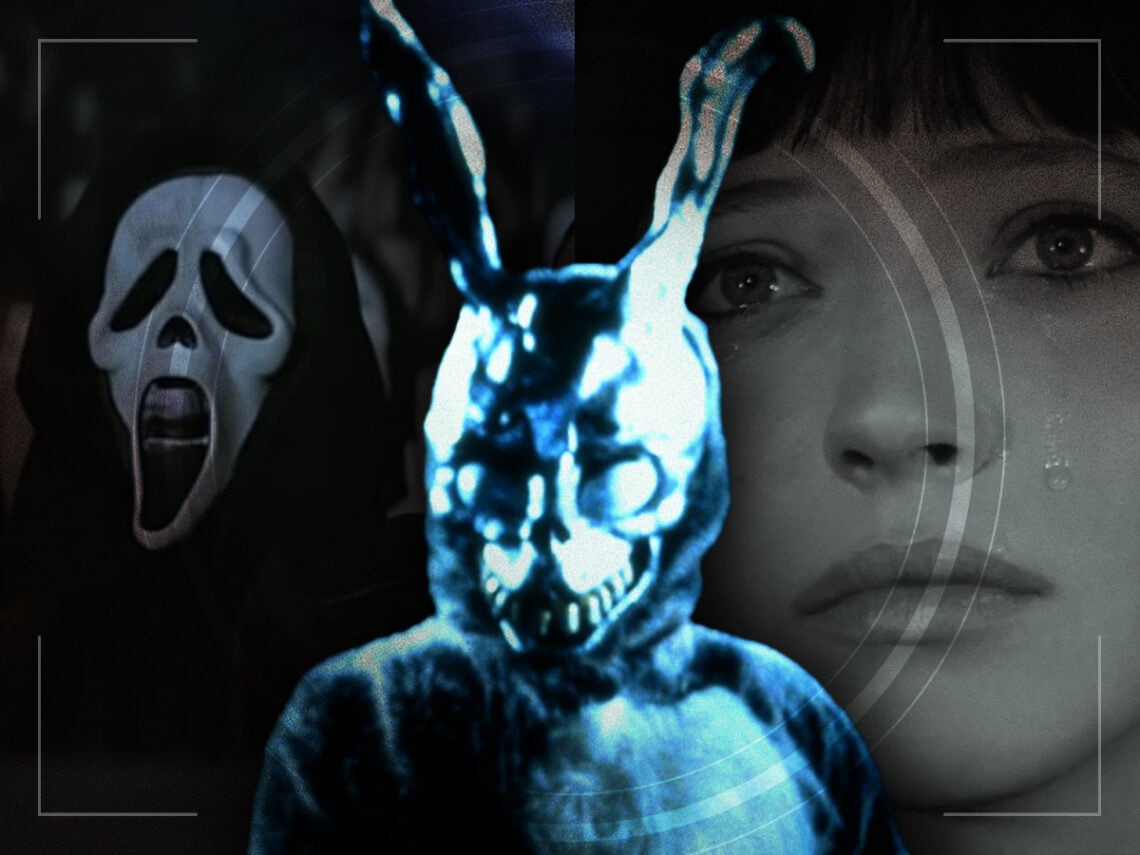
Many iconic and defining scenes take place inside of cinemas, like the Donnie Darko sequence in which he speaks to the terrifying rabbit-costumed Frank, or the moment in which Nana watches The Passion of Joan of Arc in Vivre sa vie.
Here, ‘life imitates art’ takes on an even more poignant meaning.
The five best movie scenes set inside a cinema:
Donnie Darko (Richard Kelly, 2001)
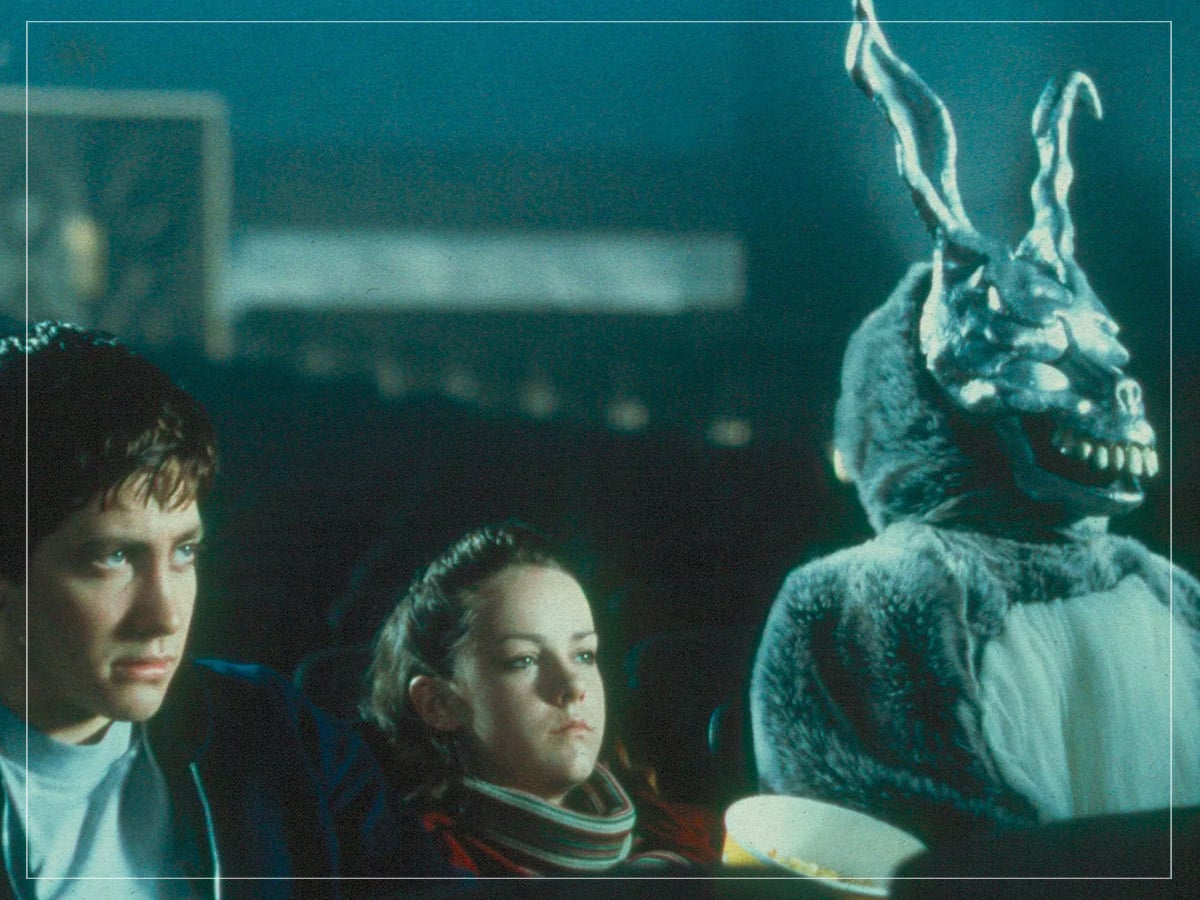
One of the big, stick-in-your-head sequences of 21st-century cinema has to be the bit where Donnie clocks that terrifying rabbit bloke in Richard Kelly’s Donnie Darko. The cult sci-fi flick has Jake Gyllenhaal playing a troubled teen haunted by visions of this eerie figure, Frank, brought to life by James Duval. There’s a scene where Donnie and Gretchen head to the cinema for a double bill, only for Donnie to glance across the room and spot that nightmare rabbit suit staring back at him.
The mask is removed, revealing Frank’s face to have just one eye with blood coming out of it. Donnie’s conversations with Frank are highly important to the narrative here, with Gyllenhaal’s character asking, “Why are you wearing that stupid bunny suit?”, to which he replies, “Why are you wearing that stupid man suit?” Frank makes Donnie pay attention to the screen and tells him to “Burn it to the ground,” referring to Jim Cunningham’s house, and here we come to understand just how powerful Frank’s manipulation is.
Vivre sa vie (Jean-Luc Godard, 1962)
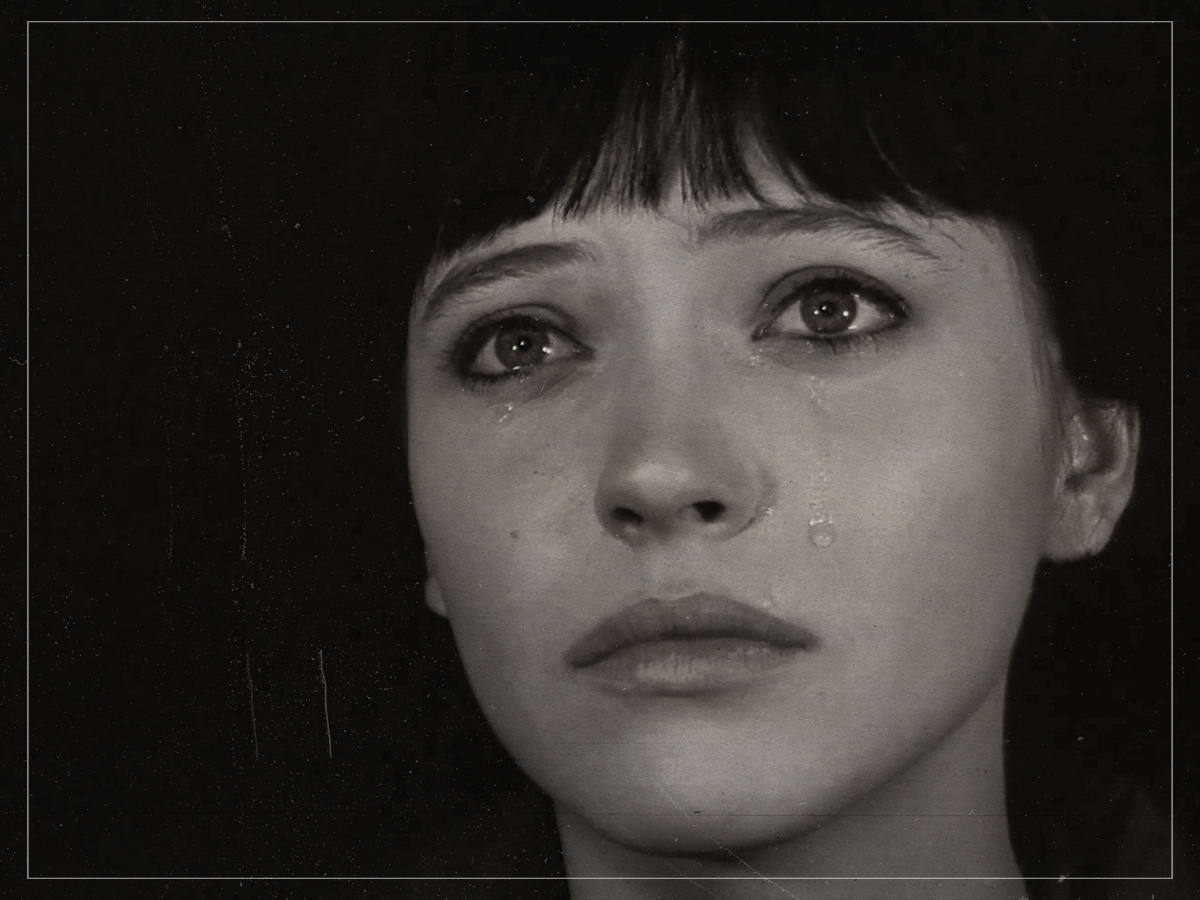
Just as he would have wanted it, Jean-Luc Godard’s 1962 Vivre sa vie has Anna Karina stealing every scene as Nana, a Parisian sex worker with a stare that is borderline capable of pinning you to the spot.
Godard isn’t just faffing about with philosophy here, he’s laying bare how women get boxed in, ground down, chewed up by the world around them. And then comes that killer moment: Nana watching The Passion of Joan of Arc, Falconetti’s face blazing out from the screen like it’s burning straight into her. Surrounded by blokes in the cinema who sit there stone-faced, she’s the only one who crumbles, moved to tears by a story of a young woman’s suffering that mirrors her own.
Considering that Nana’s fate is ultimately tragic, the cuts between sequences from the film and Karina’s face, up close and crying, makes for a particularly emotional scene. Not much happens besides Nana tearfully watching the film, but it says so much about the character and what moves her. She evidently feels a deeply personal connection to the film, and for the first time, she feels truly understood. Sometimes only art has the power to do that.
The Last Picture Show (Peter Bogdanovich, 1971)
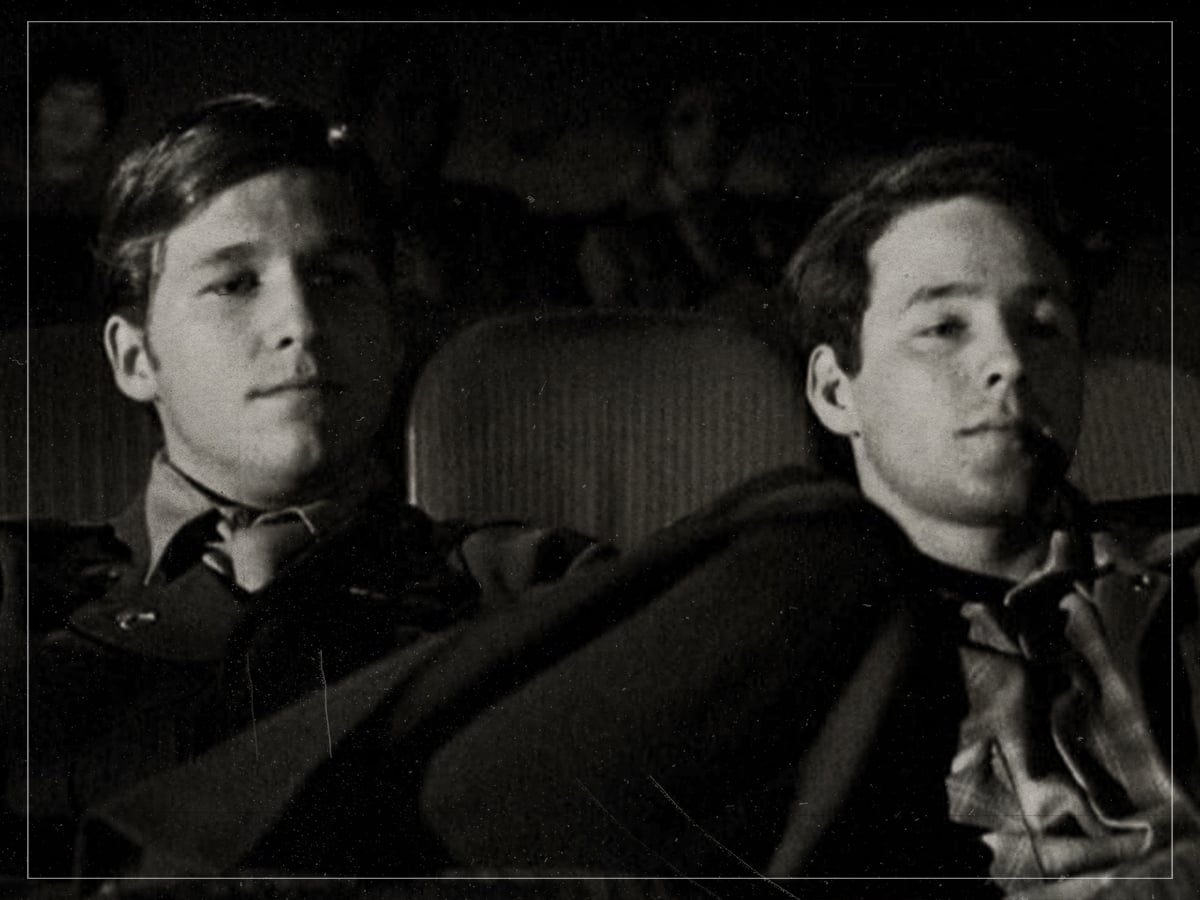
In Peter Bogdanovich’s The Last Picture Show, the crumbling old cinema isn’t just a cinema, it’s a symbol of a town that’s gone to seed, a place that once had promise but now looks half-dead.
The Texan teenagers drifting through it all don’t have much waiting for them, no big future, just the slow slide into the same dust and dead ends their parents knew. When the theatre finally shuts down, it feels like the death signal for any kind of dreaming. It’s a bleak piece of work, one that nails that grim moment you clock that innocence doesn’t last and life can be bloody hard.
Near the end of Bogdanovich’s film, some of the characters visit the cinema for the last screening, which is Red River, starring John Wayne. The super-masculine characters of the western are idealised by the boys, who have come to realise that life as they know it is changing. Further signalled by the death of Sam the Lion, a guiding male figure in the film, The Last Picture Show reflects on the transition from childhood to adulthood with painful realism, using cinema as the perfect example of dying dreams.
Scream 2 (Wes Craven, 1997)
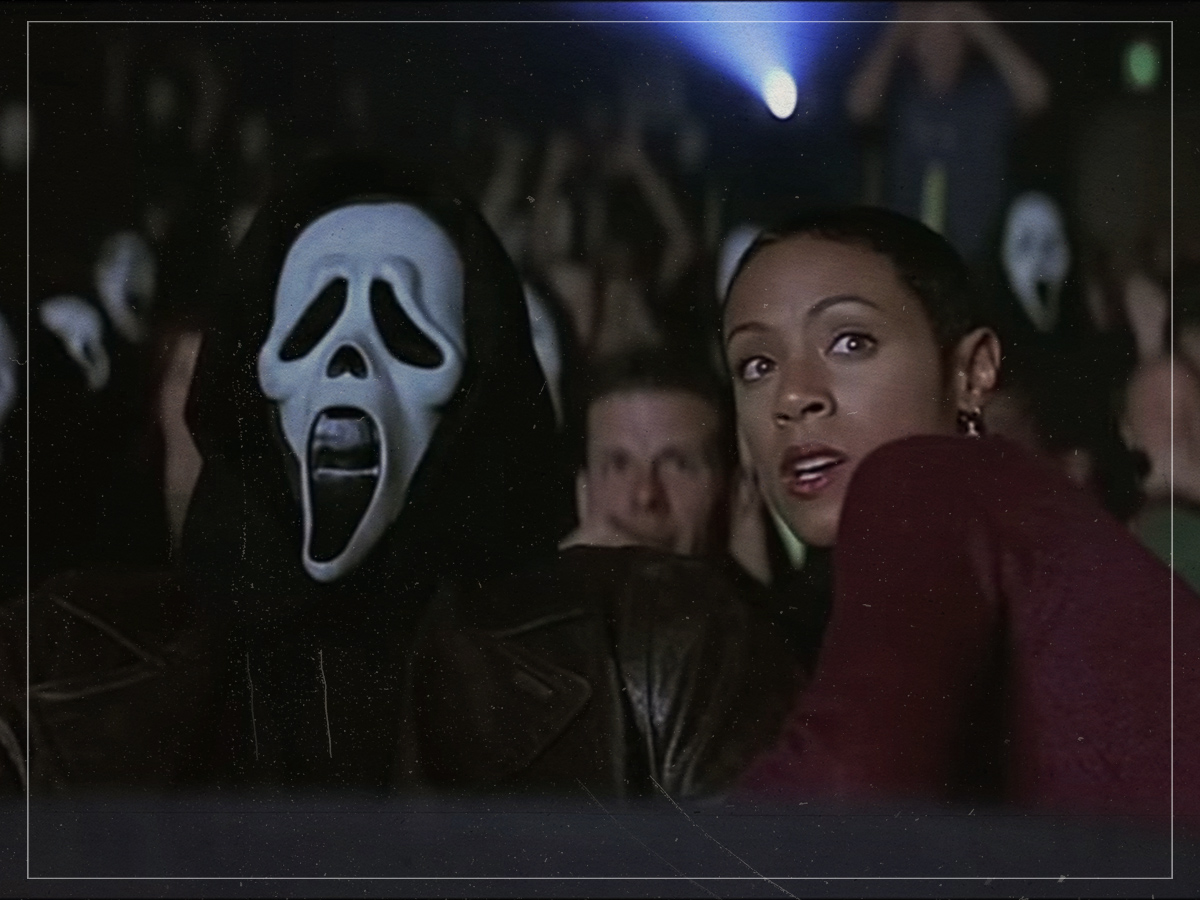
Absolutely everyone remembers the classic opening sequence of Scream. Drew Barrymore’s Casey Becker is tormented over the phone about her favourite scary movies, only to be brutally murdered as her popcorn sets the kitchen on fire. Yes, yes, it’s classic, I know.
However, I’d argue that the opening of Scream 2 is just as good (stay with me). Wes Craven establishes an even more meta narrative for the sequel. We follow two characters as they attend a preview screening of Stab, a film based on the events of the first movie, with swathes of cinema-goers dressed in Ghostface costumes all throwing popcorn, cheering, and wielding fake knives.
You know what’s going to happen. These characters aren’t going to make it out alive, and a real Ghostface is clearly lurking in the audience. That doesn’t make the scene any less exhilarating, though, and as the characters meet their brutal fates, the intensity and chaos of the sequence makes for the perfect Ghostface return.
An American Werewolf in London (John Landis, 1981)
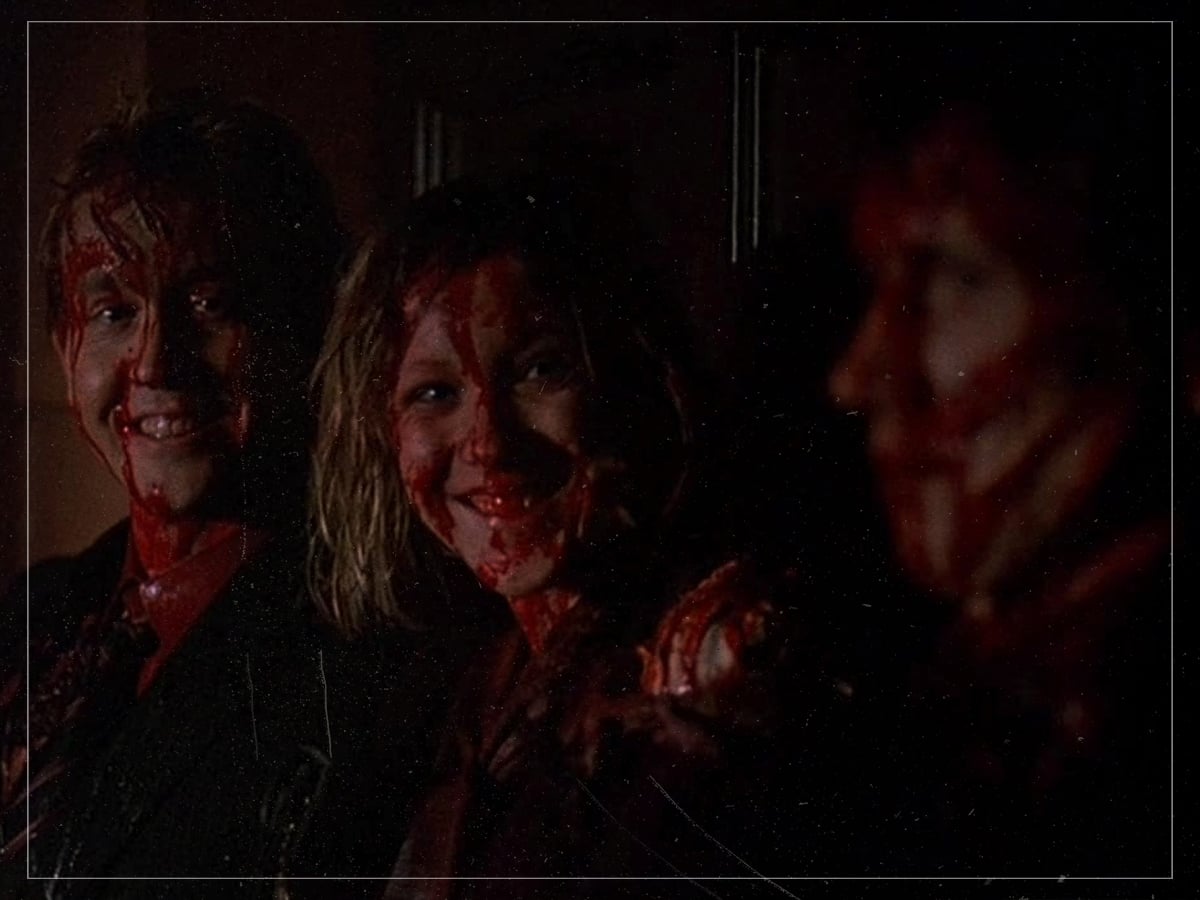
Here we are, the top spot, and who else could it be, really?
I will forever try to ensure John Landis gets his flowers while I work here at Far Out, and An American Werewolf in London is a fabulous blend of horror and comedy, which sees a young man succumb to the lycanthropic powers of a mysterious creature.
There’s not much David can do when he is released from hospital, because as soon as the full moon emerges, so do his sharp teeth, tufts of thick animal hair, and claws. With a thirst for human blood, he terrorises London by night, unable to control his urges. It’s wonderful stuff all round.
He has no say in where he changes into a werewolf, so he unfortunately finds himself in the process of a grisly transformation during a trip to an adult cinema. David is confronted by one of his victims, who curses him for leaving him one of the undead, while the similarly undead Jack, David’s friend who was attacked with him (albeit more viciously), also visits him. So much for not talking in the cinema. The guilt he feels still can’t stop his body from turning him into a terrifying animal, though.
