


The five best films where nothing really happens

In a world inundated with fast-paced stories and quick cinema, sometimes there is nothing more healing than watching life simply unfurl before your eyes, observing the rituals and routines of someone you can relate to and seeing yourself reflected in the mundanity of everyday situations.
Whether it be Chantal Akerman or Annie Baker, some filmmakers use slowness as a way to create intimacy between the audience and characters on screen, immersing us in their worlds by capturing typically overlooked moments. They add meaning to things that aren’t usually deemed worthy of being shared or noticed.
From watching someone wake up in the morning or devouring an entire pie while processing the death of a loved one, slow cinema has the power to bring us together and live in another person’s shoes, experiencing their lives with them and understanding the world around us and our innate humanity more deeply.
Boredom, mundanity and general banality are such a part of human life that they should rightly be celebrated on the big screen. But while there are plenty of films to choose from within this genre, here are my five best films in which nothing really happens.
The five best films where nothing really happens
‘Paterson’ – Jim Jarmusch (2016)

One of the most beautiful elements of slow cinema is its ability to capture the overlooked, simple pleasures of everyday life. And Jim Jarmusch was heralded as a poet of these moments after his 2016 film, Paterson, which follows a week in the life of a bus driver and poet named Paterson.
The world can sometimes feel as though it moves far too quickly, with Jarmusch proposing an alternative way of living through Paterson’s intentional routine and ability to find the slow in everyday moments. He is a bus driver, but he also finds fulfilment through his creative passions and joy in the little things, whether it be his morning stroll to work, sitting by the waterfall on his lunch break or kissing his wife while she sleeps. After spending a week with Paterson, you begin to see the fullness of your own life, even when you feel like nothing is happening.
‘Pauline at the Beach’ – Éric Rohmer (1983)

There is nobody who does slow cinema like Éric Rohmer, with the director somehow finding richness and meaning in everyday situations and characters. By immersing audiences in the interior world of a single character, he pulls you into an intimate space in which you begin to see yourself reflected on screen, appealing to the most innate human struggles and fears.
But this is something he does in a unique way through his 1983 film Pauline at the Beach, which follows a young girl over the course of one summer spent with her beautiful cousin, learning what it truly means to be a woman and the language of love. In typical Rohmer fashion, she learns through walking, talking and lounging around indoors, having conversations that prompt profound insights that forever change her perspective of the world, leaving the holiday not as a girl, but as a young woman.
‘Certain Women’ – Kelly Reichardt (2016)

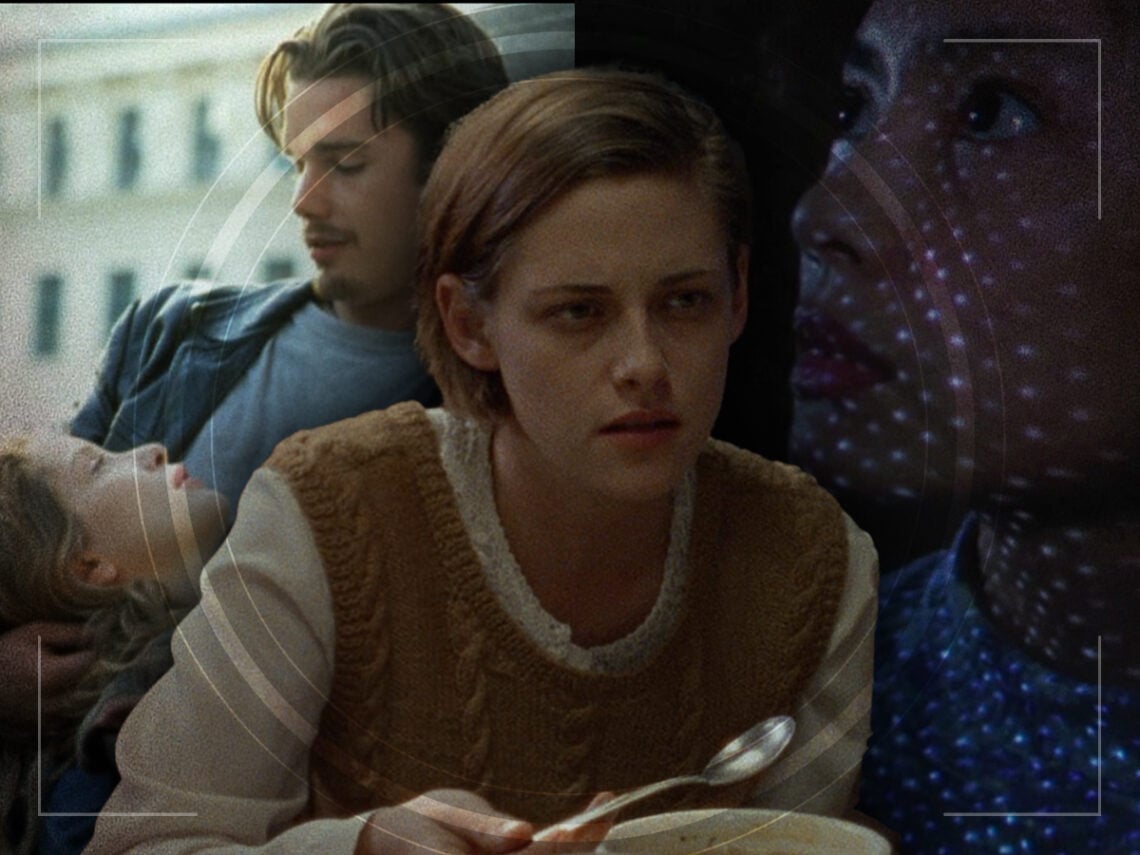
The title of this genre is deceiving because the trick is that while it looks as though nothing is happening on the surface, the richness is in the deep emotional undercurrent of the story. This is certainly the case with the work of Kelly Reichardt, especially her 2016 film Certain Women, which follows the lives of three women and the loneliness of being a ‘certain kind of woman’ in a male-dominated world.
Each story seems simple at first glance, but as the film goes on, a harsher truth is revealed about the nature of modern womanhood and the cost of forging your own path in a world that tries to stifle women’s voices. The image of Lily Gladstone’s character riding a horse or of Laura Dern’s silent frustration conveys a thousand words without a single syllable uttered, capturing the sheer genius of Reichardt’s films and her ability to raise compassion by immersing us in the minutiae of overlooked lives.
‘Before Sunrise’ – Richard Linklater (1999)

After introducing this film to my family, one of my sisters announced that she hated it because “nothing happened”. Our relationship never quite recovered, as its simplicity is why it remains one of my favourite films of all time. There is something so beautiful about watching two people fall in love in what feels like real time, capturing all the ups and downs of getting to know someone and all their little quirks.
Whether it be the listening booth scene in which Jesse and Celine steal loaded glances at each other, trying not to smile and give away their feelings, or the restaurant scene where they pretend to talk on the phone, the film is laden with perfect moments that capture the excitement and ecstasy of blossoming romance, even if they are just walking around Vienna. Nothing explicitly plot-heavy is happening, but what’s more exciting and intimate than the talk that leads to familiarity?
‘Goodbye, Dragon Inn’ – Tsai Ming-liang, 2003

And finally, there is perhaps nothing more beautiful than the slowness of Goodbye, Dragon Inn, a film that follows the workers and patrons of a cinema establishment on its last ever closing day. It captures what it means to be touched by cinema, to commune with others in silence under the flickering lights of a big screen, soaking in the memories of stories past, and remembering all those who have gone looking for themselves in them.
The film splits itself between the few people visiting the cinema on its final night, from the projectionist who gazes up at the screen and delicately completes her final chores, to the old man in the last screening who watches with a single tear on his face, to the others who walk around the building and remember it as a utopian dark space that allowed them to just be, even if for a couple of hours. It is a mesmerising feat of nothingness that both warms and devastates you, reminding us of why we go to the movies and how it connects us to the world at large.
