


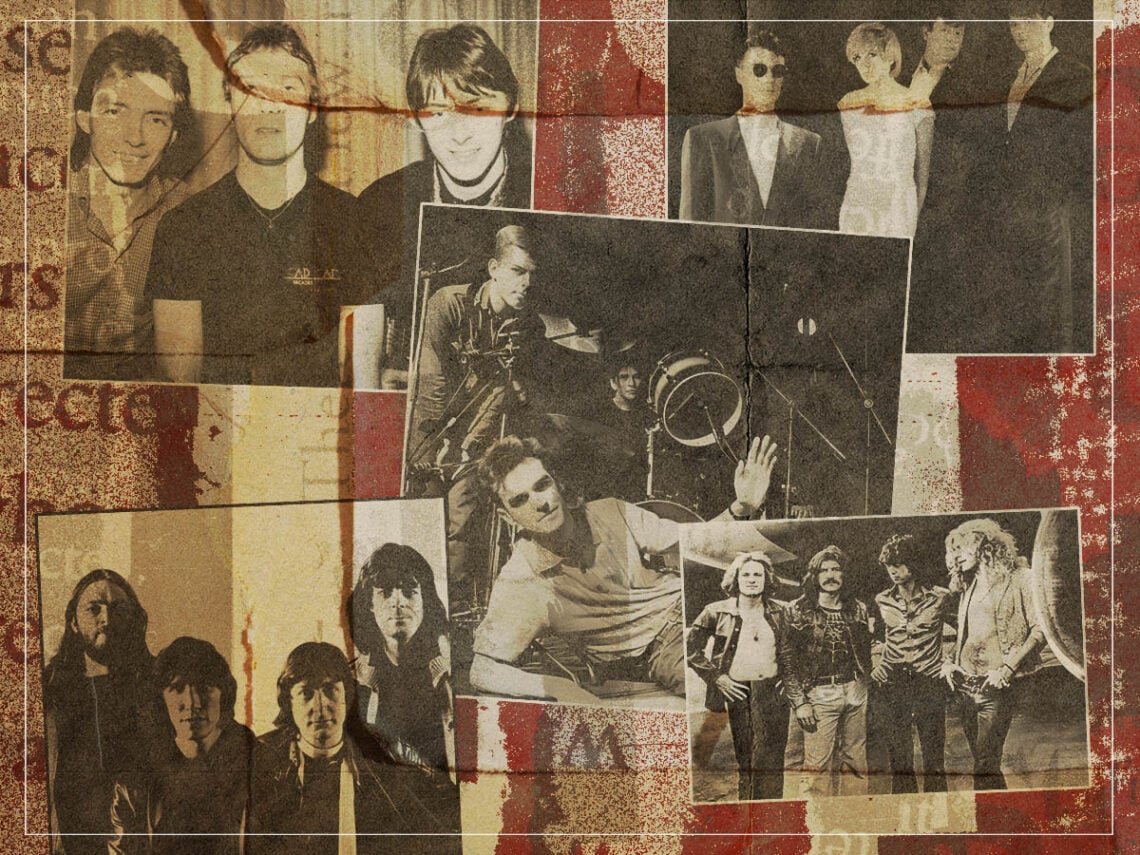
From Pink Floyd to The Smiths: Five bands that will never reunite

From Fugazi to Pink Floyd, there are many bands across the musical spectrum that fans would give a body part to see reunite. As we all know, musicians are strange beasts and generally have cemented world views and artistic proclivities, meaning that this stubborn set isn’t one to give in to the demands of fans despite the potential of lining their coffers beyond imagination.
Music has seen numerous groups split up for an array of reasons. On the more morbid side, this can be due to the tragic death of members before their time. In other cases, it’s because of brotherly disputes, political disagreements, or creative differences—the most common scourge of fan favourites. Elsewhere, some outfits simply call it a day because they’ve done all they can and don’t want to risk ruining their legacy by aimlessly trudging on, with Soundgarden ending their first run being a great example of this.
As widely influential musicians tend to be big characters, often proud and even slightly egotistical, many of the world’s most important groups have split up, with no signs that they will ever reconvene. If you’d achieved all the things they have artistically and commercially, it’s understandable that from their perspective, they would see no reason to return with the group that made them, particularly if they actively hate other members.
Yet, perhaps due to the happy endings that Hollywood has been driving into our brains for decades, these bleak realities do not stop fans from dreaming of the day that their favourite outfits kiss and make-up or return from oblivion to have one last spin around the block. Furthermore, with Linkin Park recently re-emerging, albeit in a deeply polarising fashion, there has never been a better time for music fans to maintain that you really can never say never. However, there are some bands that will simply never come back. For whatever reason, they are done.
Bands that will never reunite:
The Jam
Paul Weller, Bruce Foxton and Rick Buckler, better known as The Jam, were one of the most influential outfits of the punk period. Blending punk, new wave and 1960s sounds such as beat music, soul and R&B, The Jam were a key part of the mod revival and cut a different, more refined image to the likes of Sex Pistols. However, in 1982, after the hit release of what became their final album, The Gift, band leader Weller surprisingly decided that the band were over.
Weller’s father, John, their manager, announced the decision at a band meeting that summer. Considering the group was enjoying immense success, Buckler and Foxton were shocked, as they wanted to keep The Jam going. Unsurprisingly, it was a bitter end to a trio that defined an era for so many, but in later years, the rhythm section expressed more understanding about why Weller opted to finish.
Weller, an artist who has continued to push himself, maintained at the time that he hated the notion of continuing just because they were successful, as he wanted to feel artistically fulfilled. He soon after formed the soul group The Style Council and has since enjoyed a successful solo career. He has consistently asserted that the group will never reconvene, telling Uncut in 2013 that it “would be absurd”.
However, with Foxton, who has been playing Jam songs with From the Jam for years, recently revealing he has been in ill health for some time, there are hopes that Weller will renege and enjoy the meal ticket of his life.
Talking Heads
Talking Heads pioneered new wave in the late 1970s and early 1980s, fusing it with complex Fela Kuti-esque rhythms. Led by David Byrne and comprised of Jerry Harrison, Tina Weymouth and Chris Frantz, they too were of their era’s most successful outfits and were originally active from 1975 to 1991 before reuniting in 1999 and 2002. However, much has been made about Byrne being difficult to work with, and bassist Weymouth even called his behaviour “very Trumpian” in a 2022 Far Out interview.
This wasn’t the only time that the former Talking Heads have outlined their disdain for working with Byrne, who has continued to explore his artistic whims since their last breakup with a host of different projects, including turning buildings into instruments. Despite the band recently sharing the same space to gleefully promote the 4K cinematic relaunch of Stop Making Sense and seemingly softening their stance about a reunion, I’d wager that after the nostalgic dust settles, they’ll return to realising that perhaps it isn’t the best idea.
Led Zeppelin
Led Zeppelin is one of the most significant bands in the history of music. They dominated music from the 1960s to the 1970s with esoteric force. They were one of the only groups to remain consistent throughout the decade until they split in 1980 following the tragic death of drummer John Bonham.
While the three surviving members reconvened in 1985 for Live Aid, in 1988 for the Atlantic Records 40th Anniversary show, and frontman Robert Plant and guitarist Jimmy Page would operate as Page and Plant in the 1990s, 2007’s reformation with Jason Bonham on drums at London’s O2 for the Ahmet Ertegun Tribute Concert was the most iconic.
It was a tremendous success, resoundingly demonstrating that the band still had it. It felt spiritually proper, too, with Bonham Jr making his late father proud. This led to rumours that a more prolonged reunion was on the way, but Plant wanted no part in it, leading to Page and bassist John Paul Jones auditioning various vocalists. But it never happened, and fans still wish it would one day.
However, Plant has maintained that he has no interest in a reunion, as he has a fulfilling solo career and doesn’t want to look “sadly decrepit”. He even told Esquire that he’d be “a whore” if he accepted to get back on the road with the ‘Communication Breakdown’ legends.
Pink Floyd
The story of Pink Floyd is a strange one. After the departure of original leader Syd Barrett, the group experimented with sounds until they hit upon the expansive prog-adjacent realm that produced the likes of The Dark Side of the Moon and Wish You Were Here. Yet, the former record was such a creative and commercial success that former leader Roger Waters claimed it was what “finished” the band way back then, even with so many iconic records on the way.
As the 1970s wore on, Waters became increasingly dictatorial. When making 1979’s dark rock opera The Wall, both guitarist David Gilmour and drummer Nick Mason were reduced to essentially session musician capacities. Founding member keyboardist Richard Wright was also relieved of his duties during production and kept only as a touring member.
Well, the writing was on the wall, and 1983’s The Final Cut proved to be Waters’ final record with Pink Floyd and a divisive one at that, as it was, in all but name, a solo effort. He left in 1985, leading to a court battle, which kicked off the acrimony between him and Gilmour that exists to this day. They did have a brief détente in 2005 for the Live 8 reunion, but due to Waters’ recent political statements, he and Gilmour’s already practically non-existent relationship has hit rock bottom. This is one reunion that will simply never happen.
The Smiths
The Oasis reunion, which many never thought would happen, has had an all-encompassing effect. In addition to raising questions about the Gallagher brothers’ cultural relevance to Ticketmaster’s operations, it’s also weirdly dragged another influential Mancunian outfit into the spotlight: The Smiths.
Everyone knows that the two driving forces behind the band, frontman Morrissey and Johnny Marr, aren’t exactly fans of one another and represent opposing sides of the coin, but things have taken on a new dimension since the vocalist claimed Marr ignored a lucrative opportunity to reunite the band in 2025.
Morrissey has also claimed that Marr has blocked the release of a new greatest hits compilation. Even outspoken Kiss bassist Gene Simmons has weighed in on the matter – not that anyone asked him to – and said Morrissey should reform the band without Marr, clearly showing he does not understand who The Smiths are.
It has continued trudging on this month, with the bitter Morrissey resulting in a claim that Marr has underhandly acquired rights to The Smiths’ name. After letting his old partner in crime have his very public paddy, Marr finally commented on the matter and set a few things straight. However, it became an even murkier subject as the guitarist corrected the narrative by saying he didn’t ignore the offer to reunite; he outright refused it.
That seemed to put a nail in the coffin of any hopes for fans, and now Morrissey has announced that he’s fired his management for the shocking handling of the situation, which has made him public enemy number one once more.

Never Miss A Beat
The Far Out Led Zeppelin Newsletter
All the latest stories about Led Zeppelin from the independent voice of culture.
Straight to your inbox.