


Five avant-garde oddities that somehow became big hits

Perhaps the ultimate gauge of the national mood is a perusal of a country’s top 40. While the UK Singles Chart or the Billboard Hot 100 may feel bereft of curveball surprises in today’s pop world, as well as possessing little of the coveted attention the number one slot used to command, the hits snapped up in any given time serve more than just windows to a musical moment, but as time capsules to the lay of the cultural landscapes, both across the collective zeitgeist and the intimate sanctums of our private lives.
Never mind that most of what clogs the charts is of supreme banality. Head to the BBC’s iPlayer right now and pick one of their Top of the Pops selections at random. Streaming old episodes in full, one is struck by the proliferation of The Dooleys, Bucks Fizz, or T’Pau over your Blondie, Donna Summer, or Roxy Music. It’s a curious reveal of where tastes lie in the moment, at odds with retrospective memory, as well as a stark signal to the general escapist trends that dictate which 7″ or CD was nabbed at Woolworths.
By definition, the avant-garde rarely found a place on BBC Radio 1 or American Bandstand. Sonic radicalism could be snuck underneath a pop hook coating, however. Be it The Beach Boys’ embrace of the electro-theremin spooking up their sunny ‘Good Vibrations’ or Kate Bush’s Fairlight mysticism for the ethereal ‘The Dreaming’, pop can often provide the perfect vehicle to let loose one’s leftfield fancies on an unsuspecting audience in the guise of a good tune.
But what of the purest strangeness that somehow topped the charts? Singles that eschewed the very notion of the subservient tune attack and still managed to sell copies alongside Leo Sayer or Haircut 100. Whether due to inclusion on a commercial of the day, pro-active pushing from an eager DJ, or merely one of music’s freak mysteries, we take a look, in no order, at five avant-garde anomalies that struck commercial heights (by accident?).
Five avant-garde oddities that became huge hits:
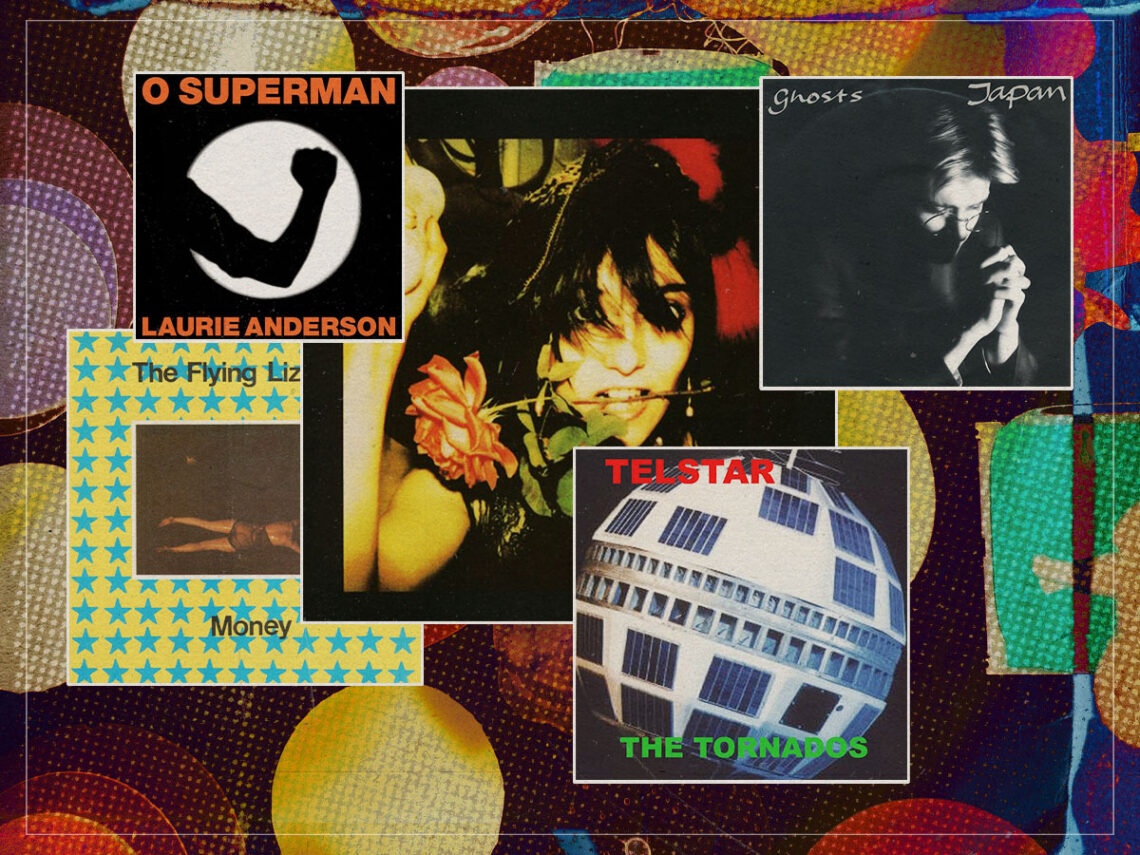
The Tornadoes – ‘Telstar’
Initially formed as the session band for visionary pop producer Joe Meek, The Tornadoes, for a moment, shoved The Shadows aside as the UK’s most popular instrumental group until Merseybeat brought back the appeal of the vocalist. Cutting a potent blend of surf rock and soundtrack scores, The Tornadoes reached into the fringe world of electronic tonalities to conjure a pop smash that reflected the era’s global ‘Space Race’ mania.
Dropped in 1962 while the USSR’s Vostok three and programmes were hovering above the planet, the West’s orbiting communications satellite response inspired the sci-fi hit The Tornadoes would forever be defined by. Opening with an eerie intergalactic rumble, ‘Telstar’ smatters its surreal Hawaiian twang with an electrical snap of primitive analogue keyboards—several years before Robert Moog had unveiled his namesake synthesiser. Still fizzing with weird novel energy over 60 years later, ‘Telstar’s’ sprightly celestial splendour is a perfect documentation of a band stumbling upon the avant-garde’s burst-open sonic hinterlands.
The Flying Lizards – ‘Money’
A loose coalition of free improv artists, musicological academics, and experimental producers – member David Cunningham having helped realise this confounding post-punk debut by Heat – wasn’t the obvious choice to make a number-five UK smash, but in 1979, following new wave’s upending impact, anything was possible.
Their second single, and leading the following year’s eponymous debut LP, The Flying Lizards’ deconstruction of Barrett Strong’s 1959 R&B stomper ‘Money (That’s What I Want)’ scoops out all the original’s soulful swagger and reassembles the piece with warped tape samples, a screwed-up noise solo, and a killer cash register sample punching with loose change percussion. Amid its uneasy bleeps and bristling aural radiations, the perfect singer, Deborah Evans-Stickland, lends a highly dispassionate and amateurish vocal delivery which ties the collage pop together with wry humour. It’s a masterful gem of the punk era and marks the moment’s iconoclastic fervour with gleeful subversion.
Public Image Ltd – ‘Flowers of Romance’
Forged in the ashes of the Sex Pistols, frontman John Lydon avoided lapses into cartoon parody that would come several decades later; his former bandmates had succumbed to it with The Great Rock ‘n’ Roll Swindle‘s dismal pantomime. Instead, he sought to hurtle steadfastly into the new post-punk terrain beckoning the punks already bored with the scene’s creeping uniformity. Recruiting early Clash guitarist Keith Levene and bassist Jah Wobble, Public Image Ltd set punk’s fury and malcontent to an infinitely more alien and subterranean aural dwelling.
After 1979’s Metal Box, Wobble departed and took his distinctive dub stylings with him. In his place, PiL filled the void with musique concrète samples and dense layers of percussion for 1981’s Flowers of Romance, a nightmarishly surreal record of unremitting avant-garde belligerence. Promoted solely by its title track, ‘Flowers of Romance’ still managed to peak at number 24 with its beguiling mist of insurgent drums and scraping Stroh violins mulching together with strange pop synergy, gifting Top of the Pops with one of the show’s most memorable performances.
Laurie Anderson – ‘O Superman’
Chicago multi-media artist Laurie Anderson had been exploring the craft of unorthodox storytelling since the late 1960s, before encountering sudden fame in 1981. Little known outside the arts, an experimental slice of minimalist poetry fusing Jules Massenet’s 19th-century arias and commentary on the American Embassy hostage crisis in Iran two years previously, found itself unexpectedly shooting to number two in the UK Singles Chart.
At eight minutes, and built around a repeated “ha” voice sample via the Eventide Harmoniser, Anderson coos via a Roland VP-330 vocoder cryptic allusions to failed US foreign policy and the futile over-reliance on technology in a strangely uneasy maternality that courses throughout ‘O Superman’. Such an innovative exercise in electronic music and experimental pop caught the attention of BBC Radio 1’s John Peel, whose incessant play pushed Anderson’s strange single to the fore of the pop world, and got her a tidy eight-album deal with Warner Bros.
Japan – ‘Ghosts’
Previously written off as little more than a Roxy Music rip-off with glam posturing, frontman David Sylvian’s embrace of synths pulled Japan away from stodgy rock towards a sophisticated futurist pop sound that filtered David Bowie’s Berlin exorcisms into Sylvian’s increasingly personal songwriting. While sharing a reluctant proximity with the New Romantics, the scene’s fashionista popularity gelled with their androgynous image and helped push Japan’s unique pop craft into the hands of Virgin Records, as they entered the 1980s.
Immersing themselves deeper into the sonic auras emitted from the Prophet-5, Oberheim OB-X and Roland System 700, Japan crafted one of UK pop’s most audacious entries with 1982’s ‘Ghosts’. Tin Drum‘s third single’s haunting austerity and frigid keys somehow wrest a faint pop hook amid its icy, contemplative fog, a slice of apparitional experimentalism utterly at odds with the chart toppers around it. Their biggest hit ever at number five, Japan called it quits and allowed ‘Ghosts’ to stand as their parting coda.
