


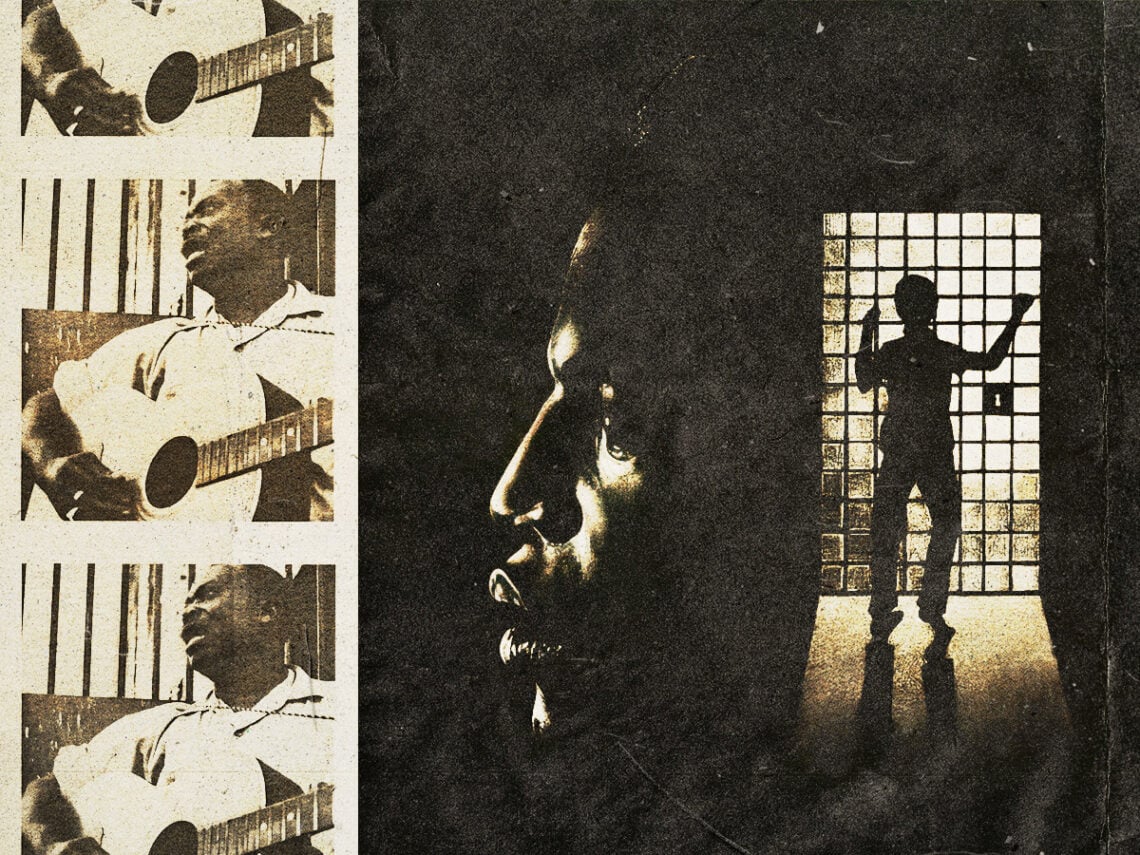
Five albums recorded by convicts in prison

Typically, we associate prison with a lack of freedom. However, over the years, many albums have been recorded and released from within the confines of jail cells, giving certain records a riveting backstory.
Some albums that were recorded in jail have been created by pre-established musicians who have found themselves behind bars for some reason or another. For example, Charles Manson’s associate Bobby Beausoleil was already a working musician before he committed murder and found himself sentenced to life in prison. Elsewhere, inmates have banded together and discovered a shared love for making music.
This list does not include albums recorded in prison by non-inmates, such as Johnny Cash’s first live LP, At Folsom Prison, from 1968, or Jail, by blues legend and rock and roll pioneer Big Mama Thornton. Rather, this list is dedicated to highlighting albums that were recorded by those incarcerated for various reasons, whether that be for murder or armed robbery.
So, from Those Prison Blues by Robert Pete Williams to Eyes of Love by The Edge of Daybreak, here are five albums that were entirely recorded in prison.
Five albums recorded in prison:
Lucifer Rising – Bobby Beausoleil
In 1970, Bobby Beausoleil, an associate of Charles Manson, was sentenced to death after stabbing and killing Gary Hinman the previous year. The murderer’s sentence was changed to life imprisonment, and he remains incarcerated to this day. However, before he ended up behind bars, Beausoleil played gigs with his band, The Orkustra, which captured the attention of experimental filmmaker Kenneth Anger.
The director needed a score for his film Lucifer Rising, and Beausoleil convinced him he’d be perfect for the job. However, plans fell through, and Jimmy Page was hired instead – until disagreements led them to part ways. Anger asked Beausoleil if he could complete the soundtrack in prison, to which he agreed. The murderer got some of his inmate pals together (The Freedom Orchestra) and recorded Lucifer Rising with Anger providing $3,000 for the cost of instruments.
Those Prison Blues – Robert Pete Williams
After shooting a man in 1956, which he claimed was an act of self-defence, Robert Pete Williams was sentenced to life in the Louisiana State Penitentiary. Here, two ethnomusicologists, Dr Harry Oster and Richard Allen, discovered Williams’ talents as a blues musician. In 1959, Oster recorded Williams performing his songs, often centred around prison life.
His debut album, These Prison Blues, was released the same year before receiving a reissue in 1971. Under pressure from Oster, Williams’ sentence was reduced, and he was released from jail, eventually playing at the Newport Folk Festival in 1964. He continued to tour over the years and was even inducted into the Blues Hall of Fame in 2014, 34 years after his death.
All We Need Is Another Chance – The Escorts
During the late 1960s, Reginald Prophet Haynes began doo-wop singing to pass the time behind bars. With a few fellow inmates, he formed a singing group, eventually labelling themselves The Escorts. The group would release their first album, All We Need is Another Chance, in 1973 after they were transferred to Rahway State Prison from Trenton State Prison.
Motown producer George Kerr recognised The Escorts’ talents after watching them perform at a prison talent show. He was responsible for bringing recording equipment to the jail for the group to record their debut, which legendary artists like J Dilla have since sampled.
Eyes of Love – The Edge of Daybreak
In the late 1970s, a group of musicians came together in Powhatan Correctional Center to form The Edge of Daybreak, a funk/soul outfit that included McEvoy Robinson, who had previously worked with names such as Otis Redding. When a friend of James Carrington, one of the members, suggested the band record an album after hearing them play, The Edge of Daybreak did just that.
Eyes of Love was released in 1979, with every song recorded in a single take during a five-hour session. Although the album received little attention at the time, with only 1000 copies available, it was rediscovered in 2015 when Numero Group reissued it.
Dauði Baldrs – Burzum
In 1993, Euronymous, the guitarist of Norwegian black metal band Mayhem, was fatally stabbed by fellow musician Varg Vikernes, who had previously played bass with the band on their debut album, De Mysteriis Dom Sathanas. However, two years prior, he had begun his project Burzum, which is regarded as one of the scene’s most influential and pioneering acts.
However, after being imprisoned for murder and arson (he set fire to three churches) and serving time between 1994 and 2009, Vikernes’ only option was to continue making music inside his cell. Since he could only access limited instruments, such as a synthesiser, he created ambient albums like Dauði Baldrs and Hliðskjálf.
