


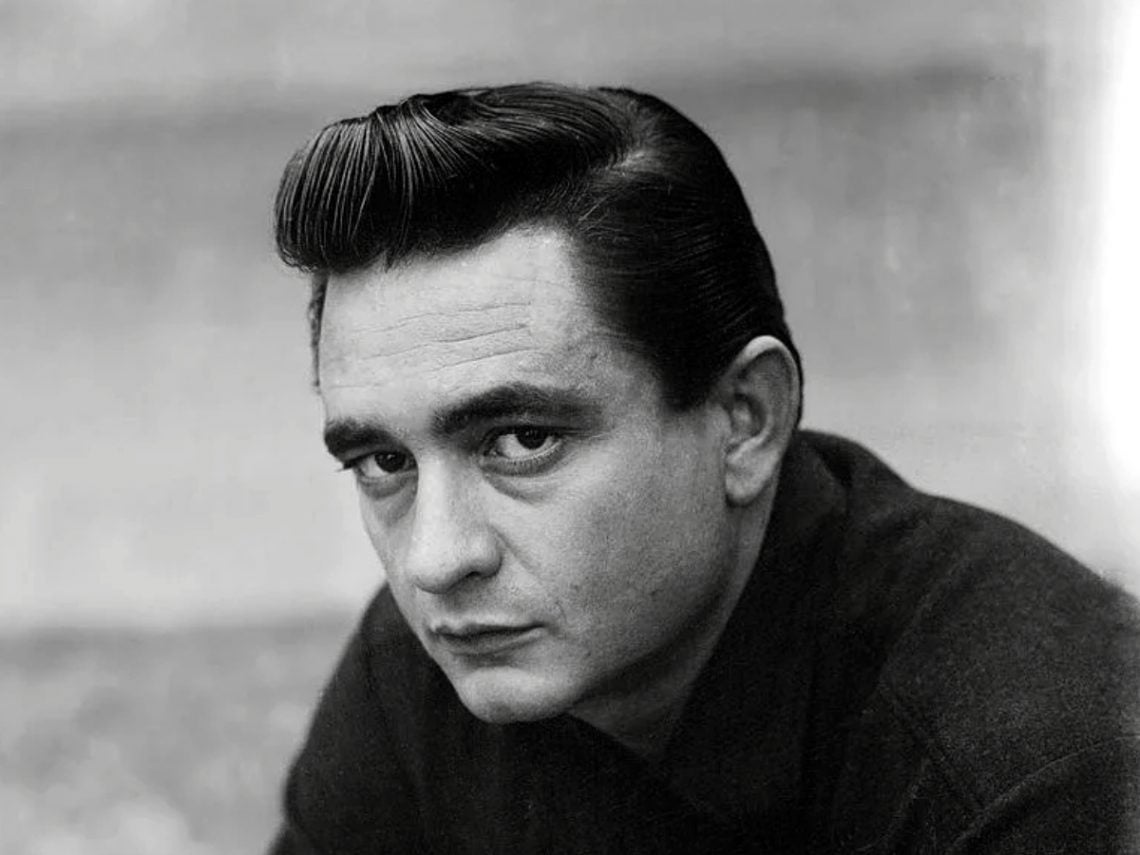
The undisputed brilliance of Johnny Cash ‘At Folsom Prison’

“Hello, I’m Johnny Cash”. It was the same introduction that Cash had used for himself for more than a decade, but this time it felt different. The roar of the crowd was bigger and more enthusiastic than normal. There was a kinship between the singer and his audience that transcended fandom. Johnny Cash wasn’t playing to a paying crowd paying customers; he was entertaining a group of thieves, delinquents, robbers, criminals, and possible murderers. He was right at home.
Although Cash hadn’t logged any prison time himself (apart from a single night in jail for drug possession in 1967), he became the first prominent figure in outlaw country, a new genre of music that was beginning to formalise in the late 1960s. Cash had some public spats with the law but nothing that ever necessitated serious jail time. Yet, there was no place that felt more appropriate for Cash to play than Folsom Prison, the California correctional facility that he’d immortalised in song nearly 15 years before.
Redemption was the name of the game for Cash. After a full decade of struggling with drug abuse and fluctuating success, Cash was hardened and sober by 1968. With a catalogue full of classic gospel songs, prison tunes, and darkly humourous tracks, Cash wanted to use his newfound clarity to give back to the men who remained on the outskirts of society. It was a preoccupation that Cash had carried with him nearly his entire career.
Cash first performed at a prison in 1957 when he entered the Texas State Penitentiary in Huntsville. Over the next ten years, Cash found himself in and out of jails, singing songs to men who had been considered dangerous by the outside world. However, Cash didn’t see his audience as bad men: he was sympathetic to those who couldn’t march in line with the laws and organisation of traditional life. He formed a kinship with them, and in turn, the prisoners saw Cash as one of their own.
In 1968, Johnny Cash wasn’t the hit-making country star that he had been in the decade prior. A generation out of step with the then-modern stars of country music, Cash’s personal struggles began to cripple his professional career. Although it wasn’t all bad, he nabbed a Grammy Award for his duet with June Carter, ‘Jackson’, in 1967. Still, Cash wasn’t a major national figure anymore.
With a shakeup at his label, Columbia Records, Cash was given the go-ahead to record a live album. He wanted either Folsom or San Quentin (a prison that he had played before and would later record in for a follow-up to At Folsom Prison), and Folsom was the first to give him the go-ahead. On a brisk January morning, Cash and his entourage entered Folsom Prison at the first light of morning, with Cash taking the stage at 9:40am to a mess hall full of enthusiastic prisoners.
From the very first cheer at his introduction, Cash loosened his stoic demeanour and began interacting with the audience. His impromptu shouts during ‘Folsom Prison Blues’ made the early-morning prison performance as raucous as a nightclub. When he slows down for the next song, ‘Dark as a Dungeon’, Cash likely expected it to be a sobering reminder of prison life. Instead, a laugh from an inmate caused Cash himself to chuckle.
With the ice broken, Cash began to talk directly to the prisoners from the stage, including famously informing the crowd that “this show is being recorded for an album release on Columbia Records, and you can’t say ‘hell’ or ‘shit’ or anything like that”. The line was kept for the final album, as were the announcements made by guards into the microphone.
Respect and admiration went both ways during the concert. Cash seems genuinely giddy to be playing for the inmates, and the prisoners treat Cash like one of their own. It’s a bond that can clearly be felt listening to At Folsom Prison 55 years later. Real joy is palpable in the air, even as Cash sings about being put away for life or swinging from the gallows.
With every additional song about the hell that is prison life, the audience only seems to be more invigorated. Perhaps it’s because they had never had someone treat them with this level of understanding; perhaps they just wanted to let loose for a little while. Whatever compelled them, the inmates at Folsom proved to be the warmest and most welcoming audience that Cash had ever played for in his life.
Another set at 12:40pm that day was recorded, but the only songs that came from the second go around were ‘Give My Love to Rose’ and ‘I Got Stripes’, the latter being a somewhat impromptu rendition that wasn’t planned or played in the first set. After a full set of gallows humour (’25 Minutes to Go’), souped-up railroad songs (‘Orange Blossom Special’) and odes to incarceration (‘The Wall’), Cash ended both his sets with a special song.
As he explained to the crowd, ‘Greystone Chappel’ was written by then-current Folsom inmate Glen Sherley. An ode to the redemption found in the prison’s church, it was the emotional climax of a show filled with personal moments. For Cash, it was the ultimate acknowledgement that his connection with the crowd went beyond the songs he sang and, indeed, beyond the walls that separated the country star from a group of prisoners. For a few hours, they were one and the same, commiserating and celebrating together in ways that couldn’t be faked or duplicated. It was all captured on tape, and it continues to live on as perhaps the greatest country album ever recorded.
