


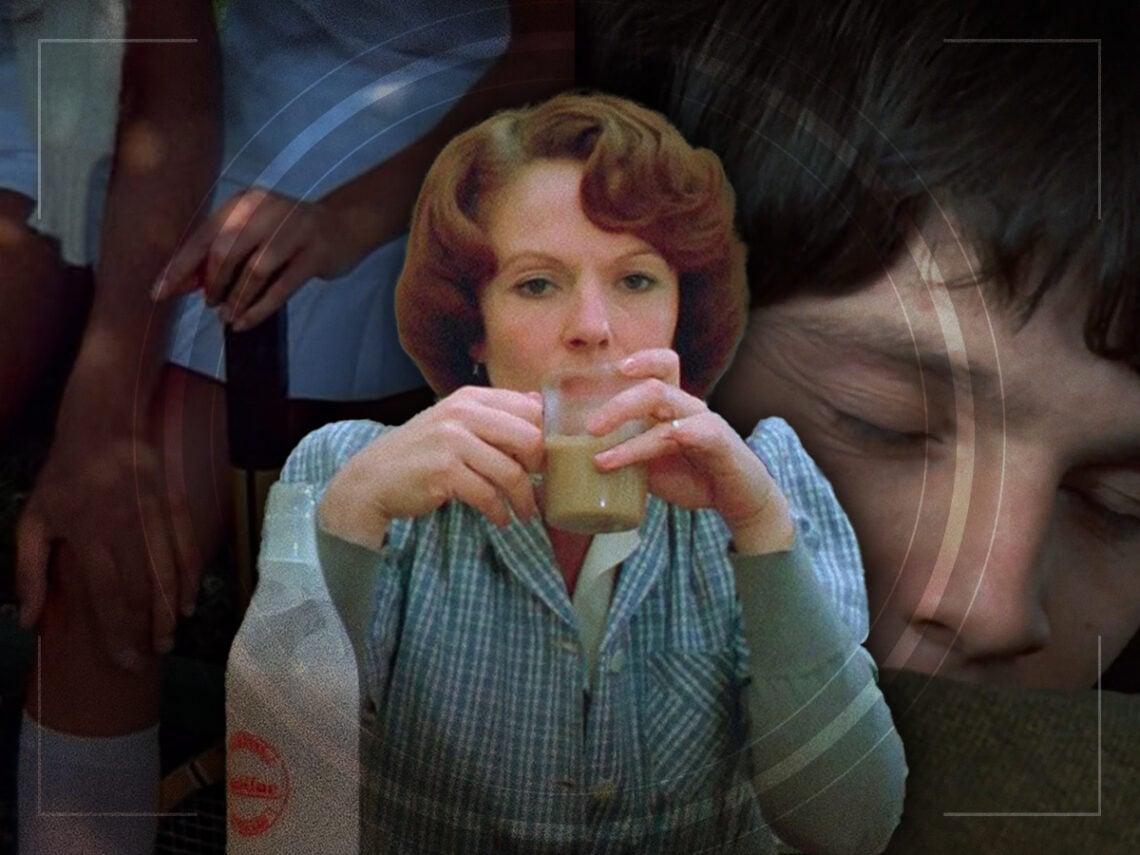
Five movies from the 1970s that were years ahead of their time

The phrase ‘ahead of its time’ is sometimes thrown around a lot in discussions about radical cinema and films perceived as being revolutionary. While there are some films that are certainly groundbreaking in more ways than one, it does not always mean that they were ahead of their time. This label is reserved for projects that took a risk by sharing a certain story or message that contradicted mainstream thinking at the time.
It could be the likes of Brokeback Mountain or I Saw the TV Glow, with both films challenging public rhetoric around queer people and going against damaging ideas becoming increasingly common in the mainstream.
Or it could be films like The Heartbreak Kid and Mikey Nicky, with Elaine May working ahead of her time in an industry that rarely let women into positions of power, with the director struggling to have her voice heard and at one point, existing as the only woman in the Directors Guild of America.
But while this label is thrown around a lot, there was one pivotal era that led to many genuinely revolutionary and ahead- -of-their-time films. The 1970s acted as a catalyst for creative change, forever altering the face of the industry.
Five 1970s movies that were ahead of their time:
‘Claire’s Knee’ – Éric Rohmer (1970)

Éric Rohmer was one of the most progressive thinkers and filmmakers of his time, sticking out even among the anarchists of the French New Wave movement for his introspective dramas and incisive understanding of human psychology. From the crushing exploration of loneliness in The Green Ray to his hilarious critique of romantic indecision in A Summer’s Tale, there is no subject out of bounds for the director. His astute and naturally insightful perspective allows audiences to glean wisdom from every frame.
However, there is one film that sticks out from his masterful streak in the ‘70s that saw the director venturing into taboo territory with his 1970 film, Claire’s Knee. It follows a professor on the eve of his wedding and his sudden obsession with caressing a teenage girl’s knee. In typical Rohmer fashion, the director shines a light on the perverse fantasies of this man and picks apart the male psyche, exposing the flimsy nature of his moral compass and constant contradictions as he justifies his immoral desire and delusional thinking. This became a common theme in the remainder of Rohmer’s work, but it is perhaps most impactful in Claire’s Knee, given the controversial lens with which he views the story and his careful handling of such a sticky subject.
‘Jeanne Dielman, 23, quai du Commerce, 1080 Bruxelles’ – Chantal Akerman (1975)

It’s impossible to talk about groundbreaking works from the ‘70s without mentioning Jeanne Dielman, with Chantal Akerman’s feminist masterpiece forever changing the framework of cinema and the types of stories deemed worthy of sharing on the big screen.
The film charts the daily routines and rituals of a lonely Belgian housewife, slowly taking us through each part of her day and giving us a taste of the sense of dread and boredom induced through living this life. Many critics blasted it for being boring and borderline unbearable, but those who understand it know that this is the point—how we force some women to live out this existence for their entire lives when we cannot even bear to look at it for a few hours. For this reason, it remains not only one of the most influential films from the ‘70s, but of all time.
‘Walkabout’ – Nicolas Roeg (1971)

There are many strange masterpieces that emerged from the Australian New Wave movement, with directors like Nicolas Roeg, Peter Weir and Gillian Armstrong becoming synonymous with a new era of creative anarchists, exposing the damaging effects of consumerism and the loss of innocence in the modern age. But there is one film that beautifully encapsulates the tone of this movement, while also standing out in terms of the techniques used to criticise our now inescapable reality.
Walkabout follows two young teenagers who are abandoned in the desert by their father, struggling to survive until being found by a local Aboriginal boy who teaches them how to live off the land. Through the brilliant editing and mesmerising visuals, Roeg captures the true beauty of the natural world and an even more natural way of life that we have slowly destroyed with our obsession with modernity and “progress”. Ultimately, Roeg shows how this pursuit has only pulled us backwards, corrupting what is natural and making lives out of unnatural processes that separate us further from our humanity. The story is scarily relevant now, with Roeg exerting a knowing eye over a bleak future that is the present.
‘All That Jazz’ – Bob Fosse (1979)

In a world that is becoming increasingly corrupted by narcissistic pursuits and self-surveillance—something that is all too common following the steady rise and domination of social media—Bob Fosse was one of the first to predict the dangers of this through his 1979 film, All That Jazz.
Fosse tells the story of his own life and time in the spotlight through the fictional character of Joe Gideon, showing how the merging of his inner and outer world and obsession with performance led him to become a shell of himself as he dedicated his entire being to the stage. Many people in the public eye become irreparably changed through fame and constant attention, with Fosse highlighting how a life in the spotlight made him lose sight of what was important, with his all-consuming performance ruining his interpersonal relationships and leaving him an empty man with nothing real to show for his success. This is a fate that awaits many people who now share their entire lives online and cannot separate their true selves from the version they portray, making this film devastatingly relevant in a world full of individuals who can’t stop performing.
‘Sunday Bloody Sunday’ – John Schlesinger (1971)

There are few films from this time that contain kind and nuanced portrayals of queer people, with many resorting to damaging stereotypes and one-dimensional characters that further exclude the community from proper representation. While a film like Fox and His Friends is groundbreaking in its portrayal of gay men, John Schlesinger’s 1971 film, Sunday Bloody Sunday, is a criminally underrated in the canon of queer cinema; it is a story that portrays queerness and non-monogamy in a revolutionarily compassionate way.
For a community that is so often erased from the spotlight or portrayed through a harmful lens, Sunday Bloody Sunday is moving and deeply human in its portrayal of three people on a journey of sexual self-discovery, with each becoming involved in a non-monogamous relationship and challenging their ideas of tradition, intimacy and love. It is beautifully complex and sensitive as it interweaves the experiences of each and explores the highs and lows of embracing one’s true self, while simultaneously highlighting the confusion over not conforming to society’s expectations yet trying to muddle through and live authentically. It is one of the most radical films from the era in its portrayal of queer love, tapping into the freedom that came with the ‘70s, as well as the uncertainty that came with exercising these freedoms.
