


What was the first song played at Woodstock?

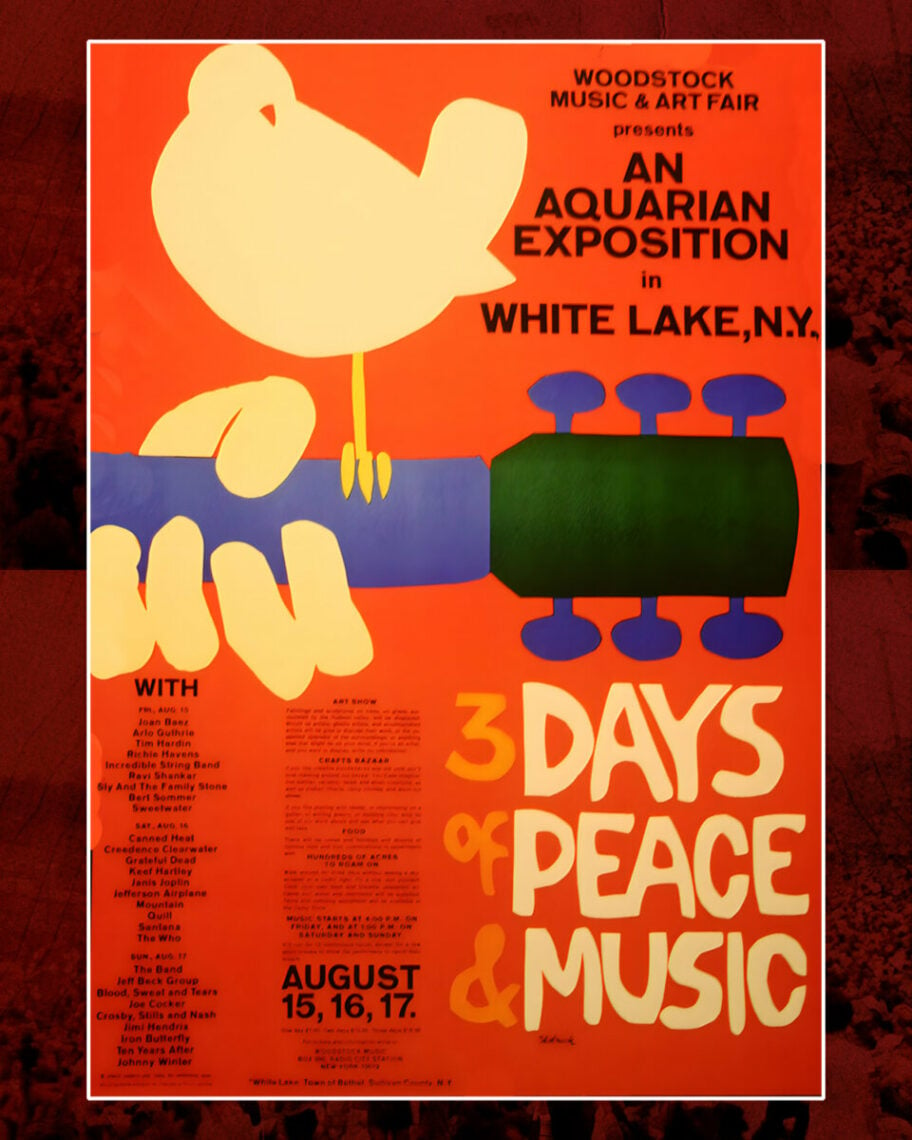
Before the event took place, nobody could have known just how big the Woodstock Music and Art Fair was going to be. The organisers had hoped to attract an audience, some thought ambitiously, of around 50,000. Their ambitions were proved to be tame in comparison to the demand. It’s estimated that around 186,000 advance tickets were sold, but in the end, over 400,000 attendees descended on the festival site in Bethel, New York, across the three now-legendary days of supposed peace and music in mid-August 1969.
Though festivals were growing as a force through the 1960s, following both the commercial success and cultural impact of events like the Newport Jazz Festival, the Newport Folk Festival and the Monterey Pop Festival, nothing had ever been as big as Woodstock, and, likely, never will be again.
It has long been rumoured that one of the reasons that the festival organisers – Michael Lang, Artie Kornfeld, John P Roberts, and Joel Rosenman – chose the location they did was in an attempt to coax Bob Dylan out of his virtual retirement from the stage. If that was true, they couldn’t have made a worse move. Having withdrawn from the inner city to a place beyond even the outer boroughs, Dylan was rapidly tiring of the hippies who were making a pilgrimage to his new home in the artist’s haven of Woodstock, in search of their lost hero. By the time the festival was put together, he wasn’t even in the country, having flown to Great Britain ahead of his surprising appearance at a different festival, on the Isle of Wight instead.
Other acts who were invited but turned down the opportunity to perform at Woodstock included The Beatles (John Lennon said he couldn’t get the group together, though, in reality, they got together at the Isle of Wight, as well, just as the audience instead of on the stage), Led Zeppelin (they were offered more money to play elsewhere that weekend) and The Byrds (who turned the offer down following a fight in the crowd at their most recent festival setting, the 1969 Atlanta International Pop Festival).
Even without banner acts like these, the festival managed to draw an enviable line-up of now legendary names, including Joan Baez, The Band, Santana, the Grateful Dead, Creedence Clearwater Revival, Janis Joplin, The Who, Jimi Hendrix, The Paul Butterfield Blues Band and plenty more. In fact, it’s not just these artists who have all become legendary figures, but for the most part, their appearances at Woodstock are all the stuff of legend, too.
Hendrix had insisted that he go on last, and following his shocking, mercurial and name-making appearance at the Monterey Pop festival two years previously, he had every right to make such a demand. Owing to the late running and chaos behind the scenes, it meant that going on last, in reality, had him hitting the stage at 9am on Monday morning, and playing to an increasingly disinterested, disassociated and dwindling crowd. Though the music had gone on through the night on each day of the festival, by the end of the three days, and then on its fourth, everyone involved was running on too little sleep and food, and quite likely too many drugs, to keep it together for the final performance.
That’s the end, but what was the first song played at Woodstock?
The festival that had caused such a stir, with so many exciting, dangerous, captivating and powerful performances, ended on the same note that it had started on: a chaotic one.
Having been stopped on their way to the festival by the police and then later caught up in the enormous traffic caused by the sheer number of people descending on the Bethel farmgrounds where the festival was being held, the group who had been booked to be the opening act at Woodstock, Sweetwater, didn’t make it there in time to go on.
Having arrived earlier than his counterparts, despite being booked to go on later, Richie Havens was pushed up the bill and, shortly after the advertised start time of 17:00, became the first performer to step out onto the now-famous Woodstock stage. Backed by Paul Williams on guitar and Daniel Ben Zebulon on percussion, and introduced as “one of the most beautiful men in the whole world”, Havens casually strolled on, said his hellos, and asked the enormous audience, almost in disbelief, “How are you? How are you in the back? Can you hear?” Havens then launched into an aching, thoughtful and haunting version of Jerry Merrick’s ‘From the Prison’, and in the process, got the most famous few days of music of all time successfully underway.
