


How to put on a good day festival: Lessons from Brighton’s Homegrown festival

Each and every time we write about the Brighton music scene, it comes down to the same points. The reason why the city is thriving at the moment is because of the way the bands, the venues, the promoters and the fans pull together as one united force.
There is a palpable atmosphere of friendship, and a community in the true, old-fashioned way, but where borrowing sugar from your neighbour is now borrowing a guitar player from another act.
There are plenty of de jure examples of that coming out of the city. One was the energy at Mumfest and the list of bands signing on to play the charity event. Another was the way hometown artists led the charge in 2024 when local venues opened up their doors to bands boycotting Great Escape Festival, rejecting the big industry to be welcomed with open arms by the community. It’s shown any time you go to a gig in Brighton and the entire scene seems to be there, either onstage as members are shared between acts, or in the crowd cheering them on.
But for a de facto example, or an example locking it in and making it official, look towards the self-made Music Venues Alliance Brighton. While other cities might see different venues scrapping like rivals, trying to outplay one another to get audience members in their door and not the door of another, Brighton’s local spots also embrace the energy of community and lock it in via an official CIC, or Community Interest Company.
Sally, the manager of Hope and Ruin, was a key figure in getting this started, explaining, “Myself and other venues set up Music Venues Alliance Brighton, a CIC, to work together to protect venues and work together. This mostly revolves around things like planning issues and noise complaints.”
At one of those meetings, though, when the official tasks were ticked off and done, the city’s spirit crept in. “We wanted to do something a bit more fun, so that’s when Homegrown was born,” she said, as it truly seems that musicians and music organisers in this city cannot resist the call to collaborate.
Just as Brighton bands provide a shiny blueprint for how a community can work best to elevate everybody, with Soft Top’s Miles Goodall putting it succinctly, “All ships rise with the tide”. Brighton’s Homegrown festival becomes the blueprint for how to put on an actually good day-festival that both serves its community and goes beyond it.

As festivals become pricier and pricier, and more and more festivals are being bought out by big conglomerates, city-based day events are becoming an answer to the problem. There are some poor examples, though, like the complaints surrounding the chain of day festivals at Brockwell Park or the commercialised nature of events like All Points East. But especially outside of London, day festivals find real success when they can tap into local communities, like Sheffield’s Get Together, embracing the social haven of Kelham Island, or Homegrown’s expert balance of letting Brighton lead while also calling in some big leagues.
Balance is key, of course. If an event is going to take over town for a day, it should serve the musicians and folks. Its inconveniencing by shutting down its local pubs and clubs, but also, it can’t be expected that everyone in a local area is keeping up to date with the happenings and emergences of new local bands. Any success requires a mix of both, and as Homegrown’s organisers talk about the making of their event, it feels like a how-to guide.
But Homegrown does begin with its home city. When asking Jacko Hooper, the manager of Folklore Rooms and another of the festival’s organisers, how they maintain balancing Brighton and beyond, he said, “I think the strength of the scene does that for us to a certain extent as it’s always changing and morphing into things and the genre spread seems to keep expanding”.
When the scene surrounding them is so dynamic, all doors are open from punk to pop to folk to ambient sounds and beyond. When all that is to be found in the local names they can book, it broadens the horizons for out-of-town acts they can invite in.
It starts local and then grows out as Hooper added, “We’ve got 70+ bands this year, so it’s a lot for us to lock in, but at the start we usually focus on some of the bands that perhaps we’ve all worked with recently who are really representing the scene in the here and now and then start discussing potential headline options.”
While other, more commercial events often have a token, small-font line on the poster of a few local names, Homegrown prioritises its own talent. And part of what makes Brighton the ideal place to make it happen is the fact that they seem to be racing ahead of the pack in realising that the scene doesn’t just include musicians but also the actual bricks and mortar buildings, the managers that run them, the bar staff that serve them and beyond.
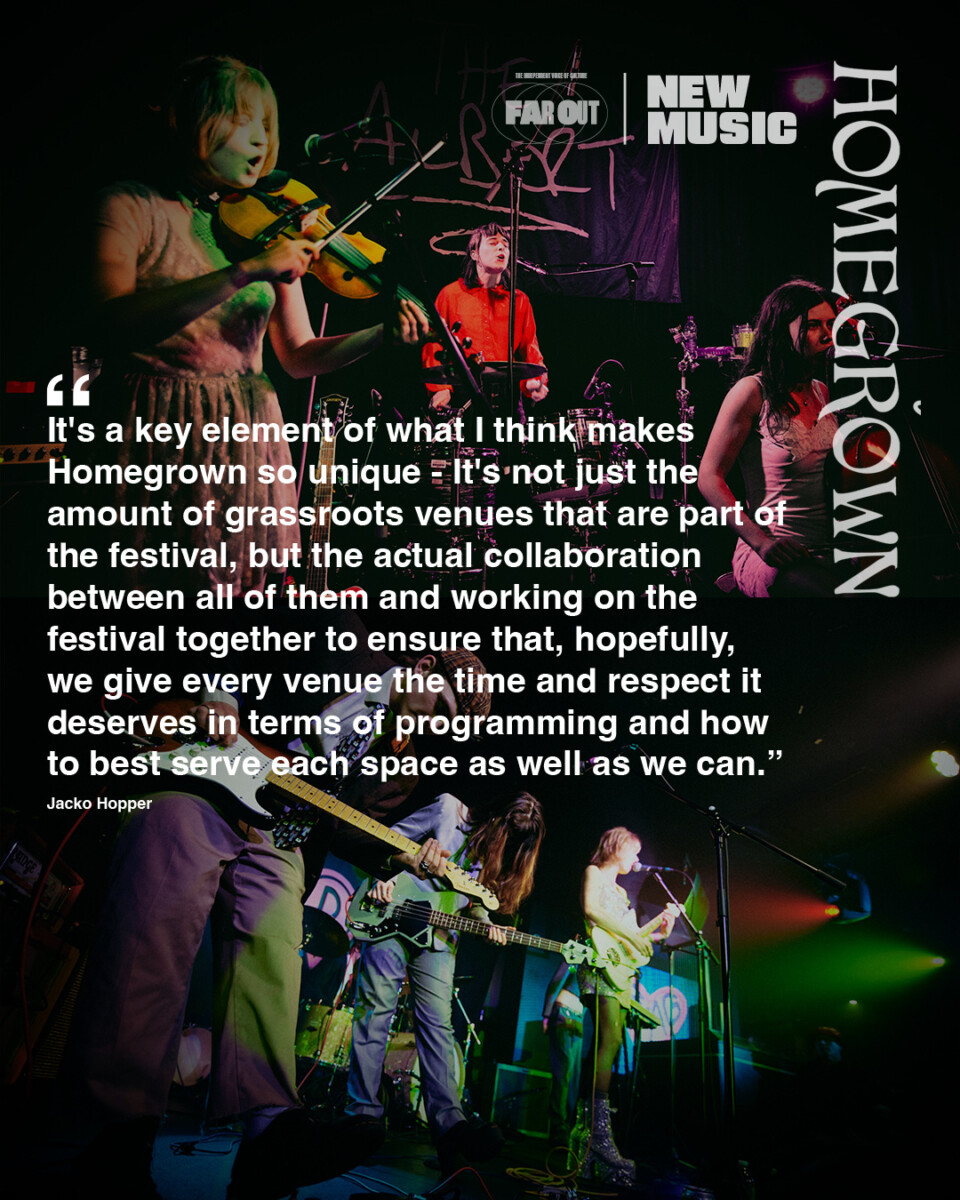
Just as Brighton bands kick start the book, its venues and the people that work at them kick start the energy. “It’s a key element of what I think makes Homegrown so unique. It’s not just the amount of grassroots venues that are part of the festival, but the actual collaboration between all of them and working on the festival together to ensure that, hopefully, we give every venue the time and respect it deserves in terms of programming and how to best serve each space as well as we can,” Hooper said as another consideration many other events forget.
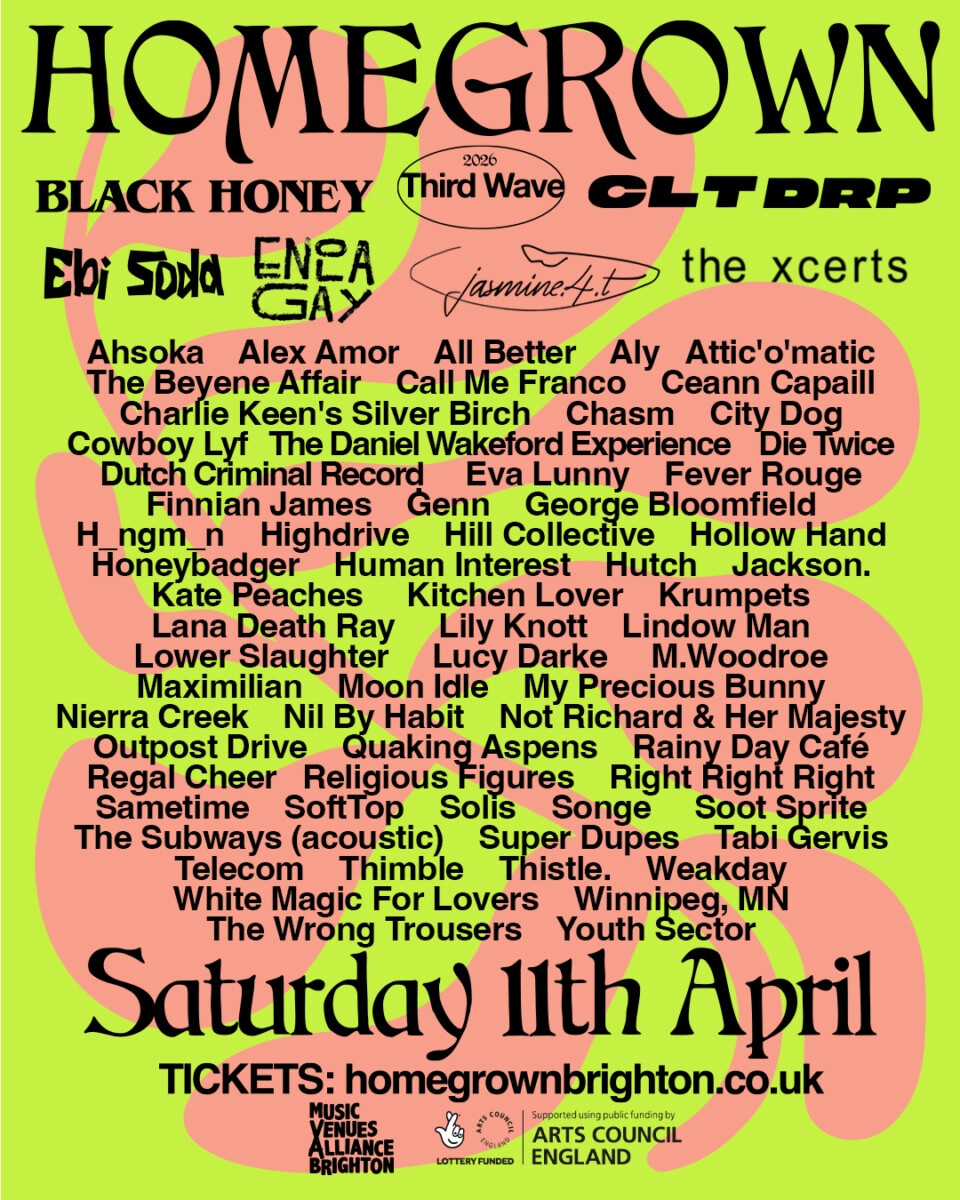
It’s not just a consideration that honours the area, but it also works out logistically as a matter of crowd control. To best enjoy the event, Hooper urges ticket holders to “keep moving! Make sure you get to as many venues as you can and take a risk on something new”. Trusting that there is no one place to be, no one base or hub that will get too busy, the dynamic lineup and the equal devotion given to each venue stops overcrowding as a smart way to organise.
That can only be done through understanding, though. An issue that crops up with other events is the fact that clearly, the people in offices organising them don’t understand the venues they’re playing with or the fans that will flock to them.
“We’re so lucky in Brighton that we have so many great venues and a lot of them have their own speciality,” Hooper said. Folklore Rooms mostly does what it says on the tin, Daltons down by the beach is typically the stomping grown of heavier rockers, Green Door Store is an indie mecca, and as the festival is organised directly by the people who run these spaces, and know that, they know best how to spread a lineup out, able to map enough variation to keep people moving, while also having the simple, logistical knowledge of their regulars and typical footfall.
In a lot of ways, Homegrown feels like a test tube baby that Brighton’s venue managers are growing as an experiment on behalf of city scenes everywhere. The Music Venues Alliance Brighton (MVAB) collective feels like that too, as it seems like each and every city should have their equivalent to all pull together. As a festival still in its infancy, but already bringing in some of the most exciting names in the modern music landscape, like Marika Hackman, Jasmine.4.t, Black Honey and beyond, as well as a huge array of the ever-expanding crowd of great acts coming from the seaside town, Homegrown is a day festival done right that understands that things should always build from the grass roots up, from home soil and then beyond.
