


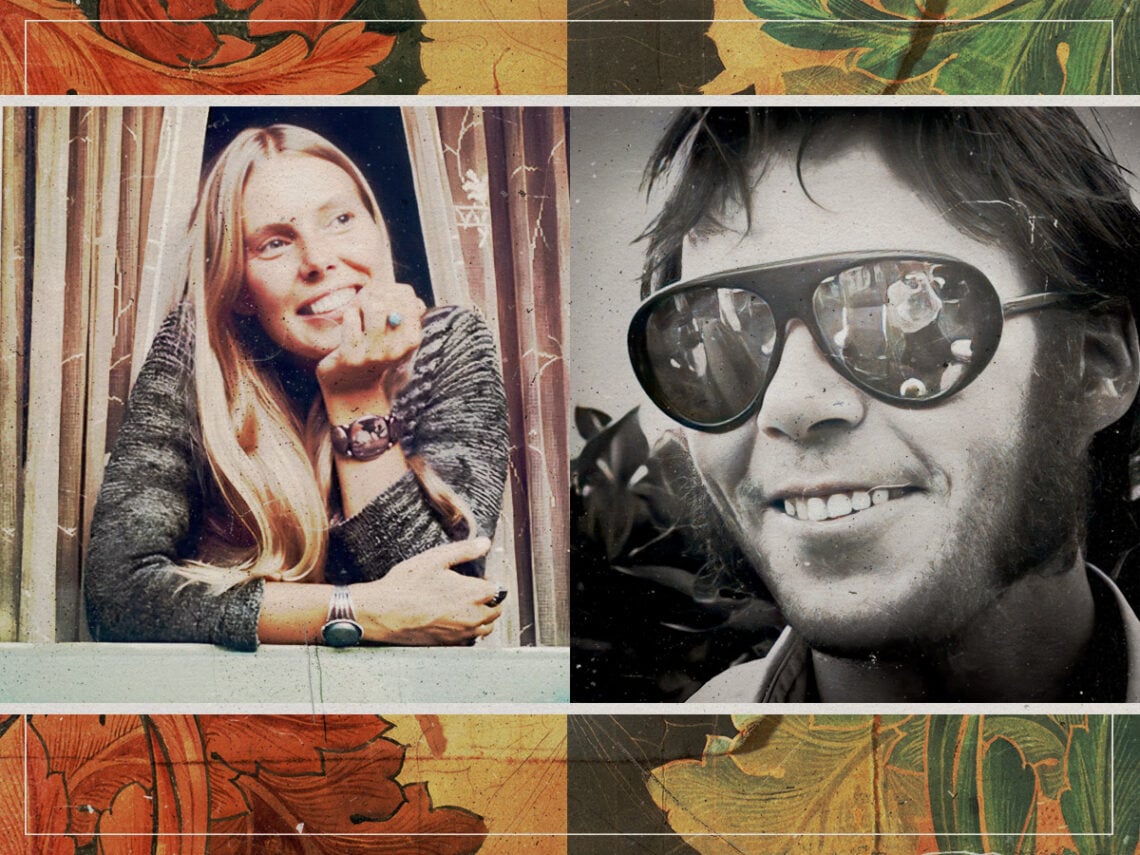
The music festival that banned both Joni Mitchell and Neil Young: “They resented our success”

Most festivals would kill to have the name Joni Mitchell sitting at the top of their lineup. It’s a booking that’s sure to have thousands of folk lovers and songwriting enthusiasts flocking to the fields, desperate to hear her delicate strums and poetic declarations in person. From the Newport Folk Festival to a series of upcoming Joni Jams at the Hollywood Bowl, her pull has been unwavering for six decades, but there was one festival that rejected her.
By the mid-1960s, Mitchell was beginning to carve out a place for herself in the folk circuit. She spent her early years playing in local clubs and hotels, before eventually landing her first big gig at Mariposa Folk Festival in her homeland of Canada. Mitchell had previously attended the festival as a fan, so this slot seemed like a huge honour for her early career.
But Mitchell’s once pure relationship with Mariposa quickly soured when the festival turned on her. She and her fellow folk legend Neil Young had expected the festival to be a celebration of the genre they existed in, but they found that they had “copped an attitude,” as Mitchell commented in a news conference via the Calgary Herald.
“They didn’t want anybody with too much drawing power at a certain point,” she explained, “And Neil and I got banned.” It’s difficult to understand how this decision came about. Following her first appearance at the festival, Mitchell quickly gained traction in the folk circuit and cemented herself as one of the most important figures within it. She should have become one of their proudest bookings.
She went on to forge seminal folk records such as Ladies of the Canyon in 1970 and Blue just over a year later. She infused the genre with newfound poetry and vulnerability, ensuring that her heart and soul went into every composition. Audiences and critics heaped praise upon her as a result, and she landed shows and festival bookings aplenty.
Three Newport Folk Festival slots in as many years. A return to Mariposa in 1969. Opening slots for fellow folk icons. Yet, Mariposa opted not to celebrate and savour her ever-growing success but rather to ban her and Young from the festival as a result. “They resented our success,” Mitchell commented.
It seems like a strange decision. Surely it would have made more sense for Mariposa, even if only from a business standpoint, to relish in their existing relationship with Mitchell. They were one of the first to put her on a big stage, to foster her talent for folk at its earliest stages, and they brought her back to Ontario several times in the years following.
On a more personal and creative level, it would have delighted audiences to see Mitchell continually returning to the stage that she had first cut her teeth on, to see her journey from humble beginnings to headline slots. But perhaps Mitchell’s success had simply become too overpowering for the festival and, instead of inviting her back, they excluded her completely.
The encounter, amongst other reasons, led Mitchell to stay away from festivals in her home country for decades. But Mariposa’s rejection didn’t stop her from becoming one of the most well-loved and well-respected songwriters not only in folk but in the entirety of music history.
