


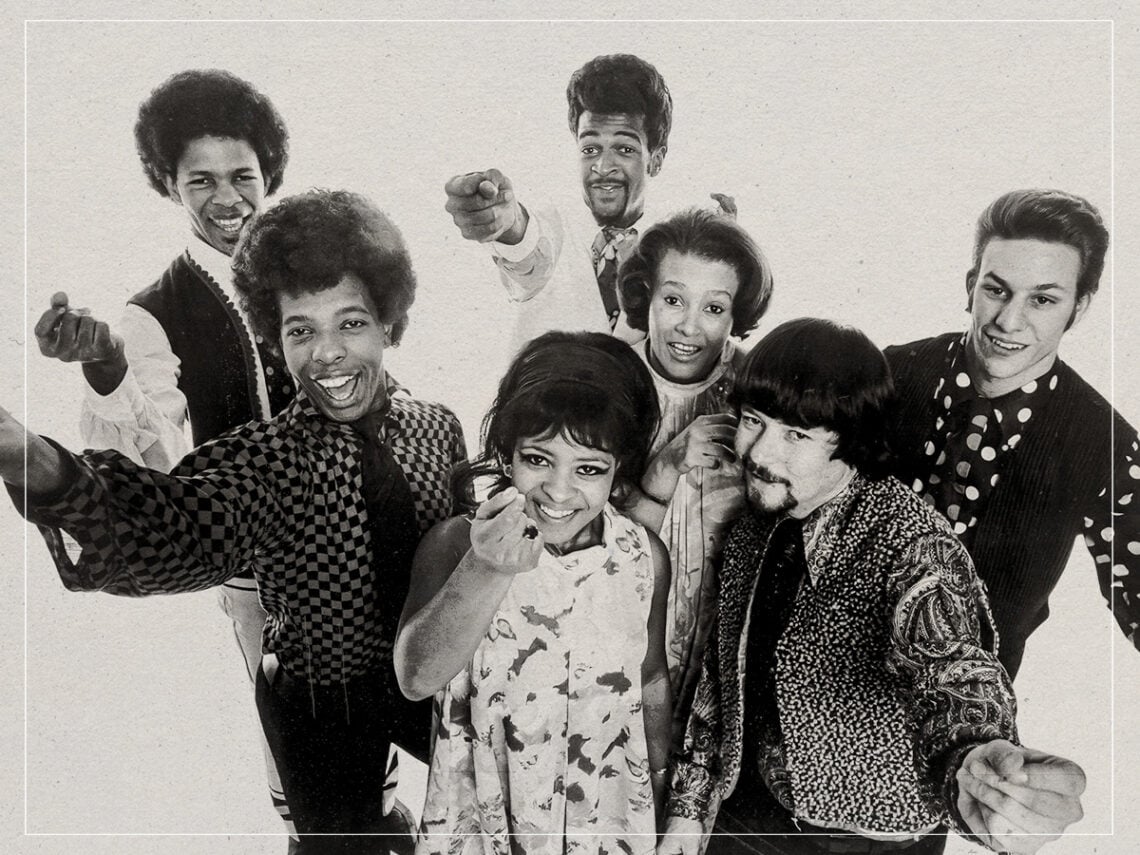
‘Family Affair’: Sly Stone’s outward cry against inner turmoil

The 1960s were seen as a time of swinging spirits, peace and love, and the notion of embracing everyone in the new technicolour world. But Sly Stone was far more interested in what happened when the sun of that facade eventually set.
Yet by the time the 1970s dawned, the generous notions of equality for all had very much become deadened in the water, and it was something that Stone and his gang had taken more than a little notice of. No longer were they in the mood for the sunshine soul of ‘Dance to the Music’ and ‘Hot Fun in the Summertime’; the mood was so much darker than it ever was, and pulling out a response to the tune of There’s A Riot Goin’ On was the only real option.
Between the minefield of societal eruptions which Stone found himself at the crossroads of in November 1971, his song ‘Family Affair’ was the true reckoning of the odds stacked against him. After all, this was not just the plight of the ugly resurgence of racism or the recurrence of community divisions – it was also the final plea to his own family to stop their inner bickerings and return to the force of good that they had started out as. Retrospectively, it could also be seen as a tragic memento mori for the fact that this ultimately fell on deaf ears.
When Stone formed the band in 1966, it seemed obvious to him that he would rely on a selection of both family and friends to create the ultimate musical machine – it just so happened that those people were a mix of men and women, whose skin colours were a range of Black and white. In many ways, it was a symbol of what society was and has always been. The fact that it would still be considered so revolutionary now is a much greater indictment than you’d think.
But nevertheless, the reason that Sly and the Family Stone succeeded was because they picked the perfect era to begin treading the boards – one in which such a smorgasbord of talent and background was celebrated rather than scrutinised, and one in which the peace and love train buoyed them to a myriad of hits. But naturally, the journey had to end at some sort of station (in this case, the start of the 1970s), which marked a much darker and more downtrodden view of their world.
Tensions and infighting within the group itself were only really the tip of the iceberg, however, because the era presented far more problems to their existential existence than there ever had been before. Drugs had torn Stone apart from the rest of his band internally, while on the outside, they attempted to display a united front in response to the Black Panther Party starting a renewed focus on getting the frontman to fire his white members, Gregg Errico and Jerry Martini.

The result was a distortion of both the reality they once knew and the future they had planned, meaning the happy-clappy approach to upbeat soul was no longer going to cut it. After all, how could you possibly carry on singing about how much you love the sunshine when your own life was filled with so many storm clouds? As such, when Stone sat down to write There’s a Riot Goin’ On, he could only resort to that more twisted mood board in order to cultivate any form of music at all.
The anthemic ‘Family Affair’ was selected as the lead single in 1971 for its relative palatability compared to the rest of the album; it was true in the sense that it captured the band their third and final number one. But in reality, this was no run-of-the-mill hit tune – it was an outward show of strength to the critics and the pessimists, but equally an inward plea to his family to keep it together for just a while longer.
Anyone who couldn’t see that this was a band hurtling towards terminal death must have been blind to the lyric: “You can’t leave ’cause your heart is there/ But, sure, you can’t stay ’cause you been somewhere else/ You can’t cry ‘cause you’ll look broke down/ But you’re cryin’ anyway ‘cause you’re all broke down,” as the writing was essentially laid bare on the wall. They ultimately couldn’t keep up the act forever.
As the darkest addition to the Sly and the Family Stone back catalogue, but equally also their most starkly frank, ‘Family Affair’ was a secret manuscript on the tensions that would inevitably rise from keeping both one’s life and work in such close proximity to each other. It was the recognition and resignation that while they once had something special within their dynamic, it was this same closeness that also tore the band irreparably apart.
Of course, family affairs of this kind are usually to be kept behind closed doors, but Stone’s decision to cast it out on such a public platform was almost a reckoning to have everything out in the open. His outward cry of unity, in contrast to his inner turmoil of that moment, was a facade that ultimately crumbled not long after he attempted to build it – but in this sense, he also managed to create a better allegory for the shift of the ‘70s than the idea of the song ever could have alone.
