


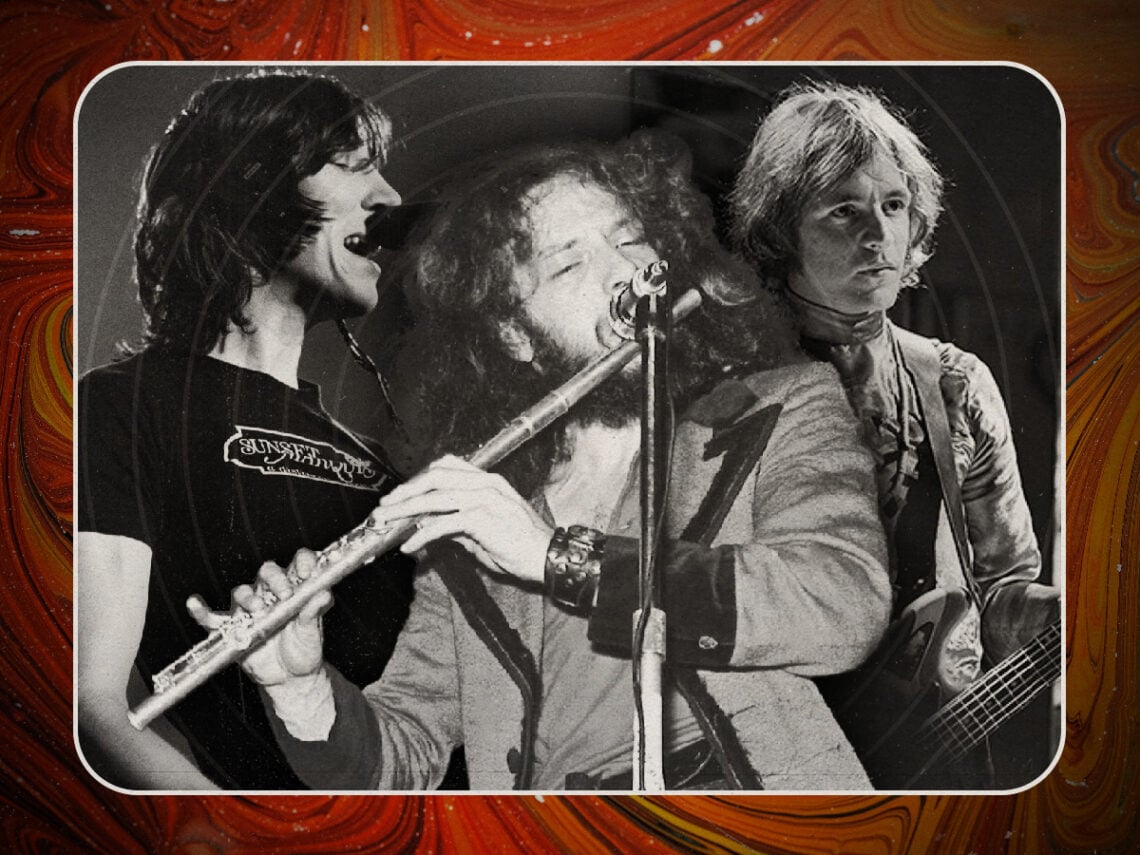
Ian Anderson and the exact moment in 1972 when prog became too “self-indulgent”

Back in February, we spoke to Ian Anderson, and he was in reflective form. Tour dates stretch out ahead of Jethro Tull until 2027, but at the age of 78, he was soberly eyeing up the end of his prog journey and the start of it, too.
“Piper at the Gates of Dawn and The Beatles’ Sgt Pepper’s in 1967, released only three months apart from each other,” he said of prog’s origin. “Those two were a signpost saying, ‘Progressive rock this way’. They were intriguing because they were a sign of things to come.” Yet these two records were notably accessible and still rooted in rock ‘n’ roll. Things were about to get a little wilder.
Prog rock has always been an acquired taste. The genre’s inherent pomposity is so divisive that even some of its pioneers have sought to distance themselves from it. While prog might attract fans of the goateed, waistcoat-wearing, white-linen-at-the-barbecue variety who inhabit sprawling country homes, for others who were there during its rise, this association is less than ideal. One such figure is Jethro Tull frontman Ian Anderson.
Jethro Tull may have played a pivotal role in rock’s evolution from psychedelia into the progressive realm, but despite the band’s lyrical depth and Ian Anderson’s signature use of the flute, they’ve always viewed themselves as separate from the prog rock label. To them, prog represents an entirely different scene. It had nothing to do with the southern, middle-upper-class and the highly educated sounds of bands like Genesis and their contemporaries.
While Anderson was born in the tough seaside town of Blackpool in the northwest, a far cry away from the picturesque, leafy suburbs of Surrey that Genesis hails from, the differences he saw between his work and theirs were more than incidental. The Jethro Tull leader has always been open about his opinion of Genesis.
The leader of the Tull is in no doubt that they’re amazing musicians, but thought that, particularly in their early, Peter Gabriel-led chapters, they took progressive rock too far into the “self-indulgent” realm. Ironically, he would lampoon groups such as they in his work, which was so subtle that it would end up being lumped in with them.
The 1972 album Thick as a Brick, which is often touted as Jethro Tull’s masterpiece alongside its predecessor Aqualung, has long been erroneously regarded as a prog rock staple. While the music is undoubtedly progressive, it was intended as a parody of the concept album genre that was taking hold of rock and making some progressive bands evolve into prog. He’s confident that 1972 was the year that prog broke off from progressive rock and became far too pompous for its own good.


When speaking to Live Music News and Review in 2022, Anderson revealed that the album’s musical elements and presentation, such as the classic cover that resembles a newspaper’s front page and the liner notes, were “very much tongue-in-cheek” and still are. He maintained that things meant to be a spoof or parody often have a serious side and used Monty Python’s iconic 1979 film Monty Python’s Life of Brian as an example. While it spoofs the Bible, it also has an underlying seriousness about people with messiah complexes.
That’s why he likes to think of Thick as a Brick in the same vein as Monty Python, as it emerged during the influential comedy troupe’s early years. Across the record, he puts his own spin on the surreal form of “oddball” British humour that the collective pioneered. He used it as the vehicle to lampoon prog rock, which in 1972 had broken off from progressive rock’s “more gentle sound” and become truly ridiculous. From that year on, the distinction widened to Anderson.
He said: “Once it became prog, there was an element of send up and perhaps certain bands, perhaps Yes or ELP and Genesis having taken it to a bit of an extreme, where it was becoming rather self-indulgent. Musically great but self-indulgent and perhaps pompously setting themselves apart from rank and file musicians like the rest of us who were still learning to play our instruments.”
It’s interesting that Anderson sees himself and Jethro Tull as distinct from prog rock, as people have often failed to notice this. But listening to Thick as a Brick, it’s clear that very little connects them to other progressive bands, save for the masterful musicianship and predilection for extensive numbers. What’s more, Genesis would never have asked Tony Iommi to play guitar for them. That would’ve been like inviting John Lydon to Buckingham Palace, whereas with Jethro Tull, it was nothing more than calling a pal to crank out some riffs over a few cans.
