


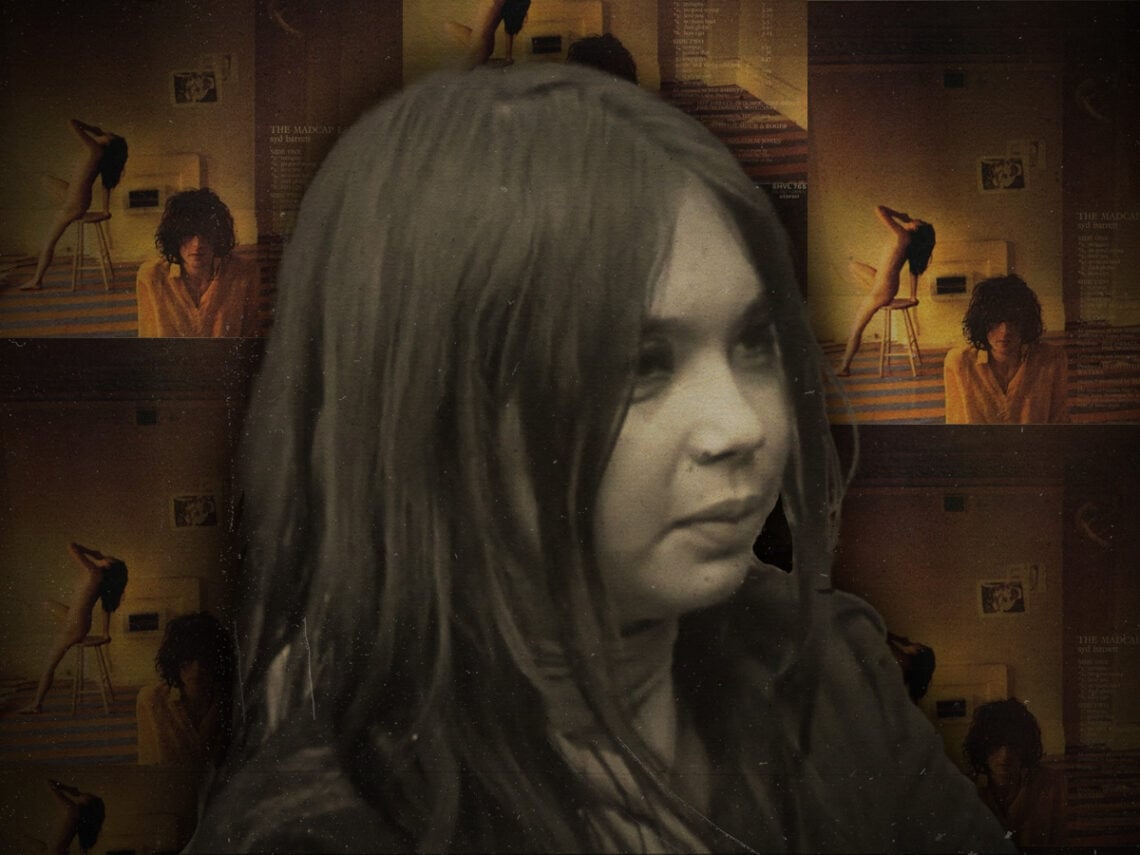
Evelyn ‘Iggy’ Rose: Much more than just Syd Barrett’s muse

The first time I came across Evelyn ‘Iggy’ Rose, it was from seeing her photographed alongside Syd Barrett in Earl’s Court, 1969.
One shot, in particular, shows Rose staring into the camera with a challenging glare. Dressed in a black bell-sleeved dress with a matching belt and pendant around her neck, her hand on her hip, she is the epitome of swinging sixties cool with a gothic aura. In the photographs from this shoot, taken by Mick Rock, Rose remains so captivating that, frankly, you forget that Barrett is next to her. Nonetheless, the Pink Floyd frontman was essential to elevating the mystique that surrounded Rose, outside of the mystery that she projected within the London scene, prior to her association with him.
This amplified once Barrett used a photograph that features her on the back cover of his 1970 debut solo album, The Madcap Laughs: as Barrett is centred in the photo, his shaggy hair concealing his face, Rose is seen in the background, nude and balanced on a stool, her head tilted back, and face turned away from the camera. She, too, is defined by long, dark hair that flows away from her.
It is Rose’s posed figured on The Madcap Laughs from which she is most often remembered, though for a time, she remained unidentified, leading fans to speculate who she was and fixate on her, until they were given answers. As it went, it seemed that for a while, Rose wished to remain anonymous, not wanting to lend more to her story than the images that existed and the lore that surrounded her, within London’s rock music and nightclub circuits.
A feature in the NME from 1966, which featured a photograph of Rose dancing at a party in South Kensington’s The Cromwellian club, identifies her as “model Iggy, who is half-Eskimo”. Thus, she became known as ‘Iggy the Eskimo’, and little else was known about her for decades – that is, until she emerged once again in the early 2010s, ready to tell her side of her story.
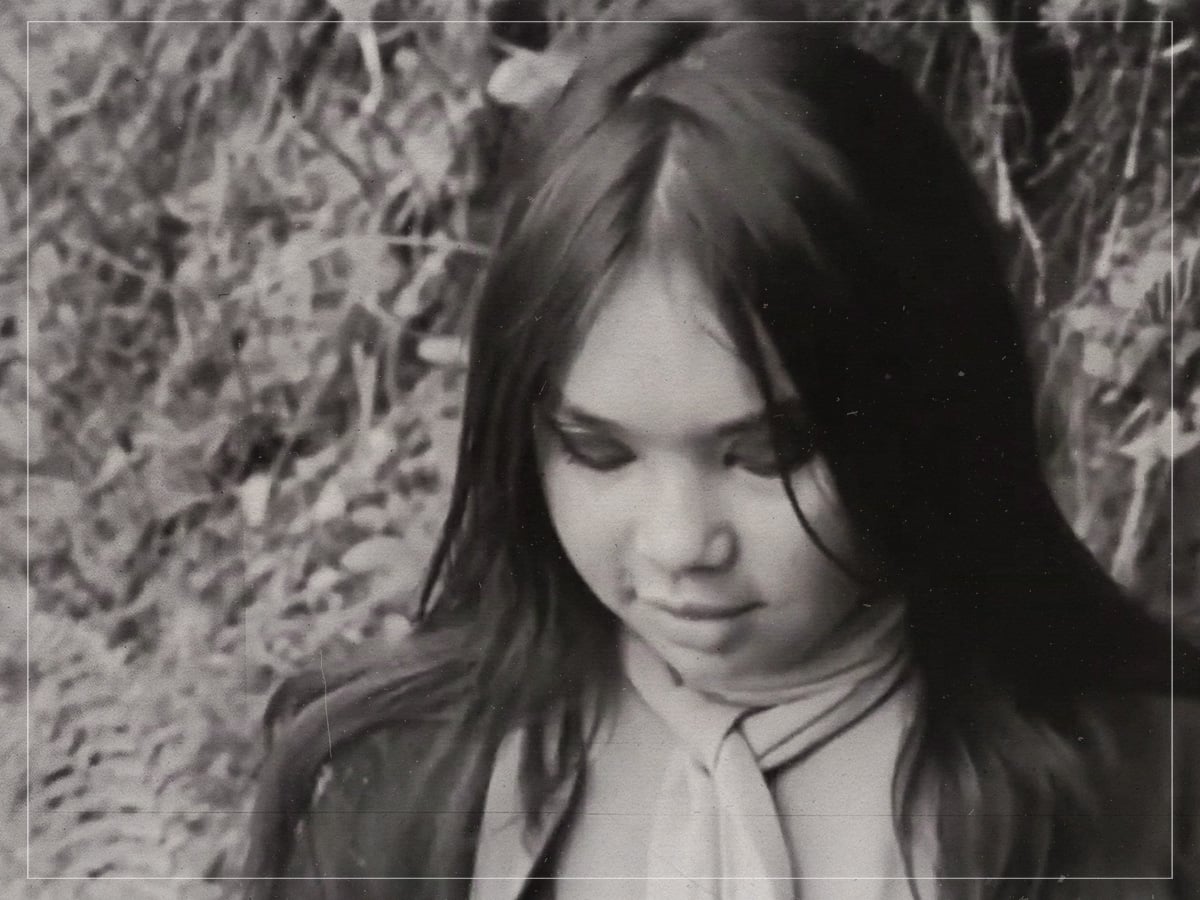
In an exclusive interview with Mojo in 2011, Rose explained that her nickname ‘Iggy’ began in childhood, when her neighbour’s younger daughter could not pronounce Evelyn. Evidently, the name stuck, and ‘The Eskimo’ did, too. That came from a joke, as Rose explained, “That was something I told the photographer from the NME when he took my picture at The Cromwellian.”
For decades, Rose allowed the public to believe that she was indeed an “Eskimo” or an “Inuit,” the former being a controversial umbrella term referring to the latter. Further, as Homegrown notes, the era in which Rose’s cult-like fame arose in the 1960s was one “where racial ambiguity was exoticised and repackaged as mystique”. The fact that Rose was reluctant to offer any information about herself to the public only fueled speculation and misrepresentation of her in the media, but perhaps this was somewhat intentional. ‘Iggy the Eskimo’ was a persona, the muse to Barrett, but not the true person that Rose was, away from the camera lens.
There was also a layer of self-preservation, for herself and her family, that can account for Rose’s silence. Rose’s father was Harry Charlton Joyce, a British army officer who, while on leave, travelled to “the Himalayas”, as Rose often referred to her origins, where he met who would become Rose’s mother, Chawngpuii (her English name was Angela). Four years after Rose’s passing in 2017, The Times of India reported that Rose was not exactly from the Himalayas, but in fact, was from Mizoram, a state in northeastern India, and her great-grandfather, Thangphunga, was a chieftain of three Mizoram villages consolidated as Chaltlang.
As her relative, Rosangzuala, told the Times of India, Rose’s Mizo name was Laldawngliani, and the search for her family had been ongoing for decades, until her passing. Rose was born in Rawalpindi, Pakistan, in 1947, and, as she explained to Mojo, she attended army schools in India and Aden, Yemen, before she and her family moved to the English seaside.
“I went to art school,” she recalled to Mojo. “I became a mod in Brighton, and saw the fights with the rockers, and I met The Who when they were on Ready Steady Go! I loved soul music, loved The Righteous Brothers, and I loved dancing, so I used to go to all the clubs…”
Around this time, in 1966, the Mizo district was struggling for its autonomy, and would later become the state of Mizoram. Communications, including letters, coming into the state would be examined and often destroyed by the government, and this resulted in no contact between Rose and her parents, and her mother’s family. As the Times of India piece was published in 2021, it would be decades, and posthumously for Rose, until her family would be connected once again.
In London, The Cromwellian inadvertently became a fixture in Rose’s life: before she was photographed dancing by the NME, she met Eric Clapton in those same walls. She claimed to have not known who he was, but followed him anyway, as he introduced her to the who ’s-who of London’s music scene.
Mojo described Rose as “Zelig-like”: a chameleon able to gel with everyone she crossed paths with, from members of The Rolling Stones to Keith Moon. She was in the audience for Jimi Hendrix’s London debut at the Bag O’Nails in November of 1966, and in 1967, she made a cameo in the film In Gear, seen browsing the racks of the famous King’s Road boutique Granny Takes A Trip and chatting with its owner, Nigel Waymouth.
She was supposed to be in attendance at Keith Richards’ home when the infamous police raid transpired the following February. “The night before, I decided not to go, thank God,” she recalled. She did, however, attend recording sessions for ‘Sympathy for the Devil’ at London’s Olympic Studios.
Before she became Barrett’s muse, she was the muse of British filmmaker Antony Stern, a friend of Barrett’s known for his experimental work. He documented a short film of Rose dancing in Russell Square, which later appeared in his project with Barrett, Wheel. “Iggy was my muse… I never knew her real name… She entirely captures the spirit of the ’60s, living for the moment, completely care-free.” Stern later remembered of her to Newsquest, in an article published to find Rose’s whereabouts in 2008, with the headline: “So, where did she go to, our lovely?”
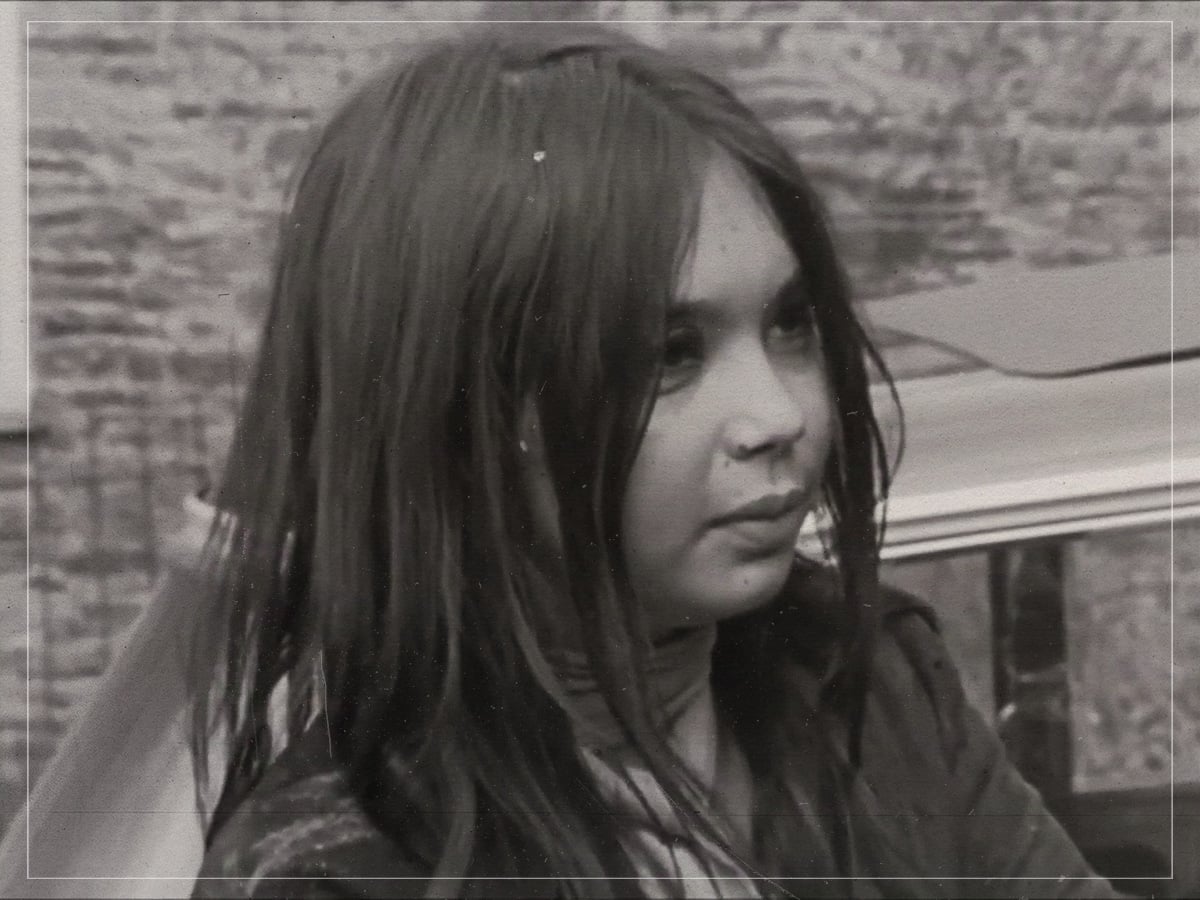
In 1966, she would first meet Barrett’s then-girlfriend, Jenny Spires, and became friendly with Pink Floyd and their circles. Among many live gigs in which Rose was in attendance at the UFO Club, she remained at all hours of the famous The 14-Hour Technicolour Dream in April of 1967, which Pink Floyd headlined. Once Barrett was replaced by David Gilmour the following year and moved into a new flat in Earl’s Court, Spires suggested that Rose, who was looking for a place to live, move in with him.
“I didn’t know Syd had been a pop star,” Rose asserted to Mojo. “I didn’t make the connection between him and the person I had seen at UFO. I knew he was beautiful looking and he had real presence, but that was all.”
The two had an immediate connection, as Rose even recalled Barrett playing her some of the music that would make its way onto The Madcap Laughs. “At the end, he said, ‘Someone at EMI – I cannot remember the name – wants me to make a record,” she recounted. “‘How would you feel about having a rockstar boyfriend?’”
The nature of Rose and Barrett’s relationship was not clearly defined – something between a relationship as lovers and partners, it seems – but such was one that, ultimately, Rose recalled fondly. “We had a wonderful, giggly time,” she summarised. “There were no sinister moments.” Even bouts of jealousy aimed at hypothetical “other women” were eventually disregarded.
The day that Rock was to arrive at the Earl’s Court flat for The Madcap Laughs’ album cover shoot, the pair took turns painting the floorboards in striped orange and mauve, which Rose notes that you can see remnants of the paint on the soles of her feet in the photograph. “I put the kohl around his eyes and tousled up his hair,” she said, recalling telling Barrett, “Come on, Syd, give us a smile, moody, moody, moody!”
She claimed that she was not even aware that the now-(in)famous photograph of her was used on the back cover of Barrett’s album until much later, when she saw it at a boot sale with her husband. “When I saw the cover, I thought, ‘Oh yes, that is my bottom,’” she remembered.
Soon after The Madcap Laughs’ sessions, however, Rose began to fade out of Barrett’s life and, before she knew it, she was nowhere to be found. She had moved out of the Earl’s Court flat, but when she went back, she remembered his old flatmate, the artist Duggie Fields, telling her, “Syd’s not here. He’s gone back to Cambridge. Don’t bother trying to find him.” Indeed, Rose would never see Barrett again, as he passed away in 2006.
In the aftermath of her life among swinging sixties London, Rose gave few details of what transpired next. She went on to have a relationship with Simon Thompson, a wealthy businessman and Scientologist, before eventually marrying her husband, Andrew Rose. The couple moved to West Sussex, and as she said, “left that life behind me”.
Ever elusive but captivating nonetheless, Rose retained a level of anonymity up until her passing at the age of 69 in 2017. Her memory is faithfully preserved on the fansite, which helped her family reunite in 2021: “The Holy Church of Iggy the Inuit”.
