


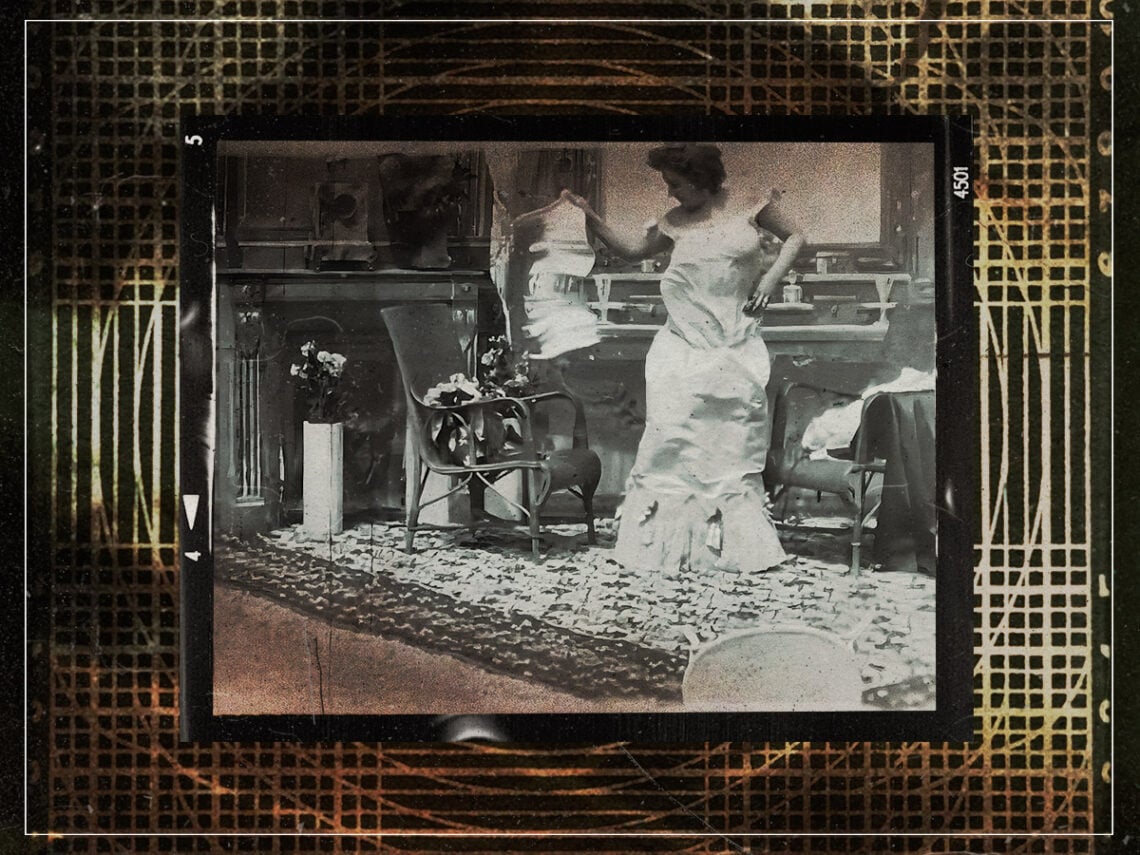
Esmé Collings: an integral pioneer of British cinema

When you think about it, the rapid development of cinema is quite staggering to behold. These days, thousands of movies are released every year, with incredibly realistic CGI and special effects available to create immense feats of visual storytelling. Yet, only 100 years ago, movies were silent and largely colourless, and a lack of computers and digital equipment meant that the filmmaking process looked considerably different.
While Hollywood is the epicentre of the film industry, pumping out new blockbusters and movie stars every year, cinema found its roots in Europe, with French and British directors pioneering the medium. Following the invention of cameras, certain ambitious figures set out to create moving pictures, although the first ‘films’ were short narrative-less depictions of people and places rather than what we would now consider movies.
The oldest surviving film is believed to be Roundhay Garden Scene by Frenchman Louis Le Prince, who filmed the two-second clip in Leeds. Other early pioneers include the Lumière brothers, who invented the Cinématographe. They were responsible for becoming the first to exhibit a film to an audience. Alice Guy-Blaché was the first female director, creating what is believed to be the world’s first narrative film in the form of La Fée aux Choux in 1896.
Yet, over in Brighton, one of England’s most culturally rich areas, a few filmmakers were trying their hand at the craft, pioneering some commonly used techniques and tropes in the process. Alongside figures such as James Williamson and George Albert Smith, who were both innovators of the close-up technique, Arthur Albert ‘Esmé’ Collings was also a member of the Brighton School.
Born in 1859, the filmmaker had a limited career in the burgeoning medium, instead prioritising photography and, eventually, painting. However, he still made several contributions to cinema, using equipment likely given to him by the engineer Alfred Darling, which has largely been forgotten. While he wasn’t as influential as other early film pioneers, he is responsible for making one of the first erotic movies, possibly the first in British history.
A Victorian Lady in Her Boudoir, released in 1896, depicts a woman taking off her many layers of clothing until she is in her under-dress, flashing an ankle and allowing her shoulders and cleavage to be seen by the camera. It is incredibly tame compared to today, but in the Victorian era, this would have been incredibly shocking.
Collings also exhibited some of the films he had captured of people in Brighton at the Empire Theatre of Varieties, which went down a treat. People marvelled at his documentation of everyday life – most viewers would never have even seen a moving picture before. While Collings didn’t exactly innovate the medium in the same way the other members of the Brighton School did, the fact that he exposed people to the wonders of film in a proto-documentary style and even pushed boundaries with one of the earliest examples of cinematic erotica should be celebrated.
