


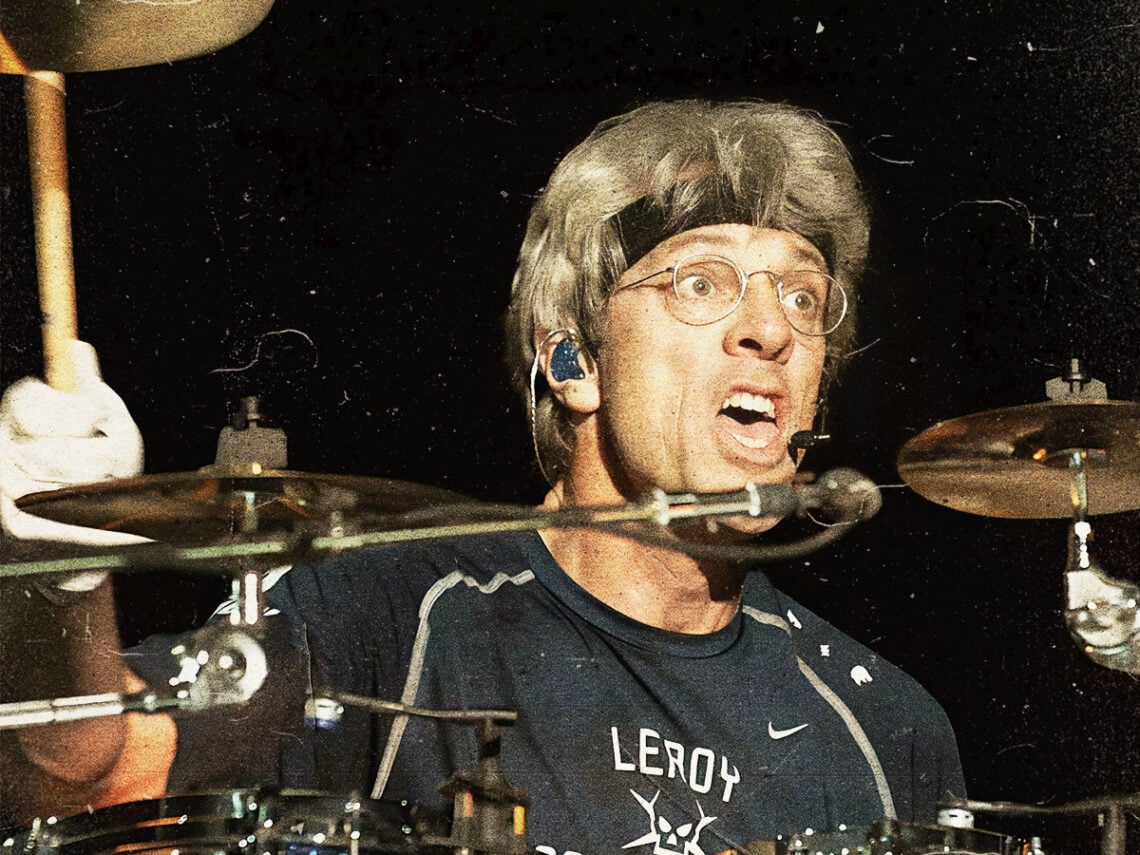
The drum solo that makes Stewart Copeland “sob”

Traditionally, rock ‘n’ roll music is associated with guitar-led compositions and a rhythm section chained to a 4/4 beat. While the description may have fit snugly during the genre’s early genesis under the tapping feet of Elvis Presley and Chuck Berry, jazz-inspired musicians soon reshaped the style significantly, calling rock into question as a genre in its own right. Stewart Copeland of The Police is among the rock drummers to break 4/4 conventions but certainly wasn’t the first to do so.
During a 2018 appearance on The Grand Tour, Copeland appeared alongside Pink Floyd drummer Nick Mason, with whom he agreed that Mitch Mitchell was the best drummer of all time, with Ginger Baker trailing close behind. When explaining who Mitchell was, he half-jokingly described Jimi Hendrix as his guitarist to assert the Experience drummer’s majesty.
Jokes aside, Mitchell and Baker were huge influences on Copeland’s approach to drumming with The Police. Baker, who played alongside Jack Bruce and Eric Clapton in Cream, described himself as a jazz drummer in a blues rock setting. In this position, he recognised that his unconventional time signatures didn’t adhere to rock tradition. Mitchell, with his dynamic mallet work, had a similar approach.
Arriving with their first album, Outlandos d’Amour, during the punk wave’s zenith, The Police brought an attacking energy to their music, especially in memorable hits like ‘Next to You’ and ‘Roxanne’. However, very few would describe The Police as a punk band.
In a past interview with Far Out, Will Sergeant of Echo and the Bunnymen remembered disliking The Police when he first heard them because he was a punk. “In a way, if you could really play, it was a disadvantage. Some bands we saw at Eric’s Club, like The Police, we thought were shit because they were too good.”
In Outlandos d’Amour, The Police distinguished themselves from contemporaries like Sex Pistols and The Clash with refined instrumental command. ‘Roxanne’ drew from reggae influences in a similar way to some of The Clash’s popular material, but thanks to Copeland’s dynamic beats, it departed significantly from punk structures.
Of course, The Police evolved over time, displaying further refinement in later albums. Copeland’s greatest drumming can be heard in songs like ‘Driven to Tears’, ‘Synchronicity I’, ‘Walking on the Moon’ and ‘Regatta De Blanc’. Such moments put Copeland among the greatest drummers of his generation and betrayed a deep passion for jazz signatures.
Whether Baker and Mitchell were Copeland’s bridge to jazzy scapes or not, his drumming transcends rock ‘n’ roll with distinction. Speaking to Goldmine in 2022, Copeland picked out some of his favourite albums of all time. He saved a spot for the eminent jazz drummer Buddy Rich and his 1966 live album Swingin’ New Big Band but revealed that he has a general aversion to jazz.
Describing his adoration for Buddy Rich’s drumming, Copeland said his “immunity” to jazz has been “ascribed by jazz chums to being raised on wrong jazz”. All the same, he feels that “for drum-set virtuosity, Buddy inarguably set the bar back in 1966, and it has not been reached since.”
Later in his selections, Copeland gave a nod to West Coast jazz, picking out Time Out by the Dave Brubeck Quartet. He admitted another jazz record jovially, describing it as “technically wrong jazz,” suggesting that he wouldn’t ordinarily be attracted to such music. However, he maintained that ‘Blue Rondo A La Turk’ and ‘Take Five’ “reset the rules of rhythm” with their exotic time signatures. On the latter, Copeland noted that “from the age of seven unto this very day, I still sob with emotion on hearing the drum solo.”
