


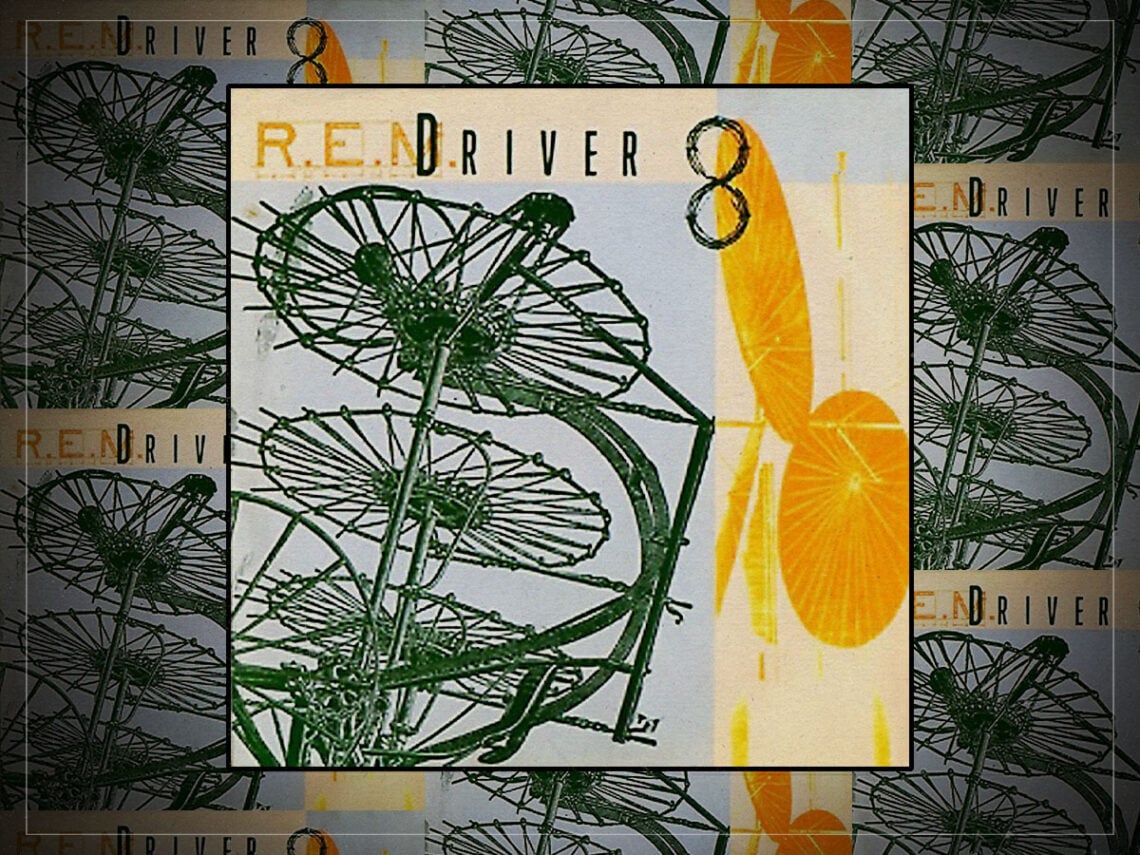
‘Driver 8’: REM’s journey into “mythological America”

Leave it to a band from the wrong side of the tracks to write a song about a train driver, but of course, anyone who loves REM knows to look for subtle traces of meaning hidden in seemingly simple characters.
‘Driver 8’ follows an overworked American train engineer being encouraged to take a break, painting a realistic picture of working-class rhythms in the southern US. The song’s relentless tempo evokes constant struggle, as does its lyrical prose, “Hear the bells ring again, the fields of wheat is looking thin.”
The Georgia-bred band accurately reflected the broken dreams of their neglected South, where many of them grew up near train tracks. This non-idealised account of a region often looked back on through rose-tinted glass went against the stream in being “so of a time. And so real.” Frontman Michael Stipe chose this medium of representation because of its resounding associations with, as he puts it, “mythological America,” the dream that so many were taught to work towards, which is accurately fitting with the 1985 album’s title, Fables of the Reconstruction.
The song’s upbeat spirit masks a never-ending drudgery, the unforgiving working rhythms of those keeping the country rolling forward by performing undesirable jobs, and a harmonica is used to mimic the sound of a train whistle, while the song’s gothic imagery and minor chords create an immersive atmosphere of melancholy.
The themes of endurance can be a mirror of the band’s early standing: even after two albums, many in REM kept a humble lifestyle, with guitarist Peter Buck and drummer Bill Berry sharing a small apartment Berry described as a “dump”. Of those early days, he recalled: “Everything was falling apart, and the only people who lived in the apartment complex besides me and Bill were some people who were living in group homes.”
Despite their uninspiring living conditions, the duo put ‘Driver 8’ together within a few minutes. Berry remembered: “Bill came up with the verse to ‘Driver 8’, and after he showed it to me, he said, ‘I need to run to the market, I’ll be right back.’ I think he went to get some beans or rice or something. In the meantime, I came up with the chorus and the intro riff. Bill came back in about five minutes, and it was done. So I played it for him, and he went, ‘Alright, that’s great!’ Bill was totally excited.”
Michael Stipe shared this excitement, telling Rolling Stone that singing it was “like breathing – I don’t think about it when I sing it.” In an interview in 2009, he proudly looked back on his songwriting efforts and “thought it was a beautiful song with incredible imagery.”
Jason Isbell also shared his admiration for the band’s powerful word choices in Uncut magazine: “That was one of the most literary of all REM songs, there are images that really stick in the brain,” he said after doing a cover of the song for his album Georgia Blue.“There’s a Southerness flare that’s not prideful. It’s practical and resilient.”
Pride was deservedly felt by a satisfied Michael Stipe, on pondering REM’s past works in Rolling Stone: “I listen to our old albums and think, ‘OK, this is where that went wrong, this is a way to improve that.’ And ‘Wow, that’s really good. You’re not the hoax you think you are.’”
