


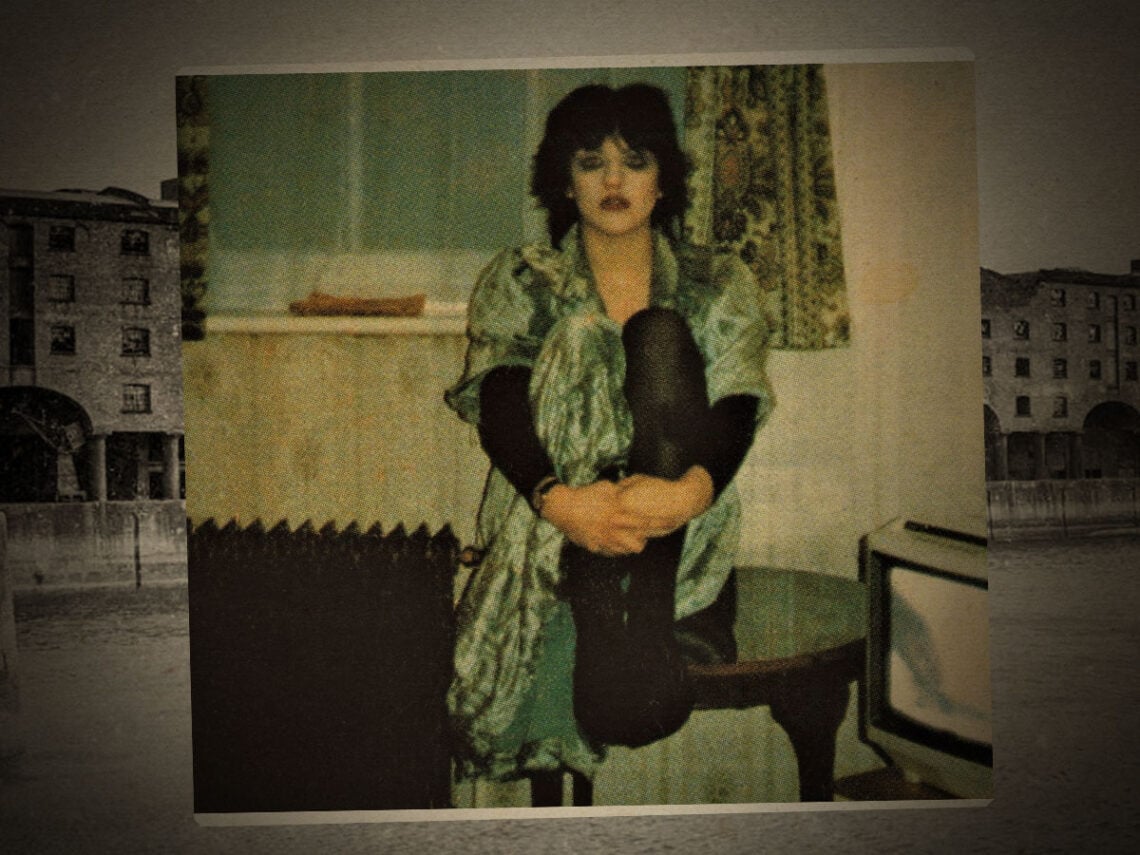
Inside Courtney Love’s pivotal days in Liverpool

“Before Liverpool, my life doesn’t count,” Courtney Love once declared. “Ian McCulloch and Julian Cope taught me a great deal. I owe them a lot. Liverpool had been a great school to become a rock star.”
At 17 years old, just before Love found herself in Liverpool for five months in 1982, she was in Dublin, where her biological father, Hank Harrison, lived. She had been granted a small trust fund of $500 a month, left by her maternal grandparents the year prior, and decided to run from her upbringing in San Francisco in search of a change. In Dublin, she spent much of her time auditing theology courses at Trinity College and hanging around the music venue McGonagles.
One fateful night, she met Cope, then the singer-songwriter for the Liverpool post-punk band The Teardrop Explodes, at one of their gigs in December of 1981. Soon, Cope allowed Love and a friend, Robin Barbur, to stay with him at his home in Liverpool, where he lived with his roommate, Pete de Freitas, then the drummer of Echo & the Bunnymen. De Freitas was initially wary of having the two teenage girls stay with them at their flat, but reluctantly agreed.
As chronicled in her published diary, Dirty Blonde, the flat on Princes Avenue in Toxteth was “horrible,” with “textured tawny-beige-green and brown-silver and white-old-human wallpaper” and “swirlfudgesludgepatterned earth tones carpet”. In this unsavoury flat, however, Love would make some of her earliest music compositions. David Balfe – who played keyboards for The Teardrop Explodes and founded the Liverpool label Zoo and later, Food Records – lent Love a four-track recorder and a synthesiser.
She once disregarded the songs she composed during this time as “stupid,” but nonetheless, they captured the time in her life as she was beginning to immerse herself in music. One of the songs she wrote was for Cope, with a chorus that heard her ask, “Julian, Julian, where have you been?” Love eventually found her way into Cope’s writing, too: in his 1994 autobiography Head-On, he refers to her as “the adolescent” in his life’s story.
Cope’s influence extended from Love to her friend, Barbur, as well. “Julian told us to live your life as if you’re being followed by a movie camera,” she once said, quoted by Dave Halsam in his book, 2020’s Searching for Love: Courtney Love in Liverpool. “I remember Courtney started walking very self-assuredly, head up, fast.”
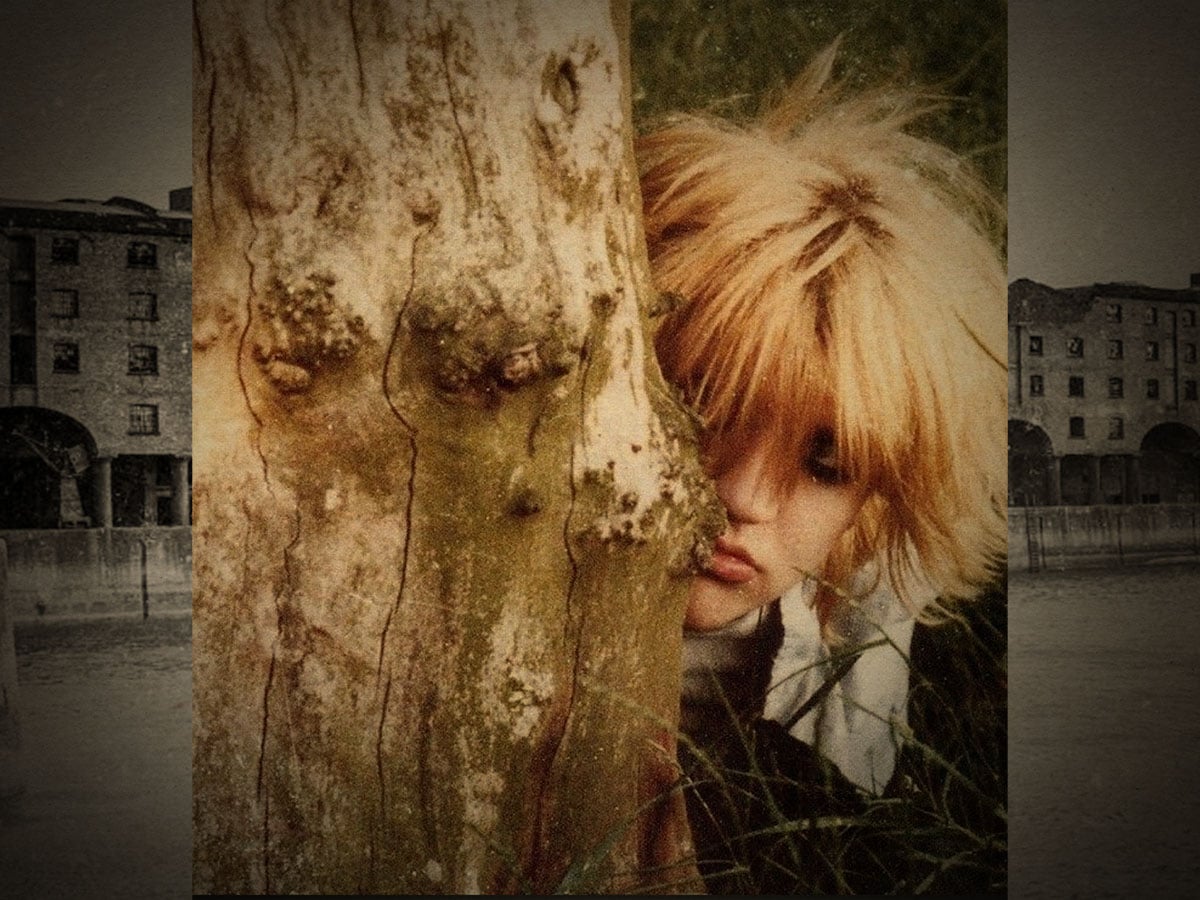
She recalled an early memory of her time in Liverpool to NME in 2020 with a date soundtracked to David Bowie’s Ziggy Stardust, drinking her first cider and eating battered sausage, a night she recalls as “one of the funnest [sic] nights of my life”. Glimpses of other Liverpool memories remain in Love’s mind: having her 1985 Melody Maker guitar sadly stolen from her, or running into Dead or Alive’s Pete Burns on the street – “the most beautifully scary creature I’ve ever seen in my life,” Love describes – and his recurring shout of “Here comes Courtney, hide your biscuits – she’ll steal them all!”, every time he saw her after.
After her stay in Liverpool, Love returned to San Francisco, where she met Faith No More and, for a brief moment, was their frontwoman. This kickstarted the cycle of music projects that led Love to the formation of Hole in 1989, with an advertisement in a Los Angeles music zine that read: “I want to start a band. My influences are Big Black, Sonic Youth and Fleetwood Mac.”
Ten years after her time in Liverpool, when Love and her husband, Kurt Cobain, were among the most famous musicians on the planet, Cope took out a cruel advert in NME that read:
“Free us from Nancy Spungen-fixated heroin A-holes who cling to our greatest groups and suck out their brains.”
“He’s one of these people who actually knows me,” Love later commented to Melody Maker in 1992 of Cope’s words. “Not well, but he does know me, and who was somebody – for all his horns and back-up singers – when I was younger, really affected me and charmed me and made me feel, ‘Wow, for an English person he’s pretty original and cool. And for him to be slagging me off in his poem in his ad…”
Nonetheless, Love described the five months she spent in Liverpool as “one of the most important things of my existence,” not just for having met the likes of Cope and McCulloch but for her personal growth as an artist. Liverpool became the location of many firsts for Love – where she first read NME magazine, for instance, and where she drank her first cider – but also one of the first times she experimented with an early music project, introduced to the thrill of composing and writing, even with little knowledge to execute her vision.
As for choosing to live in Liverpool? Love cites Joy Division as the driving force that compelled her to leave the United States. “I still, at this point in my life, believe one thing and one thing more than anything else about rock ‘n’ roll,” she concluded, “which is that ‘Love Will Tear Us Apart’ was the greatest song ever written, period. End of story – there’s nothing else to say. It has never been topped to this day. I knew I certainly wanted to live anywhere as depressing as a place that could produce that song.”
