


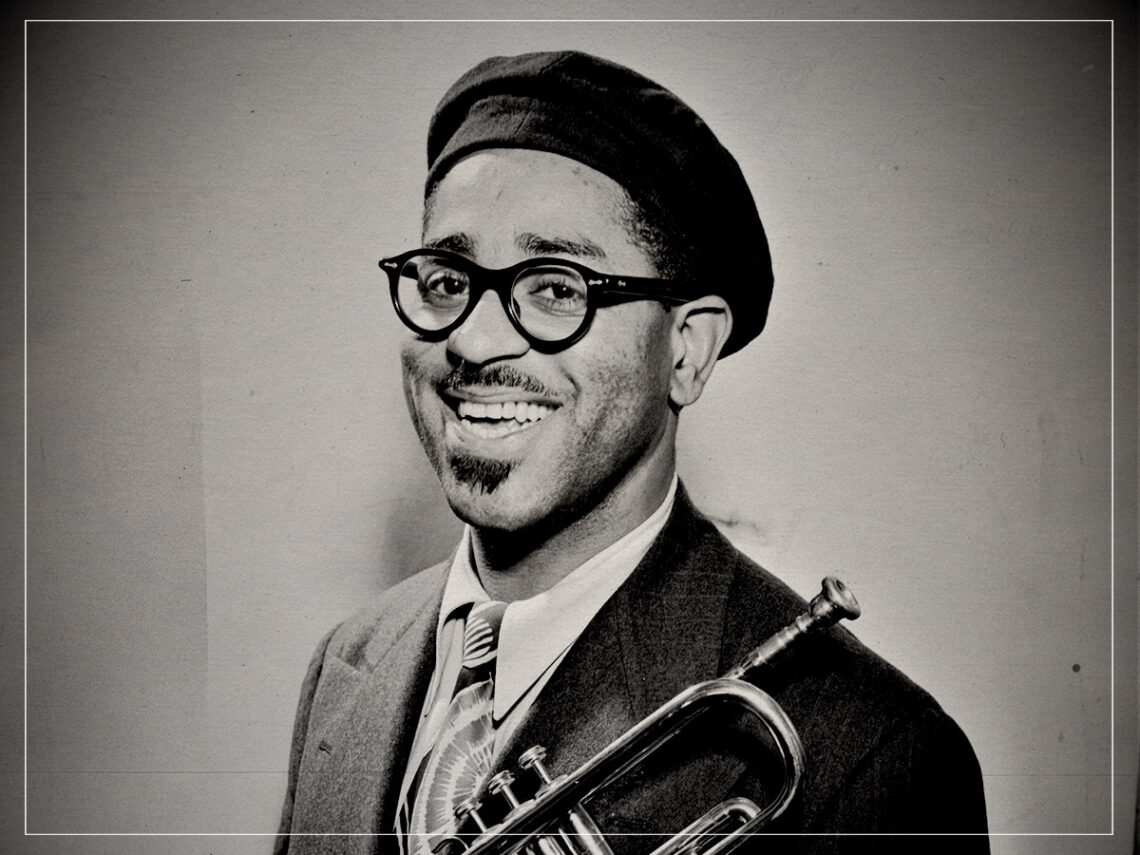
“I want to eat”: how commercial struggles derailed Dizzy Gillespie’s early days

Artists, throughout history, have been engaged in a constant internal battle between remaining true to their artistic principles and making enough money to put food on the table.
In the modern day, opportunities for working-class artists remain few and far between, but even back in the 1950s, jazz artists like Dizzy Gillespie were struggling to remain afloat as artists in an economic downturn.
A key figure in the rise of bebop, it was during the early 1950s that Dizzy Gillespie first emerged as a bandleader, having spent much of the previous decade under the tutelage of performers like Charlie Parker, rubbing shoulders with a litany of future jazz giants, John Coltrane being perhaps the greatest example. As a bandleader, though, Gillespie had total creative control over his output, and he was determined to accelerate the development of bebop into bold new avenues of sonic inspiration.
Dee Gee Records was the vehicle by which Gillespie sought to execute his vision. Rather than pandering to the needs of external record labels and their economic demands, Dee Gee was Gillespie’s very own label. In theory, then, the trumpeter had full creative control over his output, free to record and release whatever he deemed fit, no matter how experimental it was, or whether it lacked any commercial potential.
In practice, though, releasing music through your own label, particularly while still in the relative infancy of your career, perhaps wasn’t the greatest economic decision Gillespie ever made. After all, he was pursuing art, rather than profit. By the time that 1953 rolled around, though, the destitute Gillespie somewhat changed his tune, closing down Dee Gee and swiftly changing tactics.
That switch-up in Gillespie’s output, moving further towards a more commercial jazz sound for the time, is noted throughout his 1953 tour of Europe. During a stop in Hanover, the trumpeter reportedly declared, “I’m not interested any more in going down in history. I want to eat,” per Michael James’ academic exploration of the trumpeter’s career in Kings of Jazz 2: Dizzy Gillespie, published in 1959.
It is admittedly rather unlikely that Gillespie completely gave up on his determination to change the jazz landscape back in 1953, particularly given how his career progressed in the years and decades that followed, but his declaration of “I want to eat,” even if intended satirically, certainly changed the course of his output during those early years.


His pursuit of more popular recordings and shifting focus from putting together exciting young bands and creating innovative jazz experiments worked out quite well for Gillespie in the end. By the time that the 1950s came to a close, he was firmly among America’s premier jazz performers, experimenting with Afro-Cuban rhythms and entering the realm of political activism, most notably with his Black Power-fuelled bid for the US presidency back in 1964.
It is telling, therefore, of the fragility of artists’ economics – particularly, at that time, Black artists, who were routinely exploited by record labels and industry executives – that he was forced to put all the potential that was clearly inside of him in 1953 on ice, until he had amassed enough economic security to allow him to take those risks.
Gillespie’s story is not particularly novel in that sense, particularly within the realm of mid-century jazz stars, and the material he generated around that 1953 realisation is still utterly incredible, if a little less innovative than his later work. Above all, though, the trumpeter showed that, throughout musical history, there has always been a disparity between what working artists would like to do and what they are forced to do in order to pay their bills. Little has changed since 1953, it would appear.
