


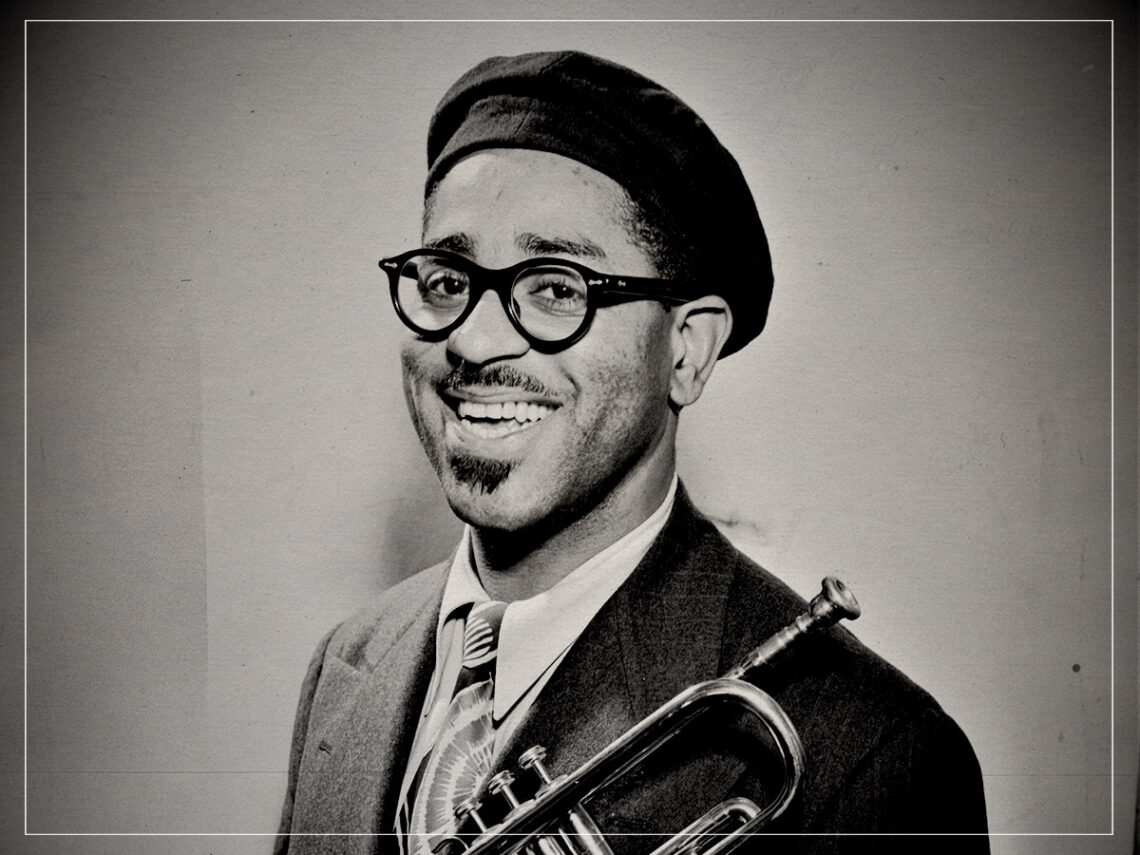
Dizzy Gillespie for President: the jazz star who wanted to rule the world

With the result of the US elections still fresh in our minds, voter turnouts have been a key point of discussion. The general public has just as much power to bring change to politics as those who are in power do, and voting for who you believe to share the same vision for the area you are in plays a vital part in putting the wheels in motion to create that change.
Of course, there are always people who believe they are above those with a political background and think they could do a better job of running a country or local area than elected leaders, whether or not they possess the right nous or energy for the job. There have been countless times over the years when musicians have even thrown their hat in the ring to be elected for office or even higher positions, and to varying degrees of success.
Hard rock legend Alice Cooper has notably run for President of the United States in every election since 1972, and while his campaigns have been largely understood to be a novelty, he did at least get a good song out of it in ‘Elected’. Controversial rapper Kanye West is a more recent example of an artist who has declared that he would run for the same position on two occasions, although his 2024 campaign was cut short, unlike his 2020 attempt, where he received approximately 70,000 votes across 12 states.
One perhaps lesser-known example of a musician who has previously run for President is jazz icon Dizzy Gillespie. While the trumpeter’s campaign for office in 1964 might have also been done in jest, he presented himself as having several ideas beyond the initial idea and put a considerable amount of effort into public appearances where he would deliver his rhetoric.
The bebop musician always had a playful side to him, with his often ridiculous sense of humour coming out in songs or on stage. Fellow jazzman Sonny Rollins was once quoted as saying that people perceived Gillespie “as an entertainer, a comedian almost, as well as a musician.”
A great deal of serious graft was put into creating badges, banners, and other merchandise endorsing Gillespie’s effort to become a leader as an independent candidate, and he later revealed in his memoir that “I made campaign speeches and mobilised people. I meant to see how many votes I could get, really, and see how many people thought I’d make a good president.”
Beyond the speeches and rallying at shows, he was decidedly more overt with other aspects of his campaign, choosing to announce a proposed cabinet full of other jazz musicians that would include Miles Davis as Director of the CIA, Duke Ellington as Secretary of State, and Phyllis Diller as his running mate. That being said, his efforts didn’t run out of steam, and he pledged that he would provide funding towards civil rights campaigns and the efforts of Martin Luther King, causes that he had a genuine passion for. As Sonny Rollins would sum up to Gillespie, it was “a joke, but not a joke.”
While Democrat Lyndon B. Johnson would go on to win the presidency in 1964, Gillespie would announce another short-lived campaign in 1971, which he ultimately dropped out of. If he hadn’t, perhaps the formation of a Gillespie/Cooper ballot could have been an even barmier prospect.
