


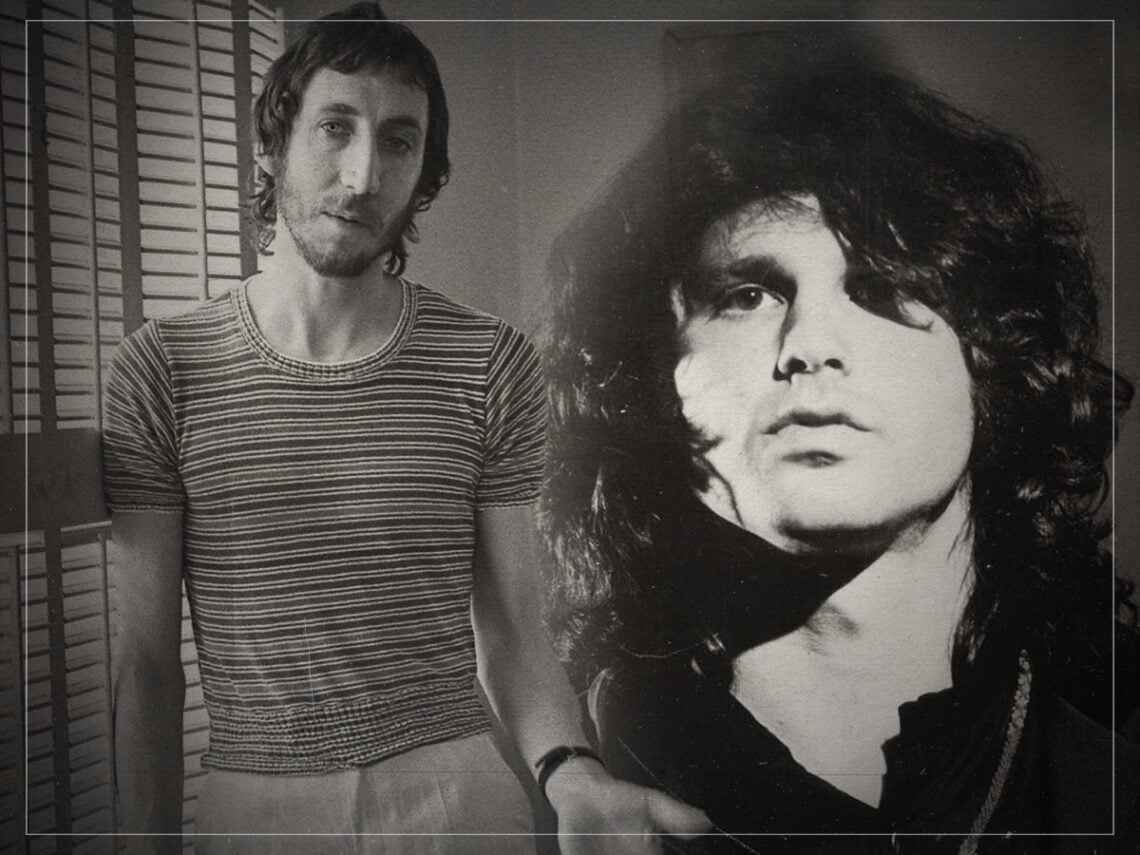
“A fat drunk”: When Pete Townshend reached out to Jim Morrison in 1971

The music industry has always been one rife with tragedy, but with the intensity and frequency of deaths of icons in the sex, drugs and rock and roll age, Pete Townshend probably barely had time to even dry clean his funeral suit.
Of the survivors, a sense of both guilt and responsibility pervades the things they’ve done since. “Many would not make it,” Patti Smith put it plainly in Just Kids. On any of her social media channels, or on stage at any of her gigs, it is clear that the artist takes remembrance as one of her main jobs, always celebrating the birthdays or mourning the death days of friends and legends lost.
“I feel no vindication as one of the handfuls of survivors,” she continued. “I would rather have seen them all succeed, catch the brass ring.” In a dream world, Smith would still be standing next to all the great minds she met in the late 1960s or during the ‘70s, or even onwards throughout history, as names like Kurt Cobain, Jeff Buckley and Amy Winehouse live forever in her heart. But alas, it wasn’t to be so.
Pete Townshend feels the same. In the British rock and roll scene as part of one of its leading bands, The Who, Townshend had the best view of the worst things imaginable. He watched as Brian Jones descended into worsening addictions, knowing with full certainty that he would die but with no way to help him. That same experience was repeated over and over for all the musicians lost, as any real sense of support or rehabilitation didn’t exist yet – or at least not to the level it needed to.
At the time, all there was to do was interventions of various degrees of brutality. Failing to find a way to actually help, Townshend’s helpless desire to try and save these people from a spiral often just came out as a harsh insult. So when he bumped into Jim Morrison in his final years, clearly on the brink of collapse, he said, “I told Jim Morrison he was turning into a fat drunk in 1971.”
He wanted to shake the singer awake to get him to get some real help, and thought maybe a shocking line might help. “I could tell from his stunned expression that until then no one had indicated they might even care,” Townshend recalled.
The Who’s guitarist always refused to accept the idea that tragedy like this was inevitable or part of the package. He refused to let death be inevitable or expected as part of the rock and roll job description, stating, “let no one pretend it’s part of the pop myth.”

So when the chance came up, he took it and said something – making it clear to Morrison that at least he had noticed the situation, just in case The Doors singer thought no one could tell how much he was struggling. Even if it came out tough, it was all tough love from Townshend.
Obviously, though, Morrison wasn’t saved by the line. Soon after, he died, and Townshend added his name to the long list of tragedies of the era, adding to his motivation to dedicate a corner of his career to improving care and support for addicts.
