


‘Euro-Country’: how CMAT forged the most important political song of our times

“Cad is gá dom a dhéanamh mura bhfuil me ág bualadh leat?”, CMAT sings as the opening line of her latest single, ‘Euro-Country’, and in one simple phrase, the crucial crossroads of the song is established.
Translated to English, “What am I to do if I’m not meeting you?”, on the face of it, this is a tune about identity loss after the end of a relationship. But what if that relationship is not with a physical lover, but with your home and entire country itself? That’s the luck, and the lure, of the Irish.
The country of Ireland finds itself situated at a cultural crossroads in this precise time, being expressed in its musical output via a plethora of routes, ranging from stereotype to agenda-setting sentiments. By comparison, ‘Euro-Country’ intentionally feels caught in the centre of it all, and subsequently could, in time, be deemed the most important export of this current heritage canon.
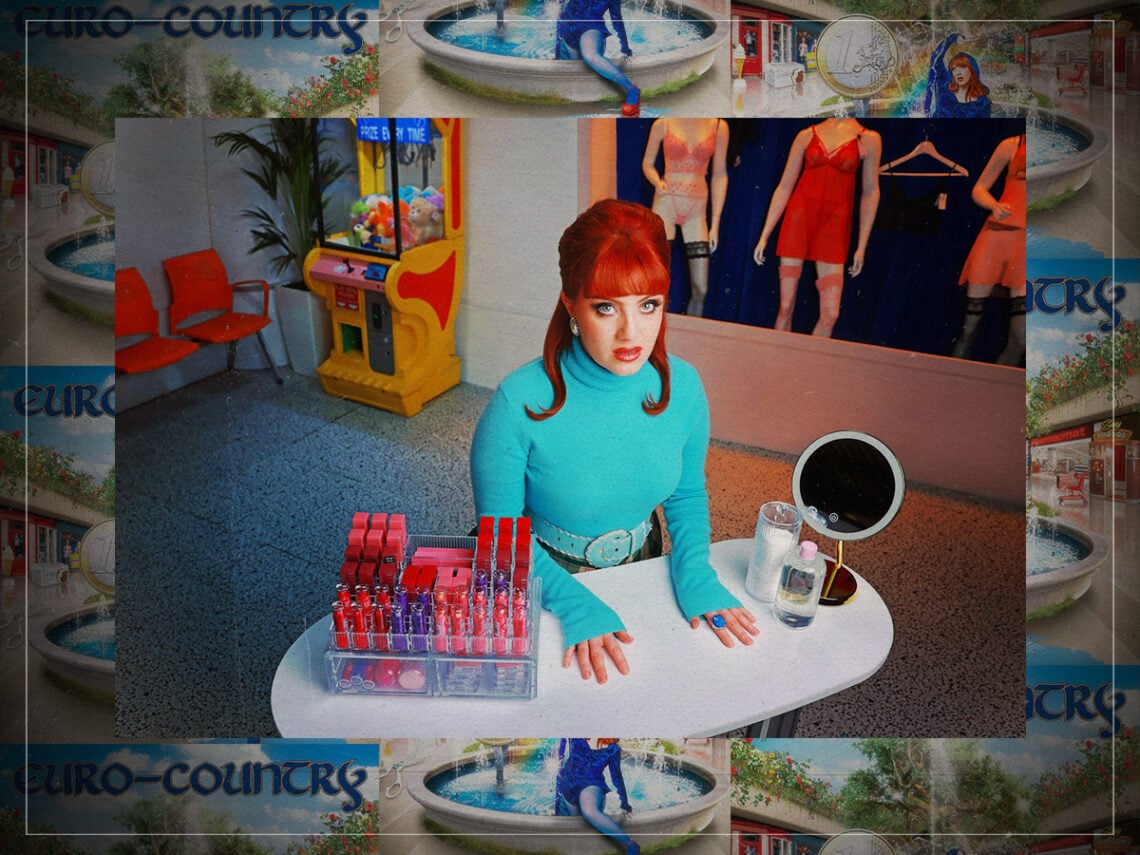
Unlike other songs with political forces steering the ship, the focus here is not about the high and mighty overlords leading the charge, but all the real people left behind to grapple with their own identities in the aftermath. The video pulls no punches in this sense, either, with CMAT frolicking around a shopping centre, any veneer of romanticism or Irish cultural allure from abroad has well and truly been stripped away, and what’s left behind is the ordinary mundanity of the working classes.
It’s thus that references to the country are completely integral to the song’s message at its heart, from the Irish language introduction to mentions of Cú Chulainn and former Taoiseach Bertie Ahern. These are just small examples of what has long been marginalised and left out of the international conversation surrounding Ireland, deemed too complex or uncomfortable in the slickness of radio edits, but what should, ironically, be the very things at the front and centre of the discussion.

The starkness of the imagery is what sets CMAT apart here, juxtaposing humour—who’d have ever thought you’d hear a mythological warrior compared to Kerry Katona in song?—with sobering home truths. “I was 12 when the Das started killing themselves all around me,” she wails in the bridge, which is brutal, but also just plain honest. When 30 years ago, Ireland’s musical scene was one brimming with politics and protest, here we see that mantle being picked up again, reflecting society after it came out the other side.
The very reason that ‘Euro-Country’ could be the most potent political song—and album—of the current lot is its very insistence on not focusing on power. Instead, there’s a landscape of “mooching ’round shops, and the lack of identity”, grappling with the romanticism of “pop star USA”, before heeding the confession that “I think we’re gonna diе trying, I wish we weren’t this way”.
Ultimately, this state of affairs is nothing new. Anyone socioeconomically aware of Ireland’s condition at any time in the past half a century could tell you that its historical issues continue to seep through to its society, even to the present day, with recessions and flare-ups of political violence only compounding that. But no one ever speaks about the people caught in the crossfires, metaphorically and sometimes literally. From suicide rates to lack of identity, this is a population suffering but missed out of the conversation, and, for perhaps the first time, CMAT is trying to reckon with that.
“My Euro, Euro, Euro Country” is a land so culturally beloved but utterly forgotten in its ordinary way of life. Naturally, there is no easy-fix solution, and no one can tell what the route out of specific ruts should be, but it could at least begin with some form of acknowledgement of the truth. Ireland is a place so desperately trying to move itself forward, but as CMAT eloquently puts it herself, due to everything that has come before, “The present is past”.
