


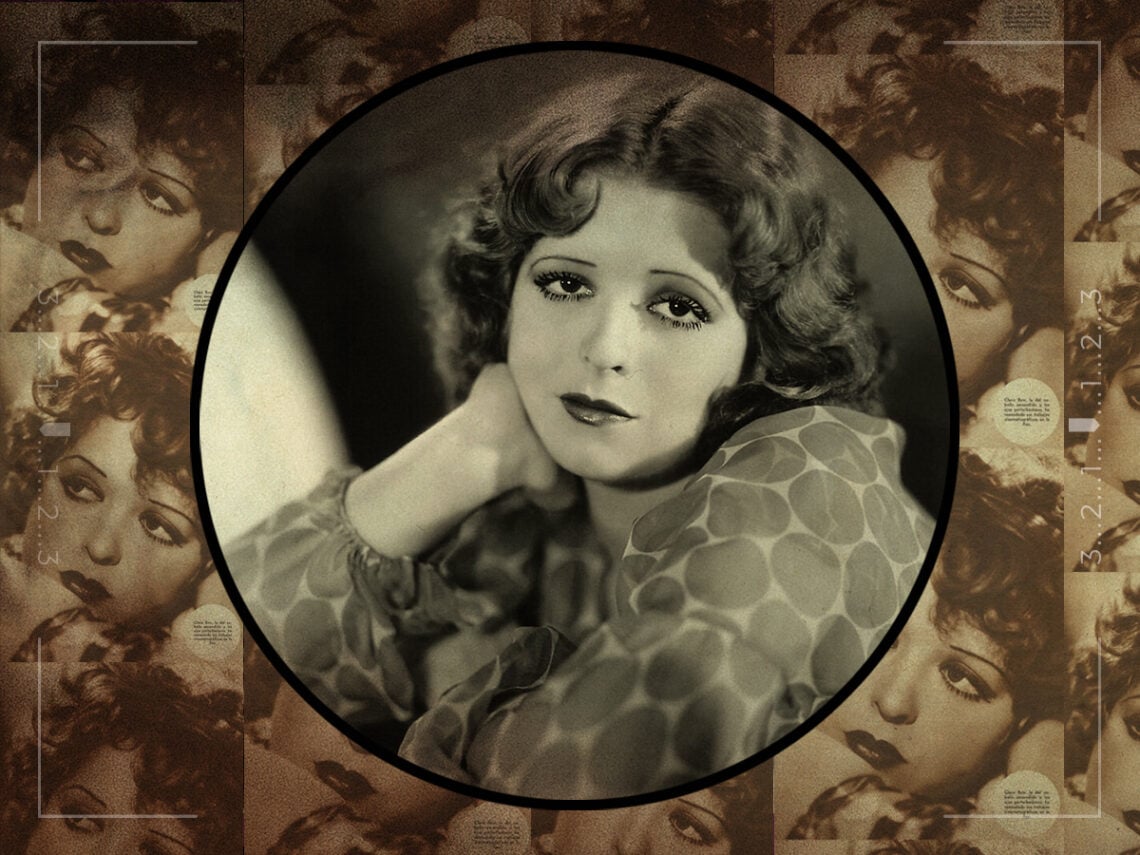
Clara Bow: The tragic story of the first ‘It Girl’

So, what constitutes an ‘It Girl’?
Youth, as it is in many things, is often monopolised. An unspeakable je ne sais quoi follows: one must be intelligent yet aloof, wealthy enough to survive but mysterious about one’s source of income. Style is imperative, and it must be curated and refined, but signature. ‘It’ has attached itself to many women over the last century, the authority that comes with the title insidiously fleeting. But it all began with one young woman who made a name for herself in the silent film era of the 1920s.
Clara Bow was born in the Prospect Heights neighbourhood of Brooklyn, New York, on July 29th, 1905. She had a tumultuous upbringing from birth: her two older sisters, born in 1903 and 1904, died in infancy, and her mother, Sara Frances Bow, had been warned not to risk childbirth again.
“I don’t suppose two people ever looked death in the face more clearly than my mother and I the morning I was born,” Bow reflected in Photoplay magazine in 1928. “We were both given up, but somehow we struggled back to life… She idolized me, but with a strange, bitter love, almost as though she was afraid to love me for fear I, too, would be snatched away from her.”
From childhood, Bow learned to care for her mother’s epilepsy and subsequent periods of psychosis, diagnosed after she had suffered a severe head injury from a fall from a second-story window. Bow remembered her mother as “mean”, though understanding that “she couldn’t help it”. Assuming the role of caregiver, their mother-daughter dynamic was skewed from the start.
Reading a magazine one day, Bow came across an acting contest, where “ability, personality, grace and beauty” would be judged. Her father gave her a dollar to get two headshots taken, which she submitted to the contest, though her dreams of being in motion pictures were clouded by self-doubt and insecurity. But, after five screen tests at the magazine’s offices, the long cast of girls was narrowed down to Bow; the contest jury concluded in a statement, “She has a genuine spark of divine fire.” With no acting experience, Bow’s love of Hollywood glamour would drive her forward.
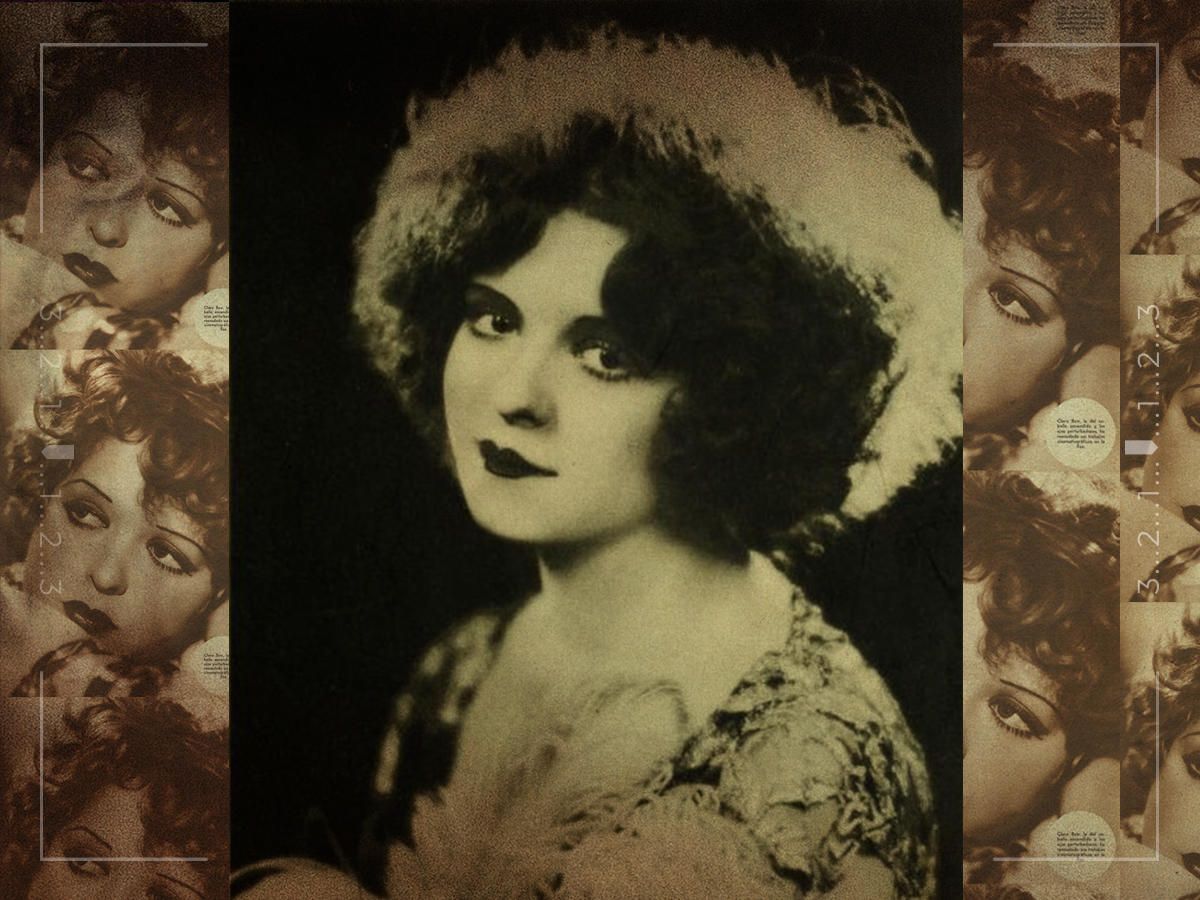
“I’d save and save and beg Dad for a little money, and every cent of it went into the box office of a motion picture theater,” she wrote of her fascination with cinema. “For the first time in my life I knew there was beauty in the world. For the first time I saw distant lands, serene, lovely homes, romance, nobility, glamour. My whole heart was afire, and my love was the motion picture. Not just the people of the screen, but everything that magic silversheet could represent to a lonely, starved, unhappy child.”
When Bow told her mother of her aspirations of becoming an actor, she responded, “You are going straight to hell. I would rather see you dead.”
One night, Bow awoke to her mother holding a knife against her throat, and Bow had to fight her off and lock her mother in her room. Her mother woke the next morning with no memory of what she had done; she would soon be committed to a sanitarium and would pass away from epilepsy in 1923, at the age of 43.
“Looking back on it now, it seems to me that the day of my mother’s funeral was the beginning of a new life for me,” Bow writes. “Perhaps it was the birthday of the Clara Bow that you know.”
Bow’s first acting job was in the 1921 film Beyond the Rainbow, where she did five scenes, all of which were cut from the final print. Though disheartened, she persisted and, due to her tomboy persona, was sought for and cast in 1922’s Down to the Sea in Ships. An uncredited sequence of her dancing on a table in 1923’s Enemies of Women followed, during a time that was especially strife for Bow.
“I’d go home at night and help take care of mother; I’d cry my eyes out when I left her in the morning – and then go and dance on a table,” she recalled.
“I think I used to be half-hysterical, but the director thought it was wonderful.”
Clara Bow
That year, she would move from New York to Hollywood, signing with Preferred Pictures and working with various studios. Maytime, a silent romantic drama, was Bow’s first Hollywood picture, immediately followed by 1924’s Poisoned Paradise. She became known for embodying the popularised “flapper girl” persona, exerting the dual combination of emotion and charisma.
In 1925, Bow appeared in 14 productions. Her career rapidly progressed, and she often filmed multiple pictures at once, overworked but enjoying her time in Hollywood. Her ‘It’ factor, before the term was coined, was defined by her subversion of gender conventions, often adopting androgynous looks and masculinity on film, all while displaying confidence in her womanhood.
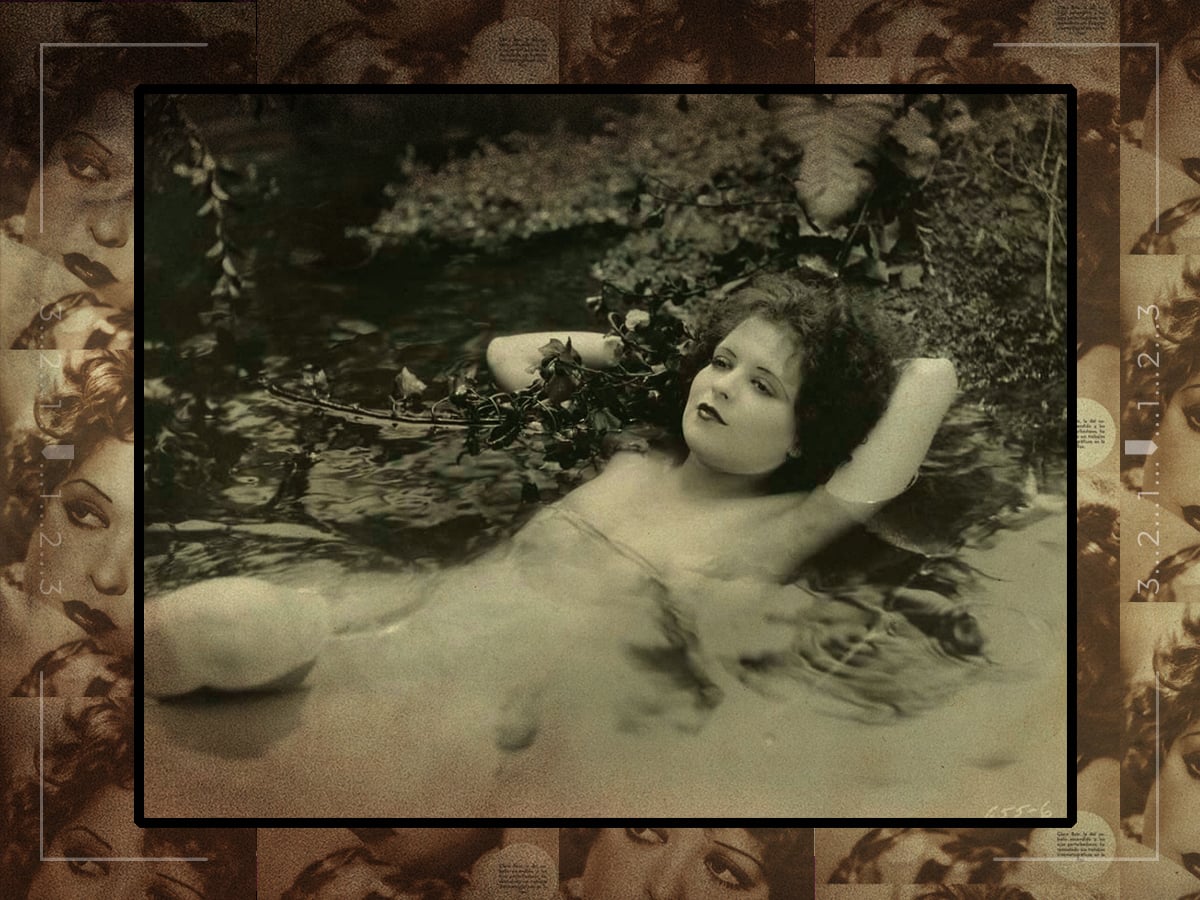
In 1926, Bow signed with Paramount Pictures and appeared in eight films, but it would be the following year that saw her appear in her signature film: 1927’s It, directed by Clarence G Badger. Based on the serialised novel of the same name written by Elinor Glyn and inspired by Cinderella, It follows a poor shop-girl, Betty Lou Spence (Bow), who wins the heart of her employer, Cyrus Walthan, thanks to her ‘It’ factor. The expression ‘It Girl’ existed in British high society during the turn of the 20th century, but gained further attention with Glyn’s definition, which she gave to Cosmopolitan in February 1927: “That quality possessed by some which draws all others with its magnetic force. With ‘It’ you win all men if you are a woman and all women if you are a man. ‘It’ can be a quality of the mind as well as a physical attraction.”
From then on, Bow was nicknamed ‘The It Girl’, buoyed by rave reviews of the film and her persona easily living up to the title. She became known for her bohemian lifestyle and lack of assumed manners in the eyes of, in Bow’s words, the “frightful snobs” of the Hollywood elite. “I’m a curiosity in Hollywood,” she once declared. “I’m a big freak, because I’m myself!”
Still, Bow maintained her crown in Hollywood as the industry transitioned to “talkies” in the late 1920s, and she remained a significant box-office draw. She persisted in the early 1930s, appearing in numerous films, but she was beginning to feel pressures weighing on her, and her mental health began to suffer. She was committed to a sanatorium in April of 1931 and promptly released from her final Paramount project.
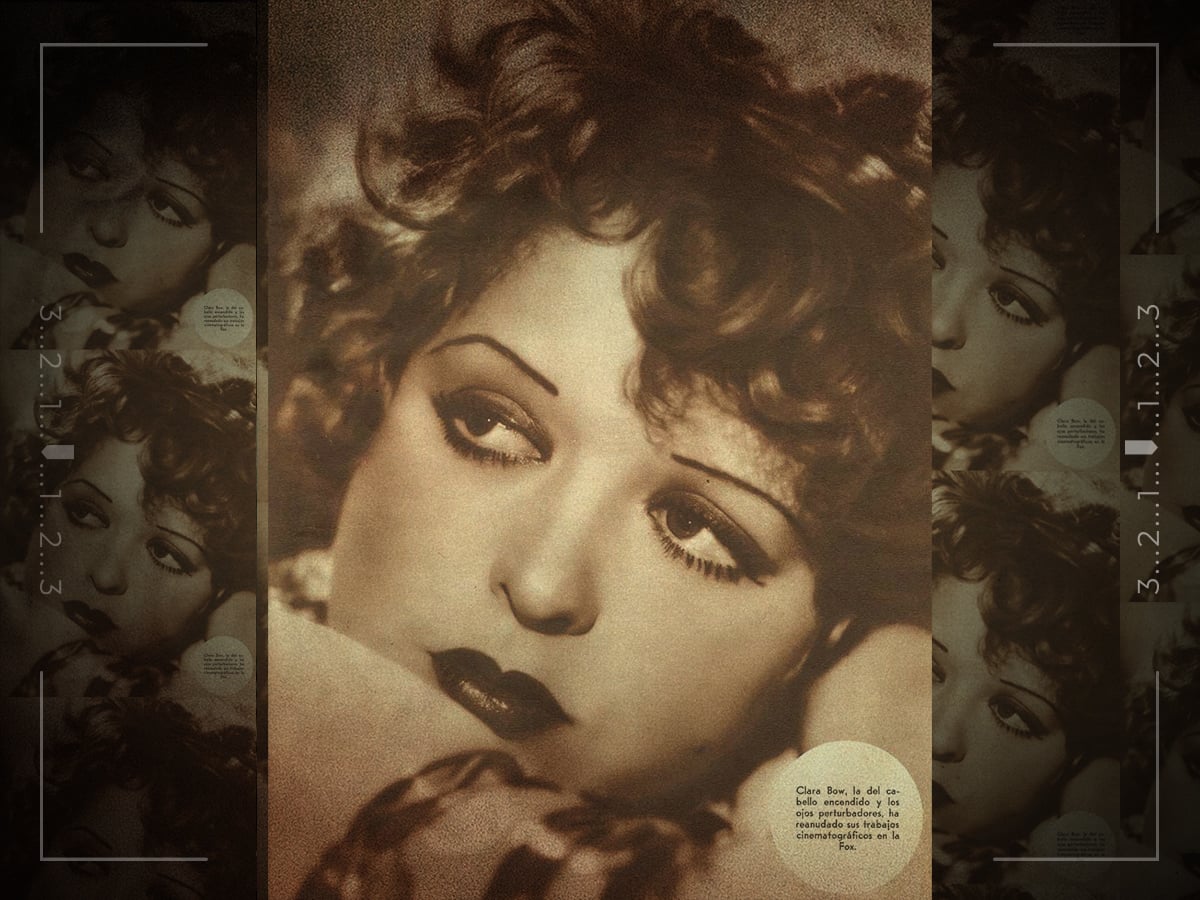
The initial peak of her career was deemed “over” by the age of 25, but once she relocated to her husband, actor Rex Bell’s, ranch in Nevada, she recuperated and returned to being in demand in Hollywood. She chose a two-picture deal with Fox Film Corporation, 1932’s Call Her Savage and 1933’s Hoop-La, both debuting to success and praise of Bow’s performances. Still, Bow would retire from acting that same year, becoming a mother to two sons, Tony (later Rex Anthony Bell, Jr) and George Beldam.
Her mental health continued to suffer and, in 1944, she attempted to take her own life. After receiving treatment, she was diagnosed with schizophrenia and consulted for her traumas, stemming from her mother’s murder attempt in 1922, but she rejected any psychological analysis. She left treatment and did not return to her family, living alone and reclusive in a bungalow until her death from a heart attack in 1965, at the age of 60.
Marred with tragedy, Bow’s life reflects one that, in all of its glamour, could not escape the overwhelming sadness that followed her from birth. In less than a decade, Bow would revolutionise the Hollywood industry that she so desperately wanted to be accepted in, becoming an icon of her time and setting a precedent of ‘It’ that millions would aspire to. But hers was a heavy crown to bear, and signals the double-edged sword of ‘It’ that persists as a warning.
A quote from her summarises the paradox of the ‘It Girl’ best: “All the time the flapper is laughing and dancing, there’s a feeling of tragedy underneath, she’s unhappy and disillusioned, and that’s what people sense.”
