


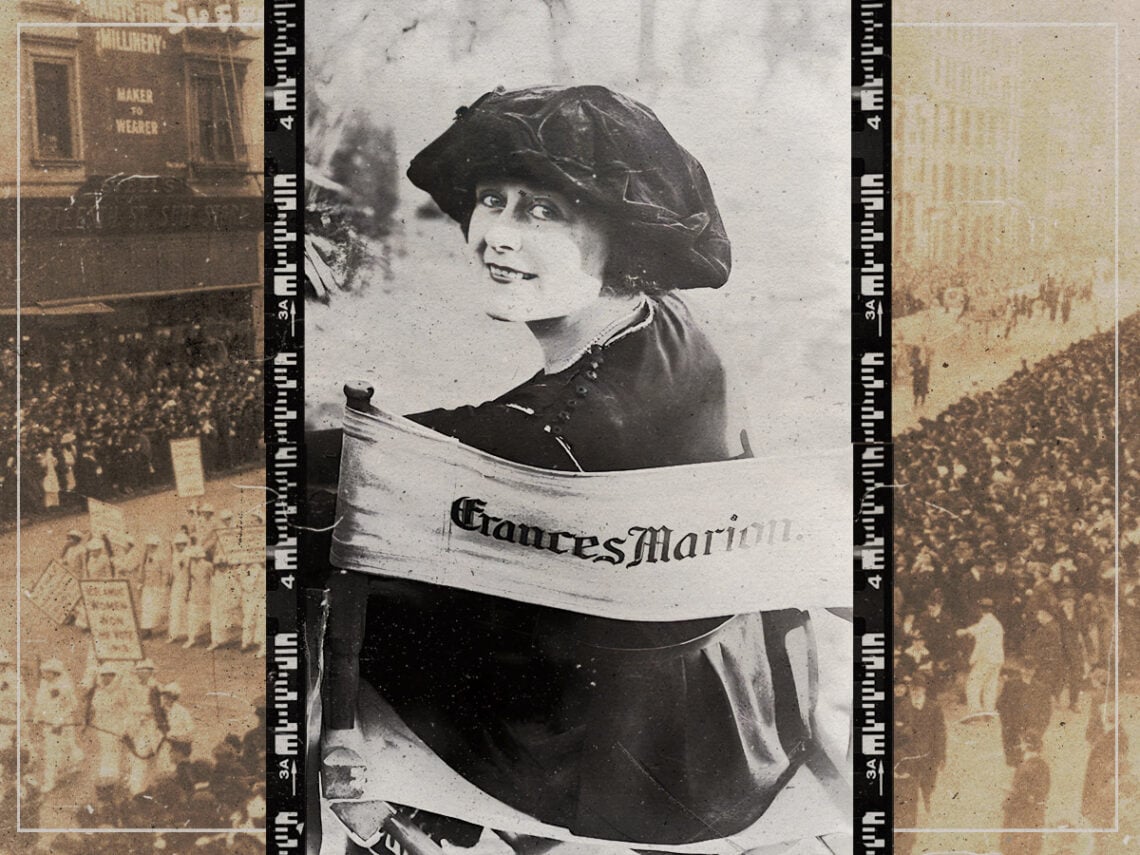
Frances Marion: Silent cinema’s highest-paid screenwriter

These days, the highest-profile screenplays are acquired by studios and streaming services for millions, ensuring that the biggest projects can be incredibly lucrative for their writers. Obviously, that wasn’t the case a century ago due to the complexities and contracts of the old studio system that gave the executives significant power over the creatives, making it all the more incredible that Frances Marion spent decades as the top-earning screenwriter in Hollywood.
Breaking into the industry in the summer of 1914 after being hired as an assistant by trailblazing director and producer Lois Weber, the two would eventually form an eminently successful and incredibly lucrative partnership, one that quietly changed the course of the entire industry in an era where women were hardly regarded as being production powerhouses.
It was at Universal where Marion found the most success, though, when she became a key collaborator of the pioneering Mary Pickford. Selling her first original feature for the princely sum of $125 in 1915, Marion was overseeing the entire writing department at World Films just two years later before being signed to an unprecedented salary of $50,000 annually by Famous Players.
Going from strength to strength, Marion was named the highest-paid writer regardless of gender every year from 1915 through to 1934, during which period she made history as the first scribe to ever win two Academy Awards. The 1930s project The Big House saw her land an Oscar for ‘Achievement in Writing’, before she took home the prize for ‘Original Story Writing’ two years later for The Champ.
Reflecting on her monumental achievement, Marion slyly noted her first Oscar was a vindication of her talent and status, particularly in such a male-dominated industry: “I saw it as a perfect symbol of the picture business,” she said. “A powerful athletic body clutching a gleaming sword with half of his head, that part which held his brains, completely sliced off.”
Adjusted for inflation, Marion earning $50,000 per year in 1917 is the equivalent of roughly $1.2million today, underlining just how highly regarded she was among her peers. By the end of her career, she was estimated to have penned well over 300 screenplays and became so wealthy as a result that she abandoned the film industry altogether in 1946 to devote her time and attention to novels and playwriting.
Not only that, but Marion would hold women-only parties at the height of her fame to create a support network for those within the industry, with historian Cari Beauchamp revealing that the focus was on “taking care of each other, personally and professionally”. For someone who isn’t a household name in terms of being listed among cinema’s most influential and important figures, Marion’s list of accolades and achievements are easily comparable to anybody else.
