


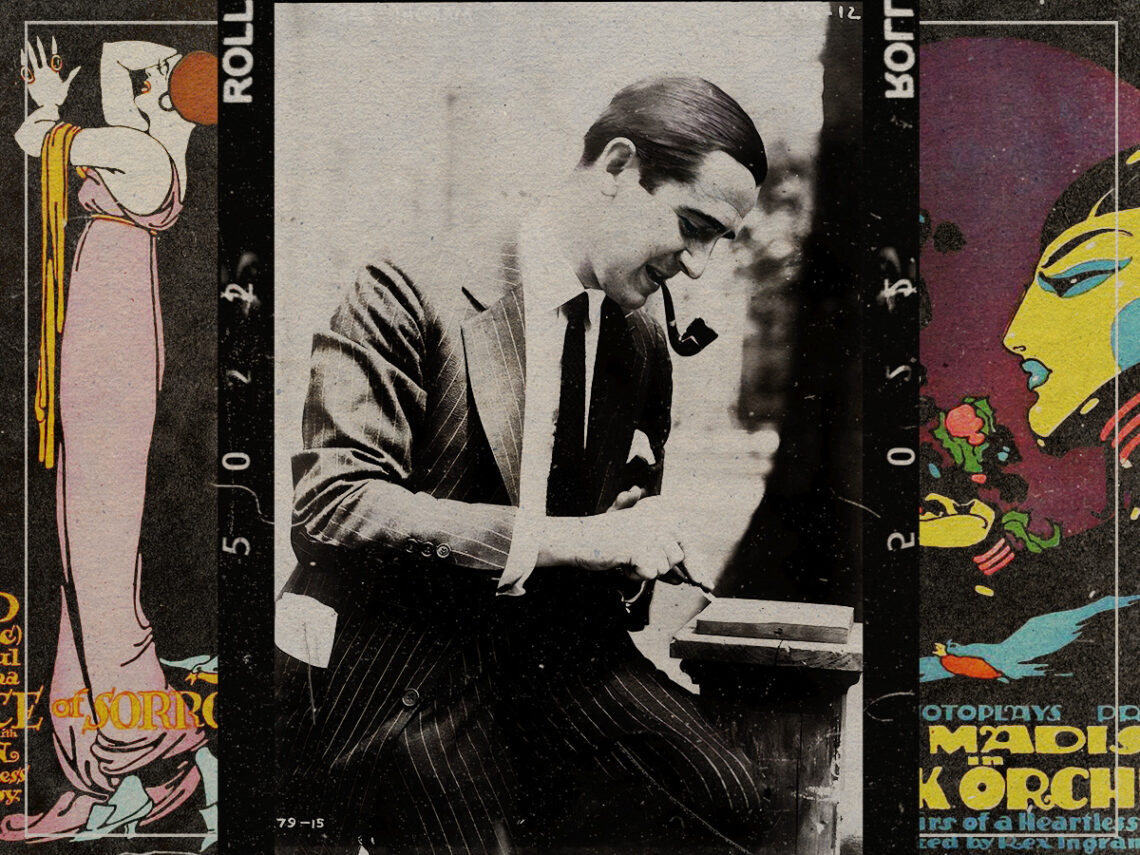
Rex Ingram: The man who woke Hollywood up

Cinema’s transition from silent movies to sound, with new movies being dubbed ‘talkies’, was a challenging period for many filmmakers and actors. Films like Sunset Boulevard and Singin’ In The Rain depict this era well, demonstrating how some people were simply more equipped for the transition than others.
A selection of Hollywood’s most prominent directors had roots in the silent era, such as John Ford, whose career began in the 1910s and continued until 1970. However, others weren’t so lucky, like Rex Ingram, whose influence waned as the industry started to favour sound cinema. Ingram, a name that is often overlooked today, was one of the most influential directors working in the silent era, significantly shaping the course of Hollywood’s trajectory.
Born in Ireland in 1892, Ingram moved to the United States in 1911 and never looked back. It didn’t take long for the young man, who took up a degree in sculpture at Yale University, to meet the Edison family, securing himself a job at Edison Studios. Ingram established himself in the industry by completing various assignments, from minor acting roles to writing. After making a short film, The Symphony of Souls, in 1914, which remains lost to this day, he made his debut feature, The Great Problem, two years later. From there, Ingram consistently released multiple films a year, including Black Orchids, The Reward of the Faithless, The Day She Paid, and Under Crimson Skies, most of which are also lost.
However, it was his 1921 film The Four Horsemen of the Apocalypse which put Ingram on the map, changing the course of Hollywood forever. Regarded as one of the first anti-war films, it became one of the most influential silent movies ever made. The Four Horsemen of the Apocalypse also marked the first leading appearance from Rudolph Valentino, who soon became a Hollywood sex symbol. Ingram was responsible for discovering the actor, casting him again in The Conquering Power that same year. He helped elevate Valentino’s star power, with Ingram filming his actor with great admiration.
Ingram continued to make films through the decade, paving the way for the imminent sound era, even if he himself did not achieve success upon its arrival. Michael Powell, who went on to direct movies such as Peeping Tom, The Red Shoes and The Life and Death of Colonel Blimp, got his start in the industry as Ingram’s assistant in Nice, France. The director significantly inspired him to start his own filmmaking career, and he made his first series of short films, Riviera Revels, in 1928.
Moreover, even the great David Lean was significantly inspired by Ingram, as he once explained: “The man who really got me going was Rex Ingram. In everything he did, the camerawork was impeccable.” Ingram was not afraid to push cinematic boundaries, becoming wholly dedicated to his craft, even if it meant filming one scene 185 times during the production of Mare Nostrum.
Ingram was one of the first directors to challenge the status quo. He included a lesbian couple in one shot of The Four Horsemen of the Apocalypse, and his general depictions of female characters were rather ahead of their time. He also created some early gothic horror movies, such as The Magician and Trifling Women, which proved to be significantly influential in the development of the genre.
Sadly for Ingram, his first and only sound film, Baroud, was not as successful, and he shortly retired from the film industry to pursue other interests, such as sculpture. Yet, Ingram must not be forgotten as an essential Hollywood pioneer, one whose singular vision was a vital springboard for filmmakers entering the next era of cinema.
