


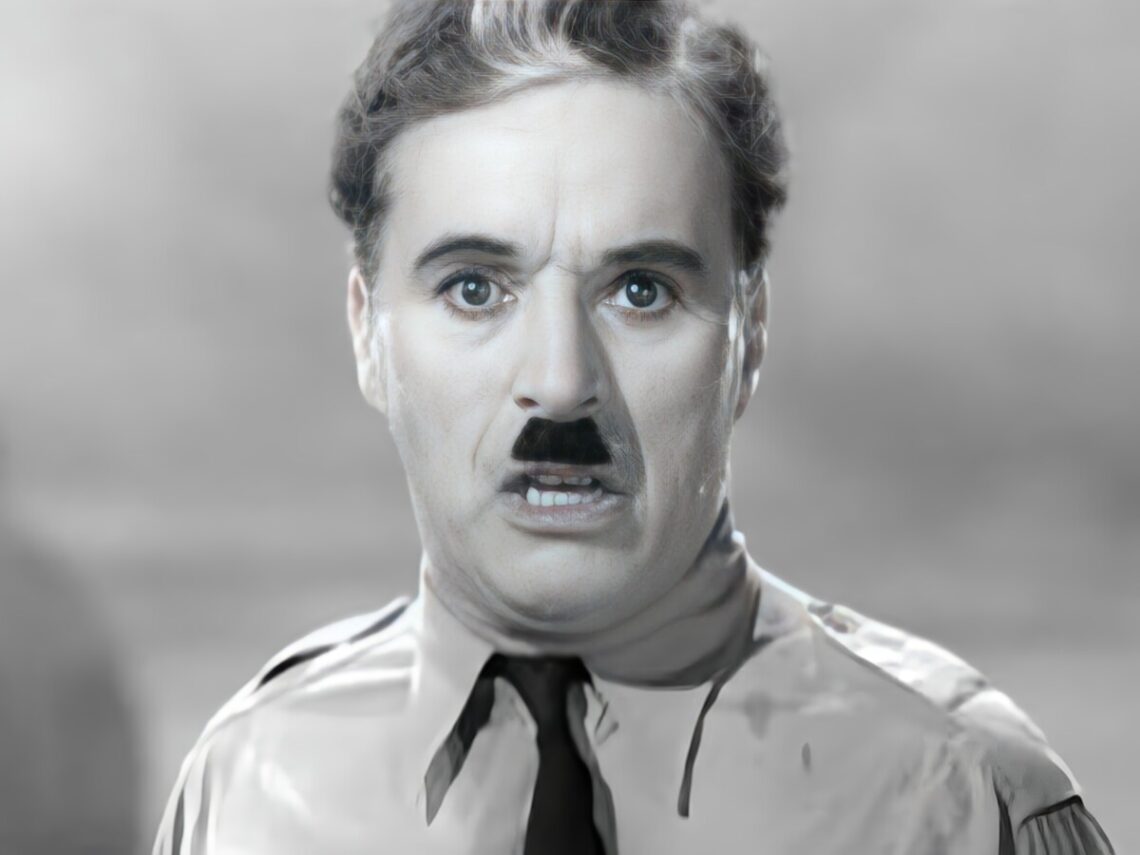
‘The Great Dictator’: Charlie Chaplin’s career-defining moment and why he “had to do it”

Opening his mouth wasn’t necessarily in the blueprint for Charlie Chaplin.
A star of the silent era, Chaplin gained fame and fortune by using his body and facial expressions to gather laughter and appreciation by the bucketful. Rarely did he need his tongue to complete such tasks.
Chances are, if you ask anybody for a single name to define the silent movie era, then Chaplin’s name would rush through their lips quicker than the next intake of breath. He grew in stature during those moments, but became essential not just to the prevalence of cinema in its current form but to the development of it to what we know today.
A known perfectionist who would often feud with his actors, Chaplin would often fight to the bitter end to ensure that his vision was not tampered with, making him unique among the auteurs of this era, also because he was often awarded total creative freedom. Although he was first appreciated purely for his skills as a physical comedian, his work behind the camera proved that he could also be the orchestrator of his stories, as he believed strongly in the merits of the silent era, and fought back when the talkies threatened to overwhelm the system.
It became harder for Chaplin to keep making silent films in the aftermath of the success of The Jazz Singer, which inspired many studios to essentially abandon the silent approach altogether. Thus, he essentially bid farewell to the Tramp, his silent film character, in Modern Times, making his first talkie a highly anticipated event, which came in the form of The Great Dictator, another Chaplin comedy in which he plays a beloved underdog character but infused with political rhetoric that he felt strongly about.
Released in 1940, The Great Dictator starred him as a Jewish barber who inadvertently gets mistaken for a ruthless dictator he looks identical to, an obvious parallel to Adolf Hitler, the then-chancellor of Germany. and served as a warning about the rise of Nazism that predated the United States’ involvement in World War II. It ends with a moving scene in which Chaplin’s character speaks directly to the audience, delivering a searing monologue about the dangers of fascism and xenophobia, and while there were some concerns about adding such serious themes to the film, the filmmaker said that he felt obligated to speak his mind when it came to a global threat.
“I had to do it,” he declared with conviction, “I just had to. There was no other way I could adequately express how strongly I felt. The time had come when I simply had to stop kidding. They had their laughs, and it was fun, wasn’t it? But now I wanted them to listen. I wanted to make them stop being so damn contented.”
Sometimes cinema transcends entertainment and becomes a vital cog in the machine for social change, and while Hitler’s disgusting rhetoric and abhorrent actions had seen him quickly start to become enemy number one, with The Great Dictator, Chaplin confirmed that nobody could stand idly by and let such a situation continue. Later, he would lament his lack of force in following through with further indictments of the dictator, but his movie was a critical moment of cultural shift.
Chaplin’s political beliefs would soon get him into trouble, as he spent much of the second half of his career being persecuted for his alleged Communist sympathies, but there was an entire subgenre of anti-fascist art that emerged because of how he ruthlessly mocked Hitler, as The Great Dictator inspired films like The Producers, Inglourious Basterds, and Jojo Rabbit.
