


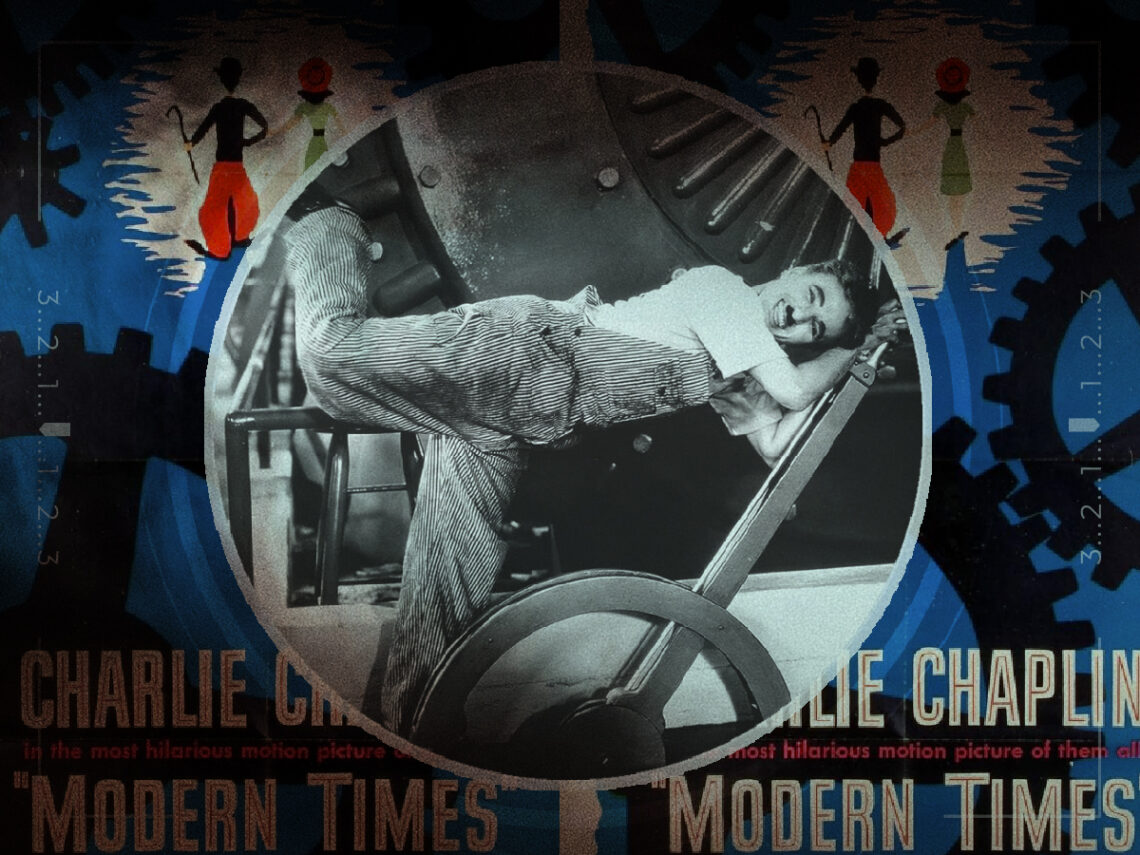
‘Modern Times’ at 90: Charlie Chaplin’s seminal farewell to silent cinema

It was only a matter of time before the combined feeling of fear and fascination that emerged in the early 20th century – as industrialisation and technological innovation left their indelible mark – made its way onto cinema screens.
Metropolis reckoned with the merging of human and machine in 1927, and even decades later, Stanley Kubrick’s 2001: A Space Odyssey captured the anxiety of technological evolution through the presence of an evil work of artificial intelligence. Whether it’s the development of space travel and computers or the ever-looming threat of AI, cinema has long dealt with these fears, but few films have put quite such a comical spin on these anxieties as Charlie Chaplin did in Modern Times.
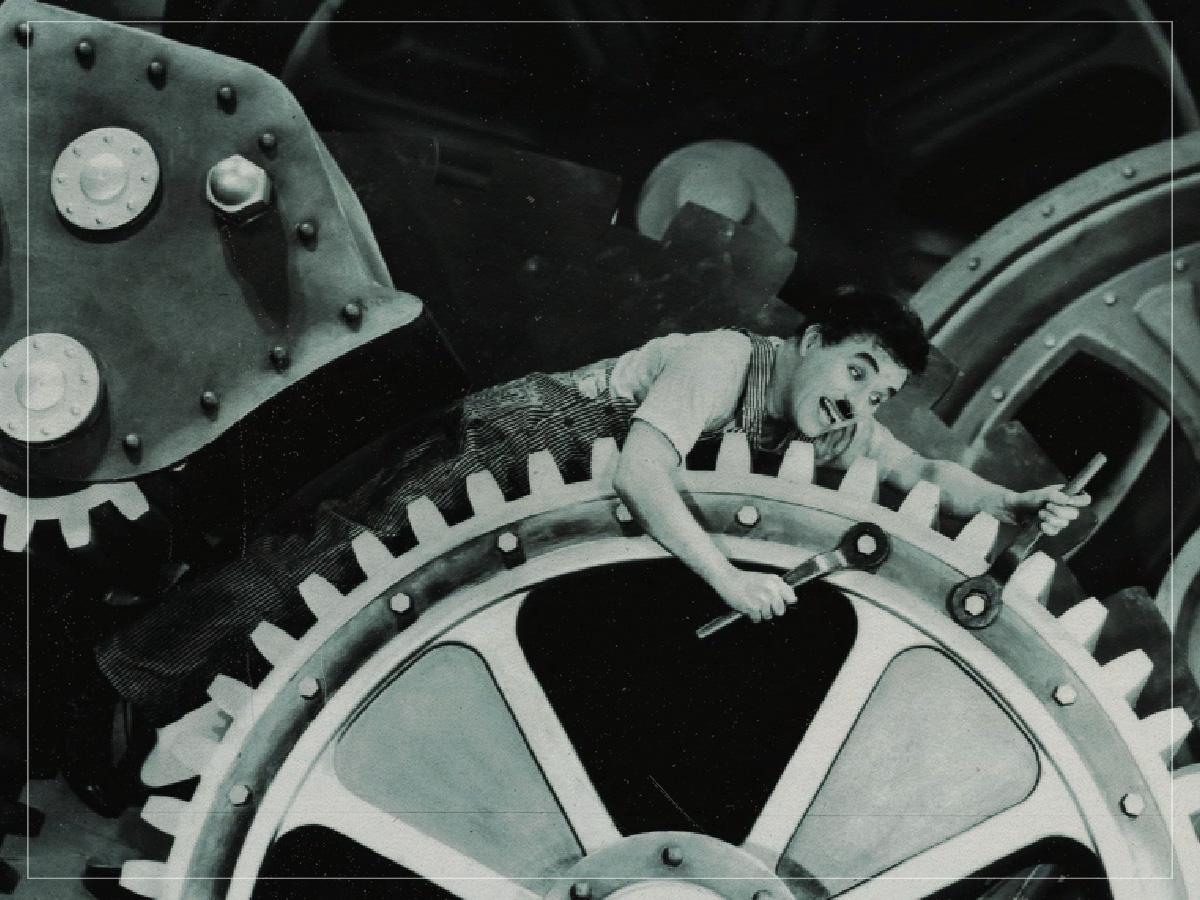
Released 90 years ago, it’s strange how much of the film – the Tramp’s final outing – still resonates with audiences. When the Tramp finds himself working on a factory line, struggling to keep up with the pace of the machine and eventually getting sucked into the cracks between its cogs, this image of human versus machine still feels relevant today when we consider how strong our fight to preserve human artistry and skill against the threat of AI really is.
Whether this says more about Chaplin’s enduring skill as a filmmaker or the dire state of modern advancement we’ve ended up in is up to you. I’d say that both are true. Modern Times is a bold transmutation of anxiety into humour, poking fun at the ridiculousness of losing ourselves to machines, which are, ironically, something we’ve invented ourselves. Chaplin makes audiences think about just how bizarre it really is to be developing the kinds of technology that make us lazy and dependent on machines, as the feeding machine sequence suggests.
Sure, there’s something novel about a machine that feeds us food without us having to lift a finger, but of course, the only possible outcome is a great, malfunctioning mess. Machines might be smart, but nothing beats the human brain’s own capabilities.
This feeding machine is like those Uber Eats robots which whizz around the streets delivering food without needing the employment of a delivery driver. It might seem quicker and more efficient, but what happens when a drunken student kicks a robot over and leaves it on its back, and what about the fact that passersby often have to help these delivery machines to cross the road? It’s dystopian, and Chaplin predicted this almost 100 years ago.
Perhaps more people should’ve thought about the humour of Modern Times, which is employed exactly to highlight the preposterous nature of such developments, which further turn humans into cogs in a capitalist machine rather than members of a community. The film is conscious of how these developments affect us as people, and while the Tramp gets carried away tightening bolts, he finds himself making enemies with his colleagues and scaring women in the street.
Capitalism and technology are real threats to what it means to be human, and Modern Times tackles this as lightheartedly as possible, although Chaplin doesn’t exactly water down his message. There is real fear here, in every exaggerated movement and raised eyebrows, that can be found in Chaplin’s hesitancy to give into a new mode of living.
But times were changing, and so was cinema. No longer was silent cinema the popular form of entertainment – talkies had emerged as the new trend, and they were set to last. The invention of sound cinema was groundbreaking, but Chaplin, again, was hesitant. He wanted to keep the Tramp’s tales silent, complete with title cards and physically expressive humour, but now silent cinema was old news. People didn’t do that anymore.
So, with Modern Times, he blended the two, keeping his character silent while employing sound effects. In a way, the film also communicated these fears of cinematic innovation, too, with Chaplin reckoning with a new era for his career – one he wasn’t sure about. The image of him stuck between the cogs of the machine is perhaps representative of Chaplin stuck between the cogs of a new form of cinema, his fall into the machine symbolic of him falling into a land of sound cinema, bigger budgets, and less slapstick. Was he ready?
He gets pulled back out, though, not ready to fully surrender himself to the new medium. The future of technology and cinema was clearly uncertain to Chaplin, and with uncertainty comes fear. But when you’re confronted with fear, the best thing you can do is put a smile on your face and embrace it, which is how the film ends, with the Tramp and his love interest, Ellen, walking away on an unknown path.
