


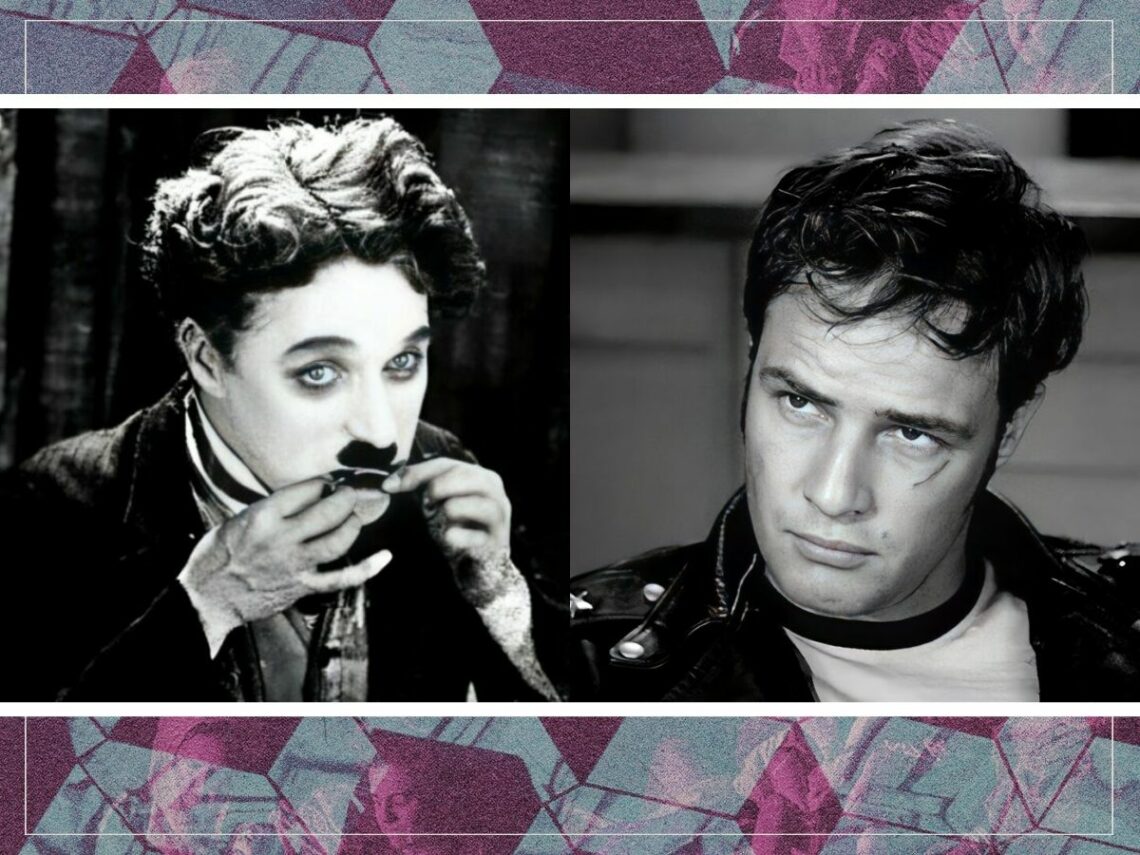
Idol, inspiration, enemy, and a rejected Oscar: Marlon Brando’s odd bond with Charlie Chaplin

Since Charlie Chaplin was so renowned as an iconic star of silent movies, it’s easy to forget that he was still writing and directing movies well into more modern times, with his final film the same year The Beatles released Sgt Pepper’s Lonely Hearts Club Band, leading him to crossing over with other legends of the era, including possibly the greatest actor of all time, Marlon Brando.
It was in that same year, 1967, that Brando and Chaplin worked together on an ill-fated romantic comedy called A Countess From Hong Kong, a star-studded affair featuring names like Sophia Loren and Tippi Hedren, written and directed by Chaplin, which led Brando to declare his former idol a sadistic and egotistical tyrant, while Chaplin, for his part, decided that Brando was “impossible” to direct.
It proved to be a sad twist in the tale of two of the most talented and important figures in all of Hollywood history, Brando the eight-time Oscar nominated star of movies like A Streetcar Named Desire and On the Waterfront, teaming up with a director that he believed was “the greatest genius the medium had produced” only to fall out with Chaplin within days of filming starting after being lambasted in front of the crew for being 15 minutes late.
Whether or not it was down to the issues on set is unclear, but the film ended up being a substantial flop, Chaplin’s only film ever made in colour simply didn’t land with audiences, and the critics were even more harsh, The New York Times calling it ‘an embarrassment’.
Any relationship between Brando and Chaplin was left in ruins, but a strange link between the pair would come a few years later, after one of the most bizarre Academy Awards ceremonies in history.
Brando famously refused to attend the Oscars in 1973 in order to accept his ‘Best Actor’ statue for The Godfather, instead sending the Apache activist Sacheen Littlefeather in his stead to read a 15-page speech complaining about America’s treatment of native Indians and refuse the award outright. At no point did she ever lay hands on the golden statue being offered by guest host Roger Moore, and despite the Academy offering to send it to Brando, he again said he didn’t care what they did with it.
That year, following a rapturous reception in 1972 that included a 12-minute standing ovation for his services to film, Charlie Chaplin was again honoured by the Oscars, this time for a 20-year-old movie called Limelight, but by now the legend was well into his 80s and not able to attend the ceremony. Instead, an Oscar was sent to him, which was damaged in transit, leading his family to request a replacement.
In a twist of fate, the statue that was sent to Chaplin turned out to be the very same one that Roger Moore had handed back once it was rejected by Littlefeather in front of a shocked watching public.
Brando seemed immensely disappointed by his experience working with Chaplin, saying, “I still look up to him…but as a human being, he was a mixed bag, just like all of us. Sometimes, we told each other, you do what seems impossible: you achieve greatness when you only want a warm, safe room for your mother. We bonded over this shared biographical fact, if nothing else.”
