


Catherine Breillat: revolutionary or repulsive?

French feminist director Catherine Breillat has long been the subject of intense analysis and debate, her work delving into taboo subject matter through provocative narratives. After attending a talk in which Breillat discussed her films, she explained that her stories revolve around “matters of desire”, which she claims is the driving force behind the world. While her comments provided insight into her intentions, her framing of topics such as rape and grooming as simply “matters of desire” cast her work in a deeply unsettling light. This reductionist view seemed to strip these complex, often harrowing subjects of their nuance, leaving me questioning whether her storytelling methods are revolutionary—or simply repulsive.
Fat Girl, released in 2001, is largely seen as the greatest film within Breillat’s body of work. It follows a twelve-year-old girl called Anaïs who is on holiday with her family, becoming envious of her older sister after being swept up in a holiday romance with an older boy. Anais becomes fixated on this relationship after her sister loses her virginity, becoming aware of the value of women and the intersection between intimacy, power and control.
While it is a thought-provoking watch, and the film ends with a confrontational message about internalised misogyny and sexual violence, I felt deeply unsettled by the way in which Breillat chose to convey this message. The final scene is so disturbing that I reasoned to myself that the actor must’ve been much older than 12 years old, with the character being physically vulnerable and partially naked as she is sexually assaulted. But after doing some research on the film, I was shocked to discover that the actor was, in fact, the same age as her character, and a child had been the one to perform these scenes.
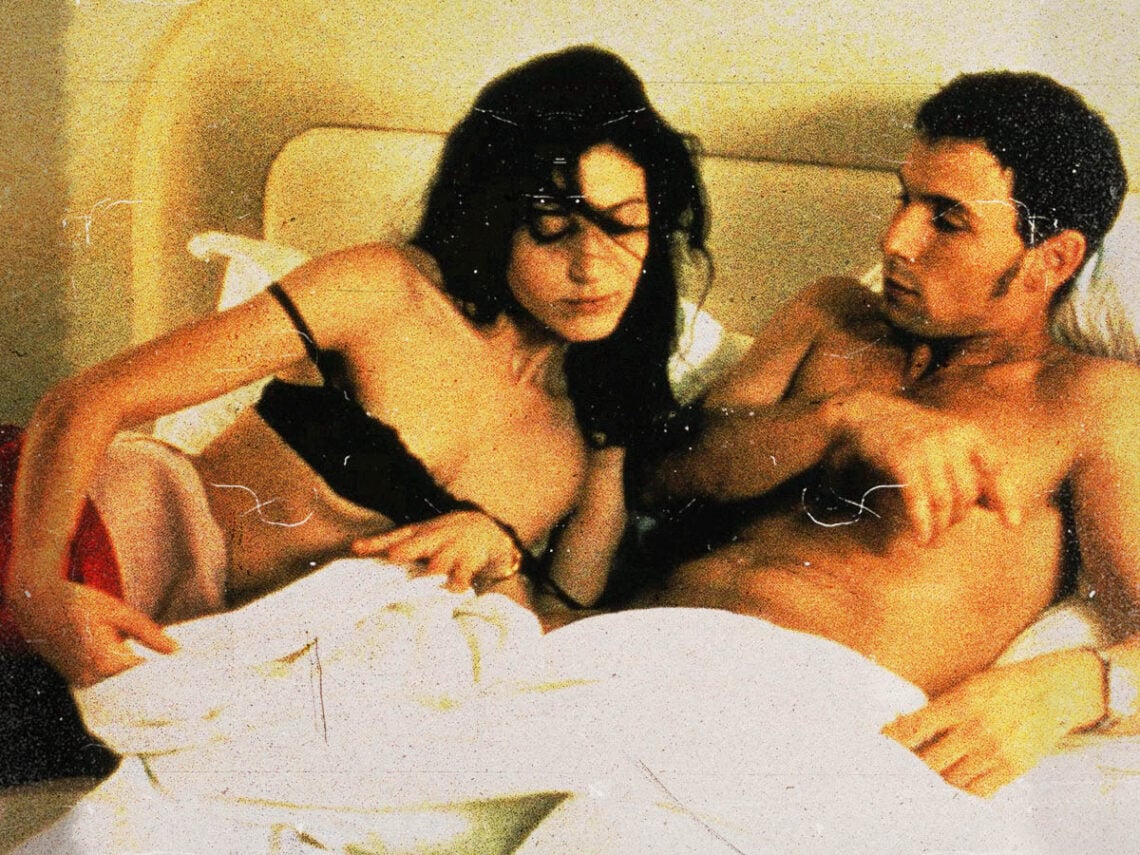
Breillat’s 2004 film Anatomy of Hell is similar, with the director clearly making a statement about the male gaze, deep-rooted misogyny and limited understanding of the inner world of women. However, in her typical explosive fashion, she chooses to share these ideas through grotesque images and extreme situations, with the slogan of the film being, ‘watch her as she becomes unwatchable’. The main character forces a man to watch her for four nights in her house while she does increasingly degrading and perverse things to her body to prove that she is more than his ideas about her.
However, in order to prove her so-called detachment from traditional expectations of femininity and the confines of her body, she then proceeds to highlight only the functions of her body over those four nights, which allegedly encourages him to see her more than her body. The intention behind the work is clear – force men to see women outside of a sexual context, but in attempting to do so through such extreme techniques, I feel that the work becomes regressive instead of subversive.
By degrading women’s bodies and highlighting relevant feminist issues through such extreme methods, I feel that Breillat is instead making films for men about women’s issues, but at the expense of women. For one thing, a piece of feminist media can only be considered as such if the on-set practices were considerate and respectful towards the women involved, and all the power of the message in Fat Girl is undone by the fact that it was achieved at the expense of a child. Using a child actor to perform such a scene is unforgivable, and this contradictory decision completely counteracts any of the ideas explored in the film.
The same goes for Anatomy of Hell, with Breillat choosing to highlight the limited male perspective of women and their objectifying ideas about them by objectifying and reducing this woman to her body. The idea of being watched as you become unwatchable is interesting, but executed in a way in which the woman does not have power over the situation and is subsequently exploited by the man she is with, all whilst reiterating the idea that her entire identity as a woman comes from her body, which feels particularly terf-like.
By exploring feminist ideas in this way, Breillat is only taking away from the importance of the subject and making it so controversial that it loses any of its power. Naturally, the focus will be pulled away from what she is trying to say and onto how she says it, which is often done in a disgusting way that diminishes the thematic weight.
While the work is revolutionary in terms of the ideas being committed to celluloid and the fact they hadn’t been before, it wasn’t revolutionary within the realm of feminist storytelling. Ultimately, if you are truly going to explore radically feminist ideas in your work, then they have to extend to real life and the practices used on set, and without this, it is just as exploitative and damaging as the misogyny she is critiquing.
