


The Story Behind The Song: Bob Marley’s ‘No Woman, No Cry’

“After battering around from this dwelling to that one, we finally ended up in a government house in Trench Town,” Bob Marley’s mother, Cedella Marley Booker, wrote in her 2003 memoir, Bob Marley, My Son.
The year was 1957, and Robert Nesta Marley was still just a 12-year-old kid in Kingston, Jamaica, struggling to find some sort of sense of stability in his life. His new house at 19 Second Street wasn’t one his mother had bought or been assigned, but one she’d hurriedly moved into after her brother Solomon got divorced and moved out. There was literally a race for the Marleys to move their furniture in before Solomon’s ex-wife, Ruth, could hand the place over to her own relatives. Fortunately, Cedella and Nesta, as she called her son, got there first.
“Yet it seemed as soon as one trouble ended, another began,” Booker wrote.
During this period, Cedella was in a relationship with Bunny Wailer’s father, Thaddeus Livingston, and while that helped create a bond between Bunny and Bob as young step-brothers with budding musical interests, it didn’t make for a peaceful home life.
“Mr Taddy and I were not living smoothly,” Booker wrote, referring to Thaddeus, “There was always fussing and fighting. He was a violent man with a wicked temper and mad jealousy. Sometimes he didn’t like the way I talked. Sometimes he didn’t like the way I was dressed and would just come up to me and rip off my frock and say, ‘You not going anywhere’.”
Cedella had a daughter with Thaddeus, Pearl Livingston, in 1962, but shortly thereafter, she started a relationship with an American civil servant, Edward Booker, and left Jamaica for the US to be with him. Bob Marley, still a teenager, was now essentially on his own, left to carve out a life in Trench Town, which mostly meant a lot of crashing on friends’ beds and working on music with Bunny Wailer and Peter Tosh, forming a trio they called the Wailing Wailers.
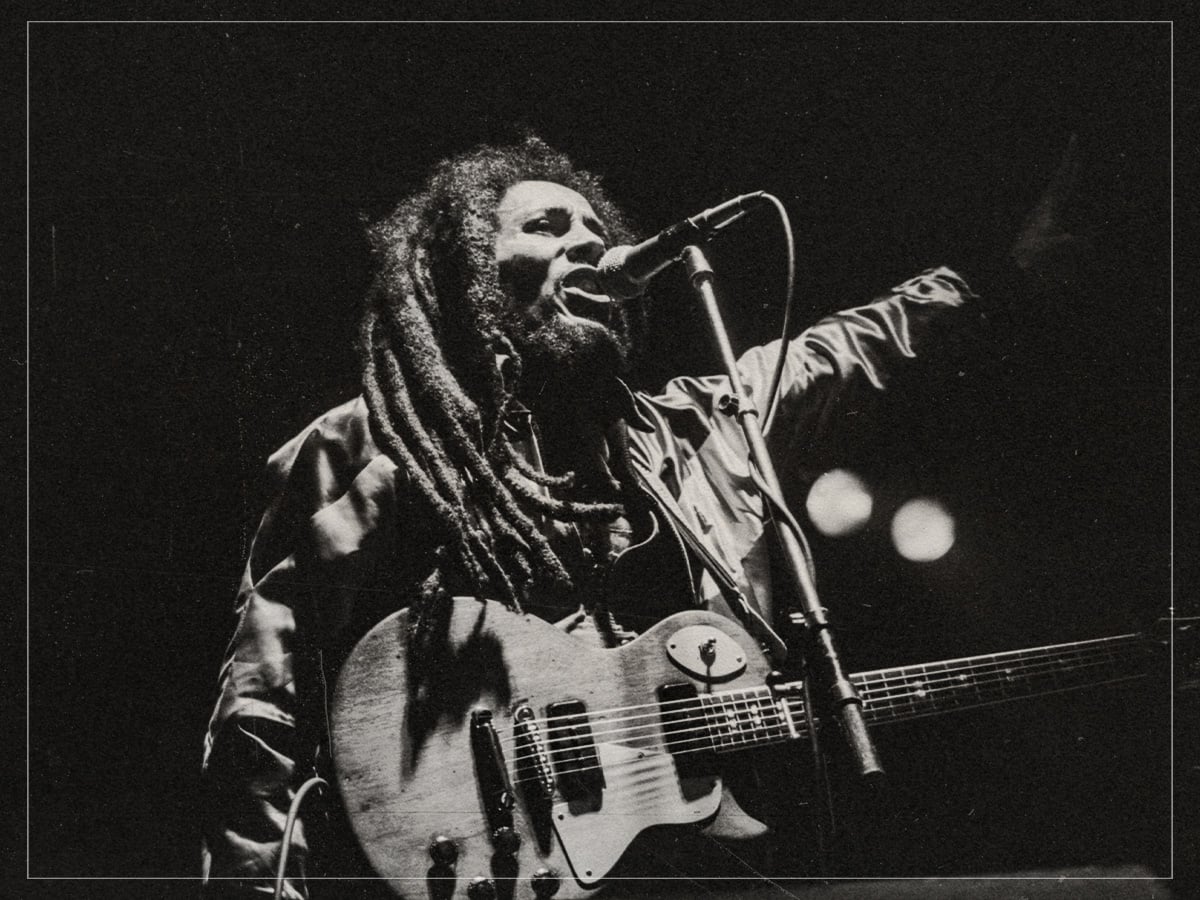
This was the time period Marley had in mind, 12 years later, when he wrote and recorded ‘No Woman, No Cry’, a song which, despite 50 years of misunderstandings from clueless, non-Jamaican, dorm-room listeners, was not written as a form of chauvinistic relationship advice (that is, if you avoid having a woman in your life, you’ll save yourself some grief). Instead, it was an appreciative, nostalgic portrait of the neighbourhood where Marley spent his formative years, and the women who were part of that community.
“I remember when we used to sit / In the government yard in Trench Town / Observing the hypocrites / Mingle with the good people we meet / Good friends we have had, oh, good friends we’ve lost along the way”, goes the song.
Some have speculated on who, exactly, the “woman” is that Marley consoles in the song. Was it his mother, a partner? Some have said it was a specific woman Bob encountered, who was left in tears after her son was unjustly arrested. The more likely explanation is that the “woman” in question was a composite, a stand-in for many of the women Bob and his friends knew in Trench Town, where life wasn’t easy, but a sense of camaraderie and a love of music were essential survival tools for daily life.
Interestingly, ‘No Woman, No Cry’ first appeared on the seventh Bob Marley and the Wailers album, 1974’s Natty Dread, which was also the first not to include Bunny Wailer and Peter Tosh, the childhood friends who’d shared those Trench Town experiences with Bob.
Bunny and Peter hadn’t exactly left the Wailers on the best of terms, either, as brewing tensions over creative control of the group, along with Island Records’ supposed favouritism toward Bob, had contributed to their departure. With this in mind, ‘No Woman, No Cry’ could be seen as Marley writing a bit of a wistful reminder to himself about what had brought the Wailers together in the first place. His career was about to take off, and he seemed to know it, but he was fully conscious about staying grounded and remembering his roots: “In this great future you can’t forget your past / So dry your tears I say”.
Of course, the only real problem with analysing Marley’s various motivations behind ‘No Woman, No Cry’ is that, if you believe the liner notes on the record itself, he didn’t actually write it.
The song that saved a soup kitchen
The official songwriting credit for the song went solely to a man named Vincent ‘Tata’ Ford, who ran a soup kitchen in Trench Town and provided regular shelter and friendship to Marley when he was a young lad in those rough years of the early ‘60s. Ford had some musical chops of his own, so it’s never been a complete impossibility that he wrote the song himself and handed it off to Marley. The vast majority of reggae historians, however, believe that ‘No Woman, No Cry’ was one of numerous examples of Marley strategically crediting his friends as songwriters in order to avoid having to share royalties with a businessman named Danny Sims.
Sims, an African-American club owner and impresario from New York, had ‘discovered’ Bob Marley in the late ‘60s and inked him to a contract with his upstart publishing company, Cayman Music. That relationship soured after a few years, however, and while Sims was able to retain some publishing rights to Marley’s ongoing work after he signed with Island Records in 1972, Bob was none too thrilled about the lingering connection.
As a result, Marley began assigning credit for some of his songs to friends and family, hoping to side-step his deal with Sims and send his rapidly increasing income to the people it could really help. In the case of Vincent Ford, the royalties from ‘No Woman, No Cry’ are reported to have helped keep his Kingston soup kitchen operating for decades, along with paying for various expenses from Ford’s later health problems (he died in 2008 at 68).
Despite that heartwarming narrative, as late as 2014, the owners of Cayman Music were still battling in court for their share of the royalties to ‘No Woman, No Cry’ and a dozen other songs they accused Bob Marley of falsely crediting to other songwriters; they lost the case.
It’s always better live
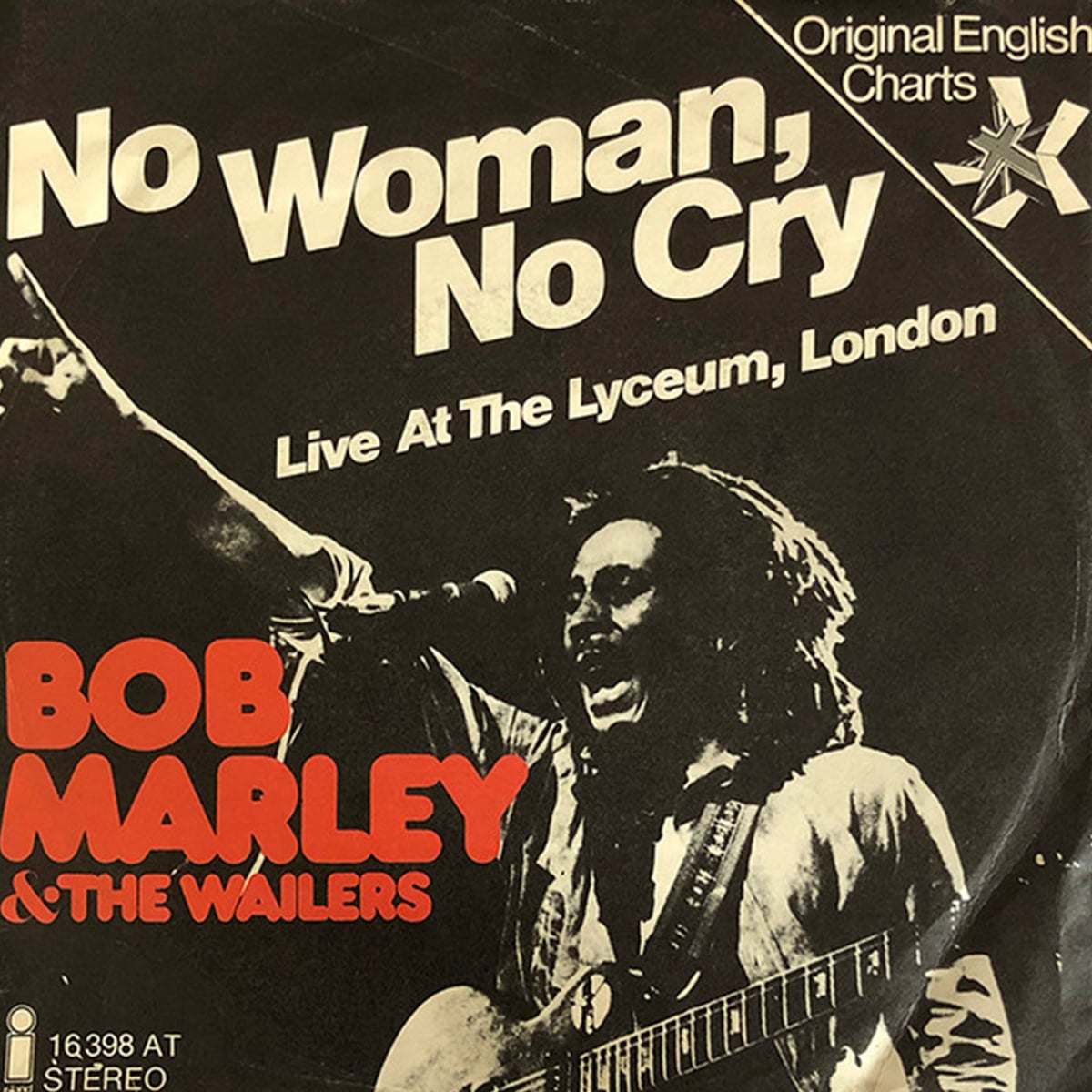
If you start humming ‘No Woman, No Cry’ in your head, it’s a safe bet that it won’t be the original, Natty Dread version from 1974. While the song was one of the better tracks on that record, its relatively tame and laid back arrangement, led by a simple Hammond organ line and a drum machine, hardly caused a stir.
As was becoming a bit of a trend in the 1970s, though, the song found new life and enormous success when it was released as a live single a year later, taken from Marley and the Wailers’ full-length live album, Live ‘75. This new version was nearly twice the length of the studio track (seven minutes and seven seconds versus three minutes and 46 seconds), and had the feeling of a gospel anthem, including a slow build-up featuring a magical Tyrone Downie organ solo, a soulful bass line from Family Man Barrett, and angelic “oooohs” from the Wailer backing singers Rita Marley and Judy Mowatt; not to mention half the theatre singing the chorus in advance of the first lyric. That was all before Bob himself stepped to the mic and reached deep into his memory banks to bring the raw feelings of his Trench Town youth into the utterance of each word.
It can’t be overstated how important the audience was to the success of that live recording. Live ‘75 captured two legendary Wailers gigs at the London Lyceum Theatre in the middle of July, and because Marley was beginning to reach a wider fan base from the worlds of rock and R&B, the crowds at these shows were uniquely split between white and black attendees. Among the latter, many were longtime Wailers fans from the Caribbean, members of the UK’s Windrush generation who were now watching one of their own achieve unprecedented, crossover success.
Appreciating Live ‘75 doesn’t require any deep knowledge or understanding of the culture and history of Jamaica. But when you listen to the version of ‘No Woman, No Cry’ from that album, which reached even wider popularity when it appeared on one of the biggest ‘greatest hits’ records of all time, the posthumous 1984 collection Legend, you’re hearing a clear recognition from a large part of the audience, a direct connection with the words Marley is singing, because many of them either came from Kingston themselves, or from another town not too dissimilar.
Aston ‘Family Man’ Barrett, who played on that Lyceum recording, recalled how the band fed off “the response from the audience”. In a 2012 interview with NME, Barrett also shared his view that the song was a celebration not just of the Trench Town community, but specifically of the women who held the neighbourhood together.
“The song is about the strength in the Mama, of course, strength in the ladies,” Barrett said, “And we love a woman with a backbone… They have to be like a she lion! Woman strong, you know, not depending on the man. Of course, the man is there to help you, then for every successful man, there is a good woman.”
