


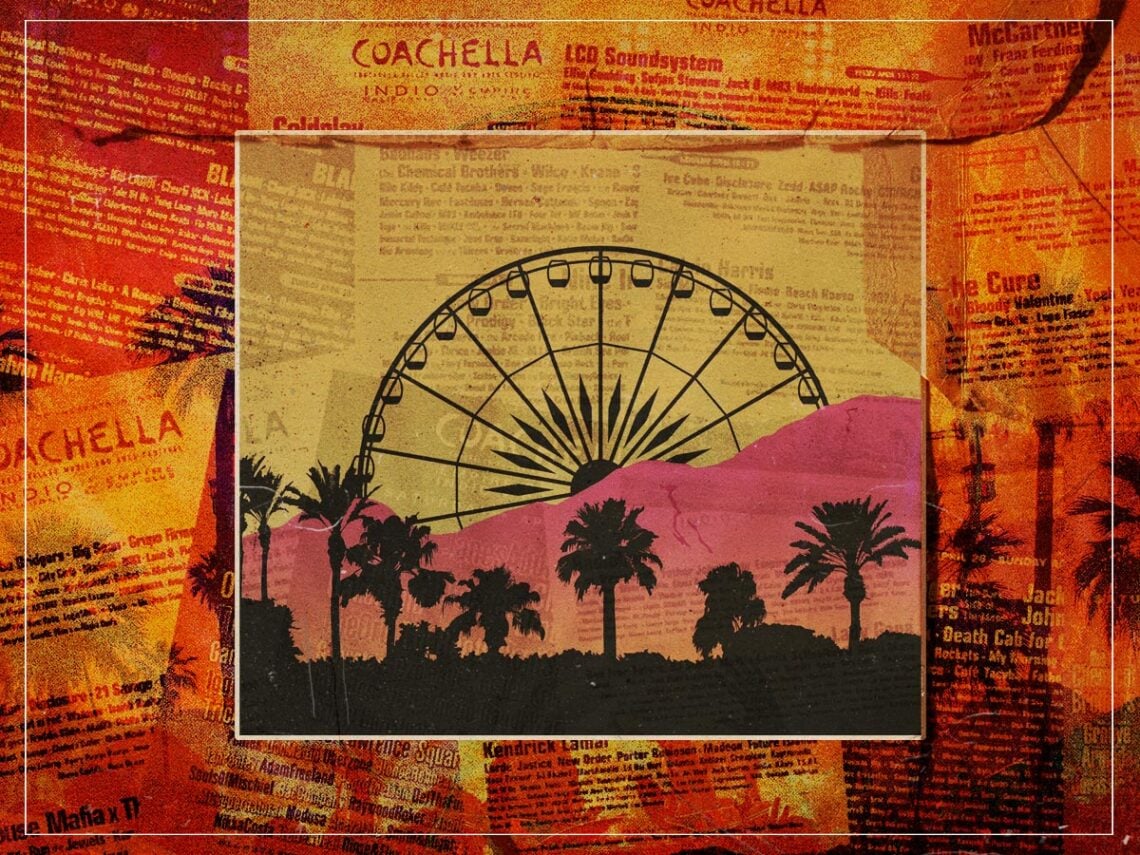
From alt-rock utopia to desert fashion show: The strange history of Coachella

This weekend sees festival season officially start as one of the biggest in North America, Coachella, blares into focus.
Headlining are Sabrina Carpenter, Justin Bieber, and Karol G, all of whom are massive names in modern music and very appropriate choices for entertaining acts to top the bill. However, when you look at the history of Coachella, those acts don’t align with the kind of music the festival was created for, and the crowd certainly doesn’t align with the original ethos of Coachella. It begs the question, in the multi-genre world that we live in now, is curation for a weekend-long festival becoming an impossible task? And how much longevity does Coachella have moving forward?
The festival was initially set up by Paul Tollett and Rick Van Santen, who were music promoters at the time. Though the artists they worked with varied in genre, they mainly dabbled in rock, so when starting Coachella, they did so with rock music in mind. The sound only came as an afterthought, though, as the main thing they were keen on was making the complete opposite of Woodstock.
Remember, the Woodstock being referred to isn’t the one in the 1960s where Hendrix changed the world and peace and love filled the air, it’s the revamped iterations of the festival from the late ‘90s. These were truly barbaric and catastrophic affairs. Crowds would turn violent, the festival was a blatant cash grab and more than once, the whole thing had to be shut down.
What Tollett and Santen did was create a new festival that was a contrast to the modern Woodstock and tried to channel that which was famous in the ‘60s. For the most part, they succeeded. The first Coachella had good music and was affordable and safe. One critic highlighted how shocked they were at the politeness of those in attendance, saying, “Polite behaviour is not something associated with large-scale rock festivals, but it was very much in effect at Coachella. People would say ‘excuse me’ after they bumped into you.”

The police were also happy with how the festival was run, saying that the crowd were well-behaved and it was fine working there. You might think this is because it was a relatively minor affair, and so was easy to manage, but you couldn’t be more wrong. Headlining were Beck, Rage Against the Machine, Tool and Morrissey. Tollett and Santen managed to sell 25,000 tickets for $50 each, but despite the success in attendance, the festival was still a failure, as it ended up losing $850,000.
It had to be cancelled the following year but was put on again in 2001, lasting one day and costing punters $65 a ticket. It might seem like a fair amount of money for the time, but keeping in mind that the headliners were Jane’s Addiction, Weezer and Fatboy Slim, it was certainly good value. From that point on, the festival got bigger and bigger, bringing in profit and steadily cementing itself as the go-to festival in North America; however, its changed a great deal during that transition.
A swift transition to trends
One of the significant ways that the festival has changed is in the people who attend. Coachella is now less a haven for hippies who want to listen to good music and instead is a fashion show for the rich and famous. It has lost its sense of self in that regard, as tickets are no longer affordable for the average person, with costs starting at $499+ fees. Additionally, people go less because they want to be there and more because they feel like they have to be there.
Littered with celebrities and influencers who couldn’t give a shit about the music being played, the festival is a networking event for those with silver spoons up their arses. Brands see the potential in it and have capitalised, with fashion companies paying celebrities to wear their clothes and setting up stalls that people can look around, buy from and take pictures in.
A lot of fashion critics have said that Coachella is now just as important as New York Fashion Week, as people find it incredibly important to be the best dressed, strutting their stuff with a catwalk track made up of some of the biggest artists in the world.
As Far Out photographer, Raph Pour-Hashemi, who has been to “just about every music festival in the world” put it, “Anyone who goes to Coachella with that Instagram-type lifestyle would get murdered alive at Glastonbury. It’s just like a breezy day in the desert where most people aren’t really there for the music.”
The sound of Coachella has also changed a lot, to the point that now it doesn’t represent a specific type of music and is more a representation of what’s big at the moment. This is a problem that all weekend festivals face, brought on by developments in music and the fact that there are so many genre-defying artists out there. It’s somewhat ironic that steps forward within the world of music creation have resulted in the devolution of festival curation.
This isn’t as problematic for day festivals as they lock into a niche and stick with it. All Points East is an excellent example of this, where fans buy a ticket for a specific day, and that day has a particular sound running through it. It means the artists booked have something linking them, and it makes for a good community in the audience who are all into the same music.
Just look at some of the days taking place at that festival this year. Lorde is headlining one of the dates, bringing her newest album, Virgin, to the UK for one of her biggest London gigs to date. The acts supporting her aren’t simply filling a support slot either, they make music which relates somewhat to Lorde’s sound, as artists like PinkPantheress and Zara Larsson will also be playing. It’s a great day of music with a common theme running through it.
Things get a bit trickier when you start booking acts for a weekend. It’s no longer the case that one particular genre stands above the others; the biggest artists in the world are pop stars, rock stars and rappers, so if you want a festival that appeals to the public, you must try and incorporate all of them. This leads to messy lineups that, in a blatant attempt to appeal to everyone, end up appealing to no one. It is a viral-like bid for instant gratification.
The appeal is wearing off, as what started as a place where people could come together and bask in the connective ability of music is now a fashion show with a haphazard line-up. It’s no surprise that it’s gotten to the point where Coachella can no longer sell out, as people would rather take the $1000+ it costs to go (once you factor in food, outfits, and travel) and would rather go somewhere else that puts more effort into its execution.
Ironically, as Coachella has become the hub for big names and social media stars, it has simultaneously lost all influence
