


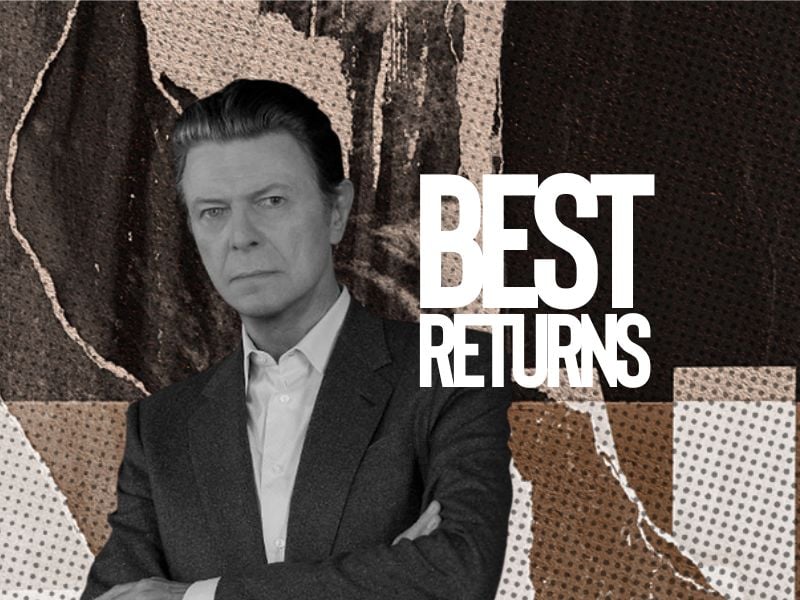
From Daft Punk to David Bowie: The 8 best comebacks in music history

Few rock ‘n’ roll traditions get minds racing more than a grand comeback. When something is gone for a long time, the collective yearning for them increases year upon year until they eventually make a return, and they seldom disappoint.
After a band or an artist disappears for enough time, history has a way of rewriting itself, and the legend surrounding these acts coats their legacy in invincibility. Even if they only played to modest audiences during their initial time together, their fanbase has multiplied while they’ve been on hiatus, which is felt during their first show back.
Of course, plenty of acts get back together for the wrong reasons, purely for the payday. In all honesty, this is almost certainly the primary reason why bands get back together. Still, as long as they don’t let their motive bleed into their performance, it doesn’t take anything away from the spectacle.
Below, we are charting the grandest returns in music history and the times when artists proved it was worth the years of torturous wait for their revival. These moments prove the second bite of the apple is sometimes sweeter than the first.
The best comebacks in music history
Daft Punk
After 1999, Daft Punk retired from playing concerts until 2006, apart from the occasional notable exception like a secret set at London’s Fabric nightclub. Their refusal to tour added intense intrigue to the duo, who already had an air of mystery because of their masked image.
During this time between touring, Daft Punk had become one of the world’s biggest acts, and everybody wanted a piece of them when they returned to the stage at Coachella in 2006. Intriguingly, the Californian festival booked them to appear in the dance tent, which remains the most historic moment in the event’s history. Everybody at the festival tried to clammer into the tent for the performance, and they squeezed in like sardines to get a glimpse of the Parisians.
Fleetwood Mac
Throughout the 1990s, you couldn’t go to the toilet without stumbling on a reuniting. After years away from the game, groups like The Eagles and The Who got the band back together for insanely lucrative tours. Therefore, nobody was too surprised when Fleetwood Mac buried the hatchet after seeing dollar signs, but it exceeded all expectations.
In 1996, the Rumours-era line-up of Fleetwood Mac sans Lindsay Buckingham reunited at a lavish private party in Kentucky, and the motive was to see if they still shared their chemistry. It put the wheels in motion for a full-blown reunion, including Buckingham. Eventually, the line-up became official the following March when they performed at Warner Bros. Studios in California for the live album, The Dance.
Pink Floyd
When Roger Waters walked out on Pink Floyd in 1985, it was under a cloud of acrimonious circumstances. It looked impossible that he’d ever step foot on stage with David Gilmour again as their relationship had collapsed entirely. However, when Bob Geldof called asking them to play Live 8 in 2005, they reunited for a cause bigger than themselves.
The performance was the first time David Gilmour, Nick Mason, Roger Waters and Richard Wright performed together since their 1981 concert at Earl’s Court in London, and it would also be their final outing as a five-piece. Although their set was heroic, it didn’t resolve Gilmour and Waters’ relationship. “Anyway, I don’t like it much. It’s all right but not part of the great emotional oeuvre,” Gilmour said in a 2006 interview.
He added: “The songs that Roger wanted were not the ones I thought we should do. The arrangements of the songs were not the way Roger wanted to do them. But I kind of insisted”.
Led Zeppelin
Led Zeppelin’s first reunion at Live Aid in Philadelphia was an utter disaster, but they made up for it in 1988 at Madison Square Garden. Almost two decades later, the group got together for the final time for a magical homecoming on English soil at the O2 Arena.
The announcement of their comeback sent fans into hysteria, and reportedly 20 million people scrambled for the 20,000 golden tickets. It was a perfect way for the band to draw the line under their career and cemented Led Zeppelin’s legacy.
David Bowie
After an absence of almost a decade, many believed David Bowie was retired in 2013 when he decided to make his grand return with The Next Day. Although Bowie didn’t tour again, the final two albums of his career were his parting gift to the world when he knew his health was declining and allowed him to say goodbye on his own terms.
Bowie suffered a heart attack in 2004, which made him reevaluate the priorities in his life and spend more time with his young family. However, with The Next Day, he proved his voice still needed to be heard, and his creative juices were still flowing on all cylinders.
Kate Bush
When Kate Bush took to the stage at the Hammersmith Odeon on May 14th, 1979, for the final night of her The Tour of Life run, nobody expected it would be 35 years until she’d publicly perform again. Fittingly, when she did return to the stage, it was at the same venue, albeit operating under a different name.
“It wasn’t designed that way, because I really enjoyed the first set of shows we did (in 1979),” Bush explained in 2016 about her lengthy absence from gigs. “The plan at the time was that I was going to do another two albums’ worth of fresh material, and then do another show. But of course, by the time I got to the end of what was The Dreaming album, it had gone off on a slight tilt, because I’d become so much more involved in the recording process”.
Fans flocked from around the world to attend dates across the 22-show residency as Bush expertly blurred the lines between music and theatre. Fingers crossed, the eccentric singer-songwriter decides to capitalise on her new-found fame and announces another comeback.
OutKast
When Andre 3000 and Big Boi collide, it never fails to be a magical spectacle. Since 2006, the world has been starved of material by OutKast, which has been challenging to take. However, the blow was softened in 2014 when they reunited for a world tour which began at Coachella in April and lasted for six months.
Even without new material, their return was special after a six-year hiatus from playing live. The run was a carnival-like celebration of everything the pair created together during their tenure, which undeniably had a sense of finality. Eight years from the tour, it seems like the OutKast journey has come to a natural end and concluded with their triumphant global victory lap.
The Stone Roses
Following the release of 1994’s long-awaited, The Second Coming, things fell apart for The Stone Roses. Although the record stands up all these years later, it was made under messy circumstances, and by 1996, everything was over for the band.
In 2011, the group announced they were back together and announced their plans for a world tour, beginning with an intimate date in their hometown, Warrington. Astonishingly, they sold-out 150,000 tickets for their dates at Heaton Park in just 14 minutes, and over the next few years, they continued to play huge shows before they bowed out at Glasgow’s Hampden Park in 2017.
Over that time, they sold-out four dates at Manchester’s Etihad Stadium, conquered Wembley and headlined festivals worldwide, including Coachella. However, it all crumbled when their planned third album was thrown onto the scrap heap following the release of two weak comeback singles, and the nostalgia train terminated. As Brown said during their final show, “Don’t be sad that it’s over, be happy that it happened”.

Never Miss A Beat
The Far Out Led Zeppelin Newsletter
All the latest stories about Led Zeppelin from the independent voice of culture.
Straight to your inbox.