


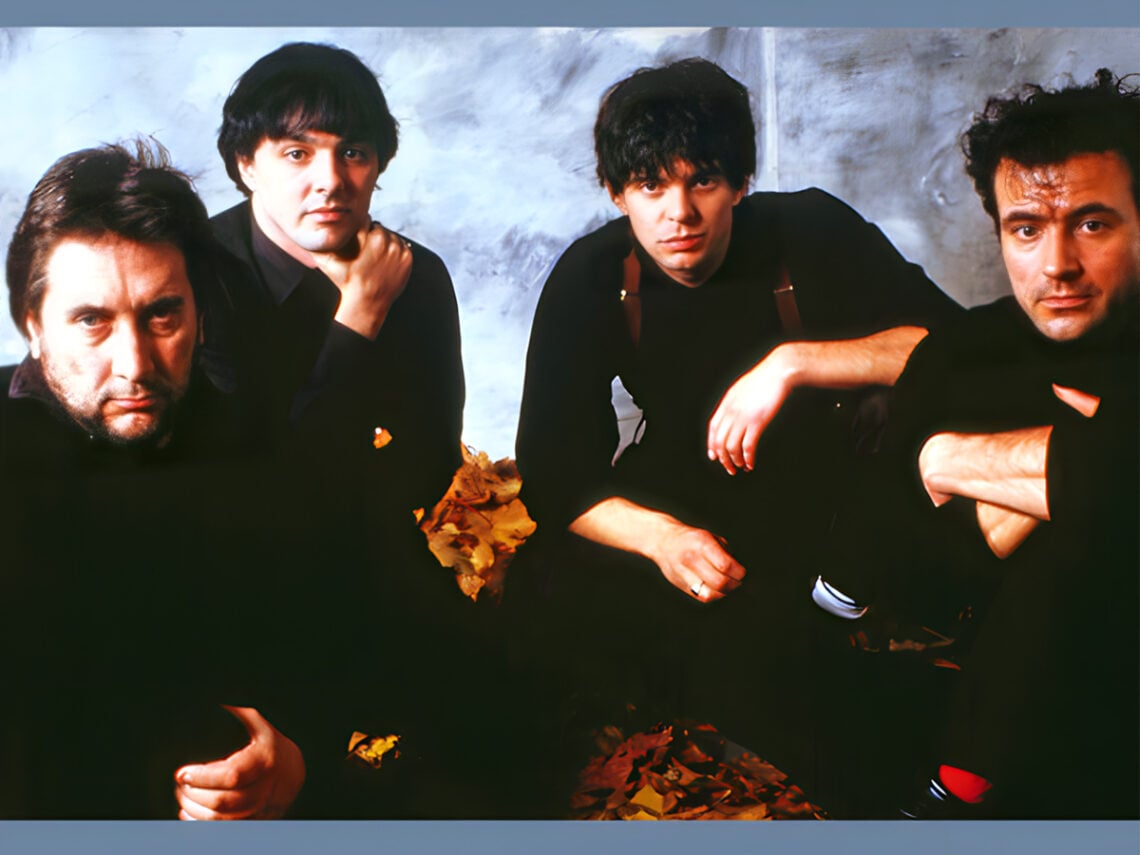
‘Aural Sculpture Manifesto’: The Stranglers’ bizarre deep cut about the evils of technology

Keyboardist Dave Greenfield, who died after contracting Covid in 2020, was a vitally important part of the sound of The Stranglers, particularly as the band looked to extricate itself from the shackles of ‘punk’ in the late 1970s.
The presence of a skilled musician playing arpeggiated prog-rock riffs on a Minimoog synthesiser sure didn’t seem very punky, but Greenfield wasn’t dulling The Stranglers’ edge either. More in the spirit of Ray Manzarek, he was adding an air of mystery and sophistication to a group that was best known, in their early days, for physically fighting the audience at their own gigs.
The prominent use of synths also suggested that they, unlike some of the real bare-bones, rough-and-tumble bands born in the punk scene, were open to embracing new technology and making friends with robots as the ’80s began. As it turned out, though, frontman Hugh Cornwell and his bandmates saw a very clear and important distinction between the use of electronics to create interesting sounds and the use of electronics to replace human creativity.
“As always, when something new is developed, it completely swamps the field,” Cornwell told the Calgary Herald in 1983, speaking of his general distaste for the use of computers in the pop music of the period, adding, “This silicon chip technology has reached the stage that if a baby presses something on a synthesiser completely by chance, what comes out is still completely ordered and structured. Now, if people want to call this baby a composer, then fine. But that jars my love of music, of artisanship, hard work and developing a craft over the years. So, we’ll call ourselves something else until all this passes over.”
Of course, more than 40 years later, Cornwell’s argument sounds essentially identical to the one artists are making every day in response to artificial intelligence in 2026. If you give AI a two-sentence prompt and it paints a picture, calling yourself a painter is akin to the baby in Cornwell’s example being considered a composer.
The Stranglers’ concerns about the potential evils of technology weren’t just coming up in press interviews, either. In 1983, the band released a one-sided seven-inch single as a companion to their album Feline, titled ‘Aural Sculpture Manifesto’.
The single, featuring what could only be described as a theatrical, over-the-top Hugh Cornwell political speech over minimal background noise, was played before the band took the stage during their 1983 and 1984 tours, and also served as a sort of bridge to their next full-length album, Aural Sculpture. The manifesto part of the song title specifically referred to the band’s stance against automated machine music, and while it’s dripping with pretentiousness, it’s also hard not to appreciate the seriousness of the sentiment in our current predicament, as society weighs whether human-made art is really worth the time and expense.
“When those of us who are committed to the creation of aural sculpture can no longer sit and tolerate the prostitution of sound that is proliferating around us,” Cornwell says on the track, “It is time to speak out. The musicians of our times are harlots and charlatans, who use science without being scientists and abuse art without being artists. We are witnessing the demise of music. So be it. The world must prepare itself to herald the advent of aural sculpture, whose presence can now be shared with the fortunate few who have the ears to hear, the vision to see and the intelligence to comprehend.”
Later in the ‘song’, such as it is, Cornwell hands the microphone over to Dave Greenfield, to describe the birth of a new musical ‘infant’, but the latter humorously just lists a bunch of random specs and features from his synthesisers. It’s a comedy song, you see; an amusing 1980s satire, and the robots were still far enough away to poke some fun at.
