


Five musicians who eerily foreshadowed their own downfall

Foreshadowing a downfall is a strange concept. Often, as is the case with normal everyday life, certain words, remarks, actions, and even thoughts don’t seem to hold that much meaning. However, when something happens, something unexpected, our minds can look back at different events and read into them, almost extracting some divine prophecy suggesting things as off-kilter as John Lennon predicting his own death.
Of course, these things rarely amount to much and are usually just strings of consciousness filled with new meaning at the hands of newfound hindsight. However, it’s interesting to entertain the thought that somehow, somewhere, certain peoples’ minds can prophesy their own future without them consciously knowing it.
At the same time, this is particularly intriguing in the music world, where much content and material is brimming with lyrical precursors to things that have happened or might happen in the near future. There’s nothing particularly eye-opening about a musician with a drug addiction singing about their love affair with heroin, but if something happens after the fact, the whole thing seems too eery to leave the whole sentiment up to mere happenstance.
While analysing all the times that musicians have foreshadowed their own downfall would be a tiresome and extensive list—especially considering the length to which most musicians chronicle their inner, most troubling thoughts—some of those below seem too coincidental to go unnoticed, signifying artists who predicted the end of their tether, often while still very much in their prime.
Five artists who foreshadowed their downfall:
Jeff Buckley
Everything about the life and career of Jeff Buckley seems a bit off, especially when putting Grace under the microscope, and not just in terms of the music. Of course, there are many instances in which Buckley seems to foreshadow some kind of untimely fate, like in the remark, “This is a song about not feeling so bad about your own mortality when you have true love,” and the hauntingly accurate line, “I feel them drown my name.” However, the cover itself also seems to prelude Buckley’s demise in a completely unexpected full-circle moment.
While he was being photographed for the album cover, the musician was listening to his song ‘Dream Brother’, which he wrote as a means of warning one of his friends against walking out on his pregnant wife. However, his hyper-awareness of fleeting existence and his own mortality permeates the lines of the song, reflecting a figure who, by their very nature, is “in trouble” and can’t do anything about it. It’s written in the stars, and in a moment of complete lamentation, Buckley’s mind wandered into the shadows lurking just over the horizon.
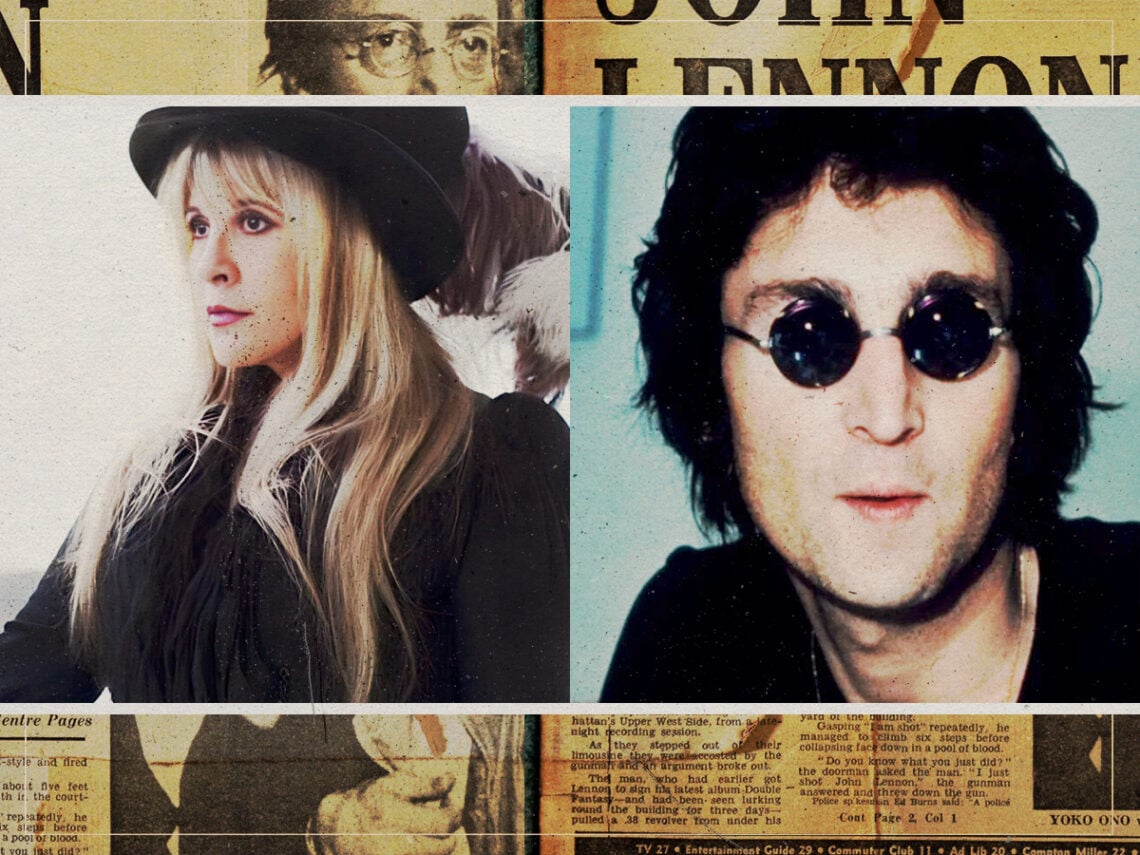
Stevie Nicks
It’s no secret that some of the best music Stevie Nicks ever created also stemmed from some of her darkest thoughts. The examples are endless—’Dreams’, ‘Sara’, ‘Gold Dust Woman’, ‘Edge of Seventeen’, and even ‘After the Glitter Fades’ seem to point towards some of her deepest fears and personal battles, including the cost of fame, the pain of heartbreak, and the heavy toll of addiction.
However, what makes Nicks’ own subtle foreshadowing particularly poignant is the self-awareness she holds while never truly or overtly longing for stability within the darkness. Even amid the chaos, she lingers there, extracting poetic beauty in the quiet acceptance of turmoil, as though she recognises that the heartbreak, loss, and wild unpredictability of life are all part of the price for creative freedom.
Amy Winehouse
Amy Winehouse was one of the ultimate masters of autobiographical music. It earned the attention of labels and producers from day one, and it was a gift she carried with her right up until she passed away. Her honesty often made her music feel like confrontational pinpricks, but it was this rawness that proved she knew she was never destined to be around for a long time, as if every time she released new music, it was both a confession and a farewell.
It’s not hard to think of songs that saw Winehouse foreshadowing her own downfall. The obvious might be ‘Rehab’, but even her deeper cuts proved how unflinching she was in the face of her own darkness, revealing the sort of self-awareness of someone who fought every day despite possessing the constant knowledge of living on borrowed time, knowing that there was no way to ever slow down.
Kurt Cobain
Kurt Cobain seemed to lead a dark, troubled, tragic, and painful existence from day one, which only grew into adulthood and infiltrated most of his music. His brooding demeanour became one of the defining aspects of Nirvana’s specific flavour of grunge, reframing Cobain’s own outsider label not only as artistic expression but a major indicator that this is someone who, one day, might succumb to his inner conflict in the darkest way imaginable.
Cobain’s fate was hinted at many times throughout Nirvana’s discography, as would be the case with an artist drawing from personal experiences, but in this particular instance, his disillusionment with fame and himself didn’t seem to come from a place within as much as from a lingering shadow that followed him throughout his entire life. In Cobain’s world, foreshadowing wasn’t a subconscious train of thought; it was an unwelcome disease that followed him right up until his last moments.
John Lennon
All over the internet, you’ll find strange quotes, videos, theories, and images claiming that former Beatle John Lennon predicted his own death. While some of the remarks did actually come out of the musician’s mouth at one point or another, it’s hard to say with the utmost confidence that he did once predict his own death. That said, there’s no denying that many things the musician said and did could be collectively construed as a presage of some sort.
Beyond various fan letters warning him of his own assassination and spiritual musings about existence and mortality, Lennon also openly shrugged in the face of potential danger and coasted through life with little worries about one day passing away. A lot of this was due to his own belief system, and that passing over to the other side was, in his words, “just getting out of one car and into another,” but everything that led him to that one fateful night in 1980, from his interviews to his music, evoked a sense of acceptance and resignation, as if he had long made peace with never experiencing the privilege of growing old.
