


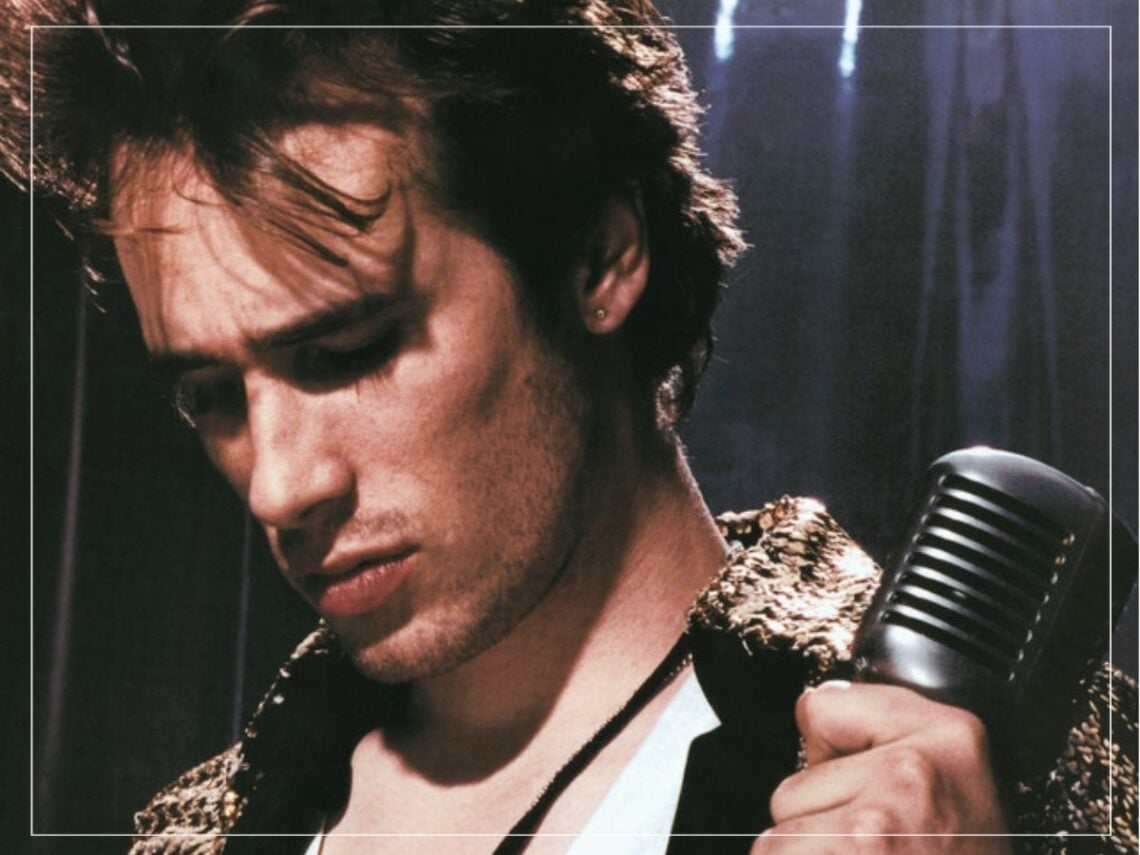
“He is in trouble”: The dark foreshadowing in Jeff Buckley’s ‘Grace’ album cover

Many albums throughout history could be deemed the most beautiful, but few match up to the concept as intensely as Grace. Jeff Buckley executed a fine line between vulnerability and intimacy with what seemed like little effort, delivering songs that oscillate between barely-heard whispers to full bellows of brokenness, leaving you with nothing but an overwhelming sense of transcendence.
When a musician dies young, it feels natural to go searching for hints in their interviews or lyrics, signs that foreshadow their tragic passing, even if they didn’t know what they were saying at the time appeared rife with double meaning. “Looking out the door I see the rain / Fall upon the funeral mourners / Parading in a wake of sad relations / As their shoes fill up with water,” Buckley sings on ‘Lover, You Should’ve Come Over’, evoking notes of eery prescience between the overt romanticism.
Because he died at such a young age, alongside the mysterious circumstances surrounding his death, Buckley’s material is filled with these moments, mainly with subtle references to mortality and the fragility of love and life. Of course, Buckley was also a poignant thinker, and many of his songs occupy a specifically romantic or philosophical space, but even he couldn’t avoid the haunting aftermath of being celebrated in memoriam.
On the title track, Buckley seems to reference his tragic fate more than any other song, with lines like: “Well it’s my time coming, I’m not afraid, afraid to die / My fading voice sings of love / But she cries to the clicking of time, oh, time,” followed by the haunting proclamation, “And I feel them drown my name,” making it difficult not to immediately draw comparisons between the melancholic line and Buckley’s own drowning in Mississippi’s Wolf River.
Beyond the music itself, numerous elements of Grace appear to foreshadow Buckley’s future, such as the cover art—initially appearing harmless and even innocent, but a closer look beyond its familiar frame reveals an atmosphere steeped in darkness and internal strife. This complexity reflects not only Buckley’s state of mind but also his perception of those around him.

On the surface, the image presents Buckley looking down, microphone in hand, reflecting the personal and self-reflective nature of the album’s songs and lyrics. However, the photograph was taken by the singer’s friend Merri Cyr, capturing a peaceful moment when Buckley was listening back to his song ‘Dream Brother’. Some members of his team didn’t like the photo and felt it sent the wrong message, but Cyr liked how it caught Buckley’s “split personality”.
‘Dream Brother’ is one of the more meditative tracks on Grace, reflecting the stark awareness of life’s transience that Buckley always held close, even as an artist trying to make music that would resonate for years to come. His hyper-awareness of fleeting romance and his own mortality permeates the lines of ‘Dream Brother’ and was inspired by one of Buckley’s friends who was considering walking out with his pregnant wife at the time.
Although specific in its references to his friend’s circumstances, the lyrics feel more like a broader warning against making detrimental life choices, providing a reminder that being happy and healthy is also an option. As Buckley explained, “It’s a song about a friend of mine, who’s led a rather excessive life… He is in trouble. This song is for him. I know what self-destruction can lead to, and I have tried to warn him. But I am one big hypocrite because when I called him up and told him about the song I’d written, that same night I took an overdose of hash and woke up the next day feeling terrible. It is very hard not to give in to one’s negative feelings. Life is total chaos.”
In the moments leading up to Buckley’s death, he was alleged to be using, even though he found the entire concept disgusting. As part of an industry that preys on those susceptible to drug and alcohol abuse, Buckley likely gave in to temptation more than his desire to actually engage in the lifestyle, caught in a whirlwind of pressure and expectation that often overshadowed his artistic integrity.
His disdain for such choices filtered into ‘Dream Brother’, reflecting a broader statement about pandering to the darker sides of life in the spotlight when, most of the time, none of it was necessary. Moreover, its more general themes of loving, living, and losing sight of what’s important have made it the perfect name or subject for various books, chapters, articles, songs, and stories that explore the complex navigation of fame and identity in relation to Buckley’s music and tragic story.
Buckley’s death was ruled an accidental drowning, but even his final scene poses a poignant picture about dreaming big even when you want out. Grace might epitomise everything the singer meant in life and death and his journey of reaching for ambition and vulnerability while grappling with despair, but listening to ‘Dream Brother’ while being photographed for the cover seems to bring the entire concept full circle.
In that moment, Buckley embodied the spirit of his music. The peace written on his face showed his deep contemplation of life’s fragility and the eternal quest to appreciate all that you have before it’s too late. In that moment, he confronted life’s dualities, knowing that nothing is ever certain, even in the shadows of mortality.
