


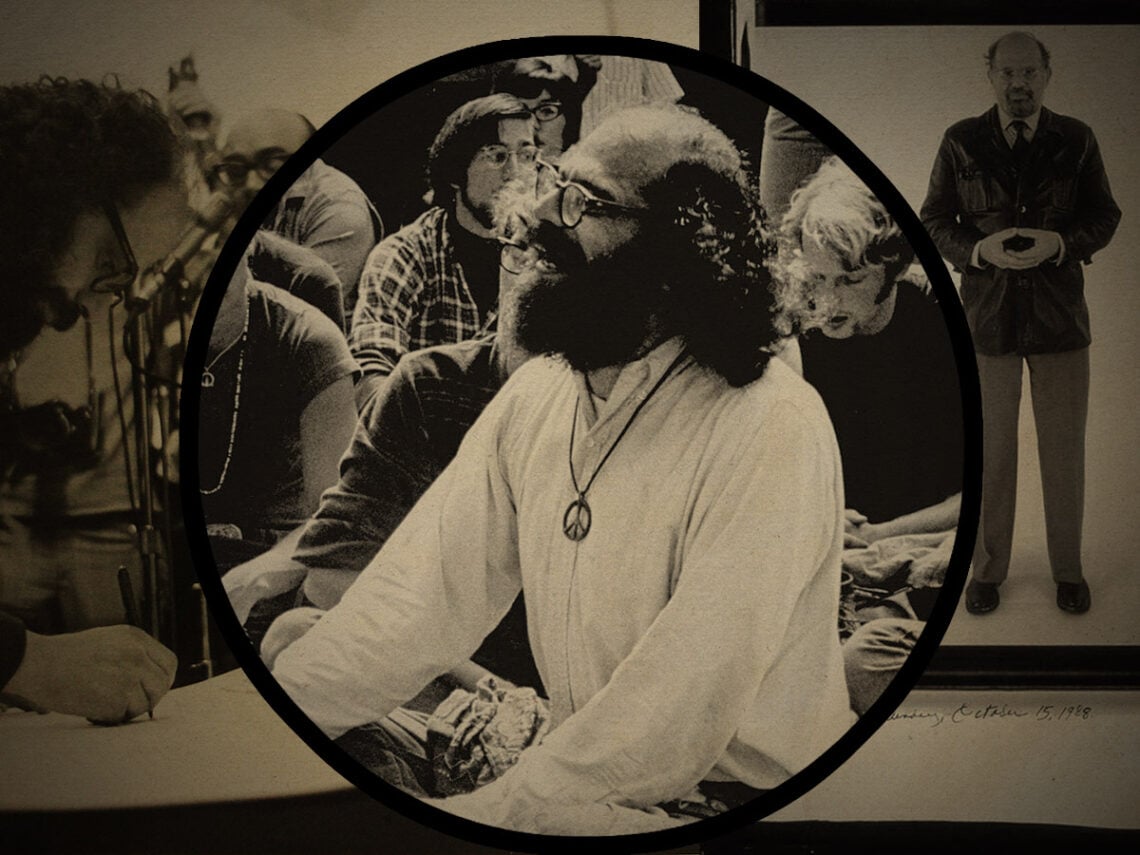
Allen Ginsberg’s troublingly overlooked days as a member of the pro-paedophilia group NAMbLA

When an organisation known as NAMbLA, the North American Man/Boy Love Association, was featured in an episode of South Park back in 2000, most millennial viewers presumed the group was fictional and farcical, another ridiculous invention of Trey Parker and Matt Stone for the purpose of uncomfortable laughs.
In reality, quite disturbingly, NAMbLA was a very real thing, having established itself as a satire-free paedophilia advocacy group in 1978. Unsurprisingly, its card-carrying members were never vast in numbers, and there were rarely any other civil rights organisations willing to associate with them.
Nonetheless, NAMbLA managed to function above ground for decades, centrally focused on trying to lower, or outright eliminate, the age of consent in the United States. Their arguments, which would likely offer useful insight into the mindset of some of those who would go on to frequent Epstein Island, were less about unimpeded predation and more about a return to a sort of old-world classicism, the supposedly more open-minded sexual sensibilities of the Greeks and the Romans.
The central tenet of the group, though, was all about the legalisation of sex with minors, and presenting that argument in such a brash and direct manner was almost beyond what most experienced cultural critics could easily comprehend, leaving some to presume that the ludicrous-sounding Man/Boy Association was some sort of concept art or thought experiment. But as one of the group’s spokesmen, Chris Farrell, made very clear in a 1989 statement, NAMbLA was completely serious about its views and what it hoped to accomplish.
“There is a mode of sexual behaviour that is appropriate for each person at each stage of their life,” Farrell said, “The person best in a position to determine this is the individual, him or herself. It’s unfortunate that we live in a culture that denies children the information they need to make the best decisions about their sexuality. I think the [age of consent] laws are intended to control the behaviour of children, not protect them.”
NAMbLA was founded by a former president of the Gay Activists Alliance, David Thorstad, and as such, it repeatedly tried to align itself with the larger fight for gay rights. The leading LGBTQ+ organisations, however, wanted nothing to do with them, and during the 1980s, in the midst of the Aids epidemic and with growing awareness of child sex trafficking rings, there might not have been a single entity more reviled for its talking points than NAMbLA. A total rejection of the group, in fact, seemed to be the one thing that a conservative Southern senator and a socialist gay rights activist could agree on.
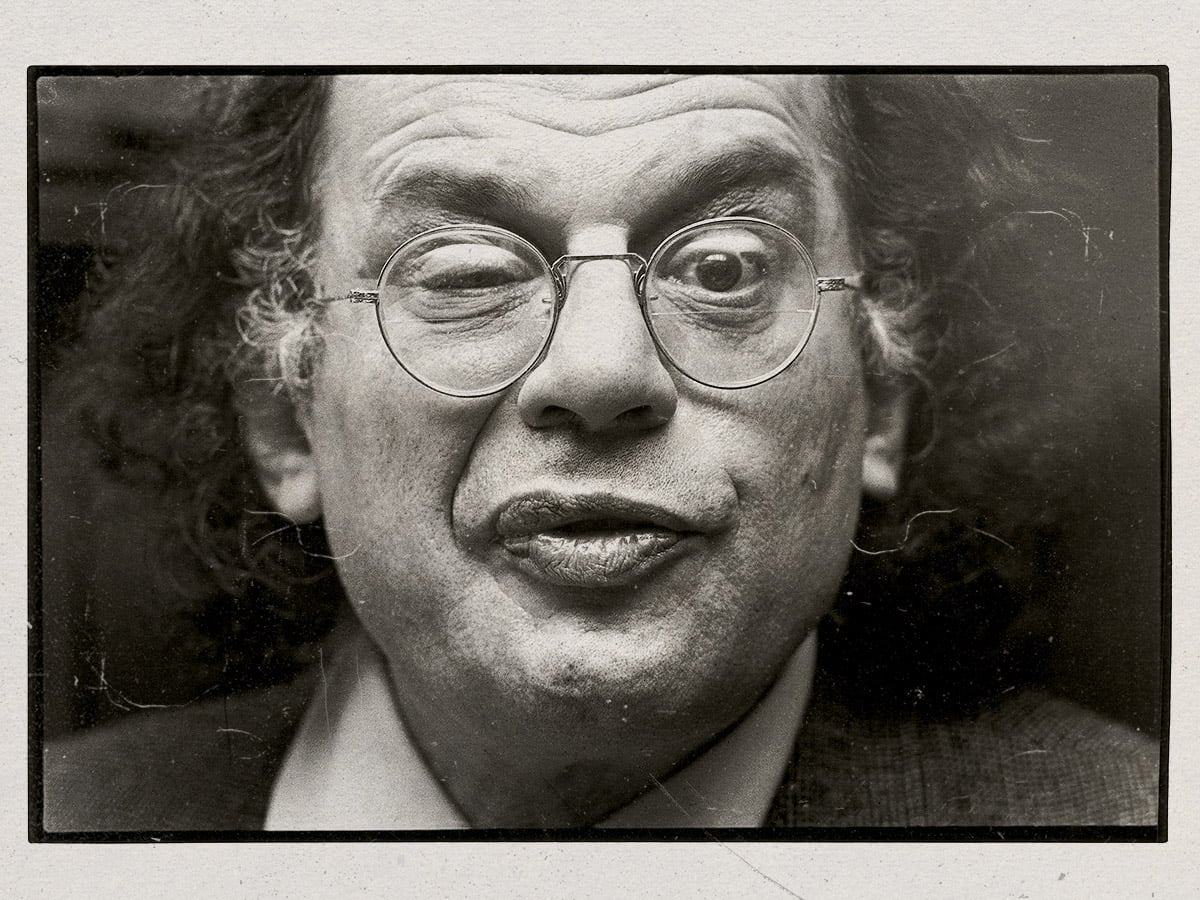
One of the very few exceptions, and certainly the only household name to take a different view on NAMbLA, was, sad to say, one of the country’s finest poets. It’s not a detail of Allen Ginsberg’s life that is ever going to be frontloaded to the top of his biography, but, much like the abusive behaviour of many of the rock stars we’d prefer to worship without caveats, it doesn’t seem correct to bury it in a footnote, either. Ginsberg joined the NAMbLA at some point in the 1980s and drew national attention for a specific incident in 1989 when he agreed to give a poetry reading at the group’s membership conference in New York City, an event that New York’s Gay and Lesbian Community Services Centre had refused to host.

“I’ve had more flak about it than anything since the campaign to legalise grass 30 years ago,” Ginsberg told The Independent a few years later, as if to suggest the two things might one day be seen as comparable movements, adding, “I can understand it. A lot of gay people [Ginsberg was openly gay himself] feel they’ve gotten certain civil rights, and it would be hard to progress with gay rights if there was any association with [NAMbLA].”
Ginsberg said that his poetry reading at the conference involved speaking to a “bedraggled group of 30 or 40 people who couldn’t find a venue because the regular gay lib group disowned them. Probably half the people there were FBI spies, but it was one of the nicest readings I ever gave”. His friend and author Bob Rosenthal later recalled Ginsberg saying, “At last, I’ve found an organisation which is totally indefensible!” And this does add some useful context, as the poet had spent more than 30 years by this point aligning himself with society’s outcasts and apparent ‘lost causes’, groups that had once included Communists, junkies, sex workers, and people within his own queer community.

In the 1950s, a poem like ‘Howl’, vividly celebrating the people from these worlds and standing in resistance to the dull conformist McCarthyism of the mainstream, struck a chord and inspired millions of people around the world, making Ginsberg one of the icons of the Beat Generation and eventually a leading voice of the 1960s counterculture. As he grew older and perhaps more cynical, though, his increasing acceptance by the mainstream literary establishment might not have sat right with the rebel instincts that still motivated a lot of his art.
“Today is like the conformist ‘50s,” he said in 1984, “With apathy based on fear. Once you break out of that conformity, you realise we have a whole nation that’s top-heavy with bullshit. If you have a whole nation operating on hot air, then poets will break through to say some of the things that make common sense.” Unfortunately, if “common sense” essentially meant a strict contrarian position against those of the government, Ginsberg ran the risk of finally aligning himself with a less worthy underdog; or worse yet, a villain worse than the powers that be.
From most accounts, it seems that the poet first became aware of NAMbLA when the FBI began cracking down on the organisation and its members in the ‘80s. An enemy of the FBI was usually a friend of Ginsberg’s, so he began publicly defending the group as a matter of free speech. “Attacks on NAMbLA stink of politics, witch hunting for profit, humorlessness, vanity, anger and ignorance,” he wrote.
Free speech advocates will often say they’d defend the rights of a saint and a bigot with equal vigour, and that might almost excuse Ginsberg’s misguided defence of NAMbLA, if not for the fact that he also seemed to personally subscribe to a lot of the group’s views. “I’m a member of NAMbLA because I love boys too, everybody does, who has a little humanity”.
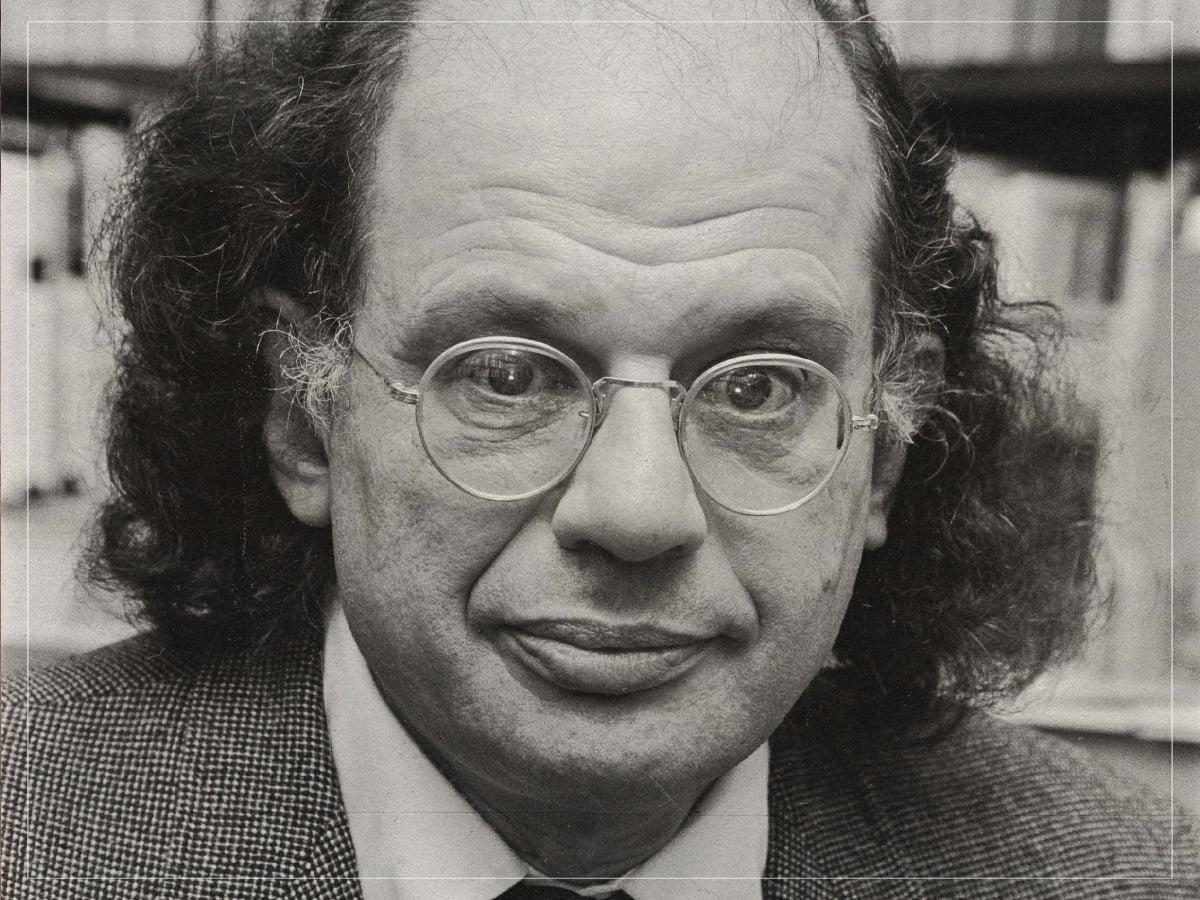
Speaking to The Independent in 1994, Ginsberg was careful to explain that most people in NAMbLA, “like myself, do not make carnal love to hairless boys and girls”. But a lot of his old friends and colleagues who’d stood shoulder to shoulder with him fighting against censorship, racism, drug laws, homophobia, and dozens of other issues, were deeply troubled by Ginsberg’s persistence in aligning himself with these people and their troubling, backwards, and self-serving cause.
The radical feminist writer Andrea Dworkin, for one, ended her friendship with Ginsberg over the issue, writing in her 2002 memoir Heartbreak that he “did not belong to the North American Man/Boy Love Association out of some mad, abstract conviction that its voice had to be heard. He meant it. I take this from what Allen said directly to me, not from some inference I made. He was exceptionally aggressive about his right to [have sex with] children and his constant pursuit of underage boys.”
Back at that NAMbLA conference in 1989, Ginsberg didn’t address the group like a visiting outsider showing empathy for their free speech battle, either. Instead, he said he was “happy to be here for the brave, intelligent, distinguished company…It’s really interesting to give a poetry reading to people who understand the references and the shadings of thought. Many don’t.”
All of this leaves us with an all-too-familiar feeling of grave disappointment and discomfort, forced to try and once again weigh the remarkable contributions of a singular artist up against the worst aspects of his character and behaviour. There is no evidence or accusations from anyone suggesting Ginsberg was a sexual predator himself, but if literally advocating for a pro-paedophilia group was “indefensible” in 1989, it might be a few degrees further beyond the pale today, as the full scale of harm done by men with similar philosophies comes to light each day.
